


Zenode.ai Logo
Beta
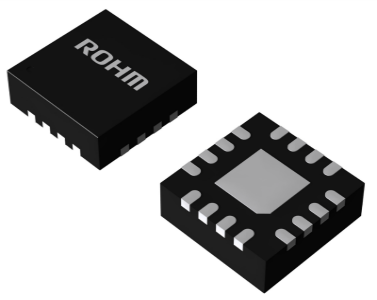
Conv DC to DC Single Step Down 4V to 17V 16-Pin VQFN Emboss T/R
Integrated Circuits (ICs)

BD9D300MUV-E2

Active
Rohm Semiconductor

4.0 V TO 17 V INPUT, 3 A INTEGRATED MOSFET SINGLE SYNCHRONOUS BUCK DC/DC CONVERTER

Deep-Dive with AI

Search across all available documentation for this part.

Conv DC to DC Single Step Down 4V to 17V 16-Pin VQFN Emboss T/R
Integrated Circuits (ICs)

BD9D300MUV-E2

Active
Rohm Semiconductor

4.0 V TO 17 V INPUT, 3 A INTEGRATED MOSFET SINGLE SYNCHRONOUS BUCK DC/DC CONVERTER

Technical Specifications

Parameters and characteristics for this part

SpecificationBD9D300MUV-E2
Current - Output3 A
Frequency - Switching1.25 MHz
FunctionStep-Down
Mounting TypeSurface Mount
Number of Outputs1
Operating Temperature [Max]85 C
Operating Temperature [Min]-40 ¯C
Output ConfigurationPositive
Output TypeAdjustable
Package / Case16-VFQFN Exposed Pad
Supplier Device PackageVQFN016V3030
Synchronous RectifierTrue
TopologyBuck
Voltage - Input (Max) [Max]17 V
Voltage - Input (Min) [Min]4 V
Voltage - Output (Max) [Max]5.25 V
Voltage - Output (Min/Fixed)0.9 V

Pricing

Prices provided here are for design reference only. For realtime values and availability, please visit the distributors directly

DistributorPackageQuantity$
DigikeyCut Tape (CT) 1$ 1.72
10$ 1.54
25$ 1.45
100$ 1.24
250$ 1.16
500$ 1.02
1000$ 0.84
Digi-Reel® 1$ 1.72
10$ 1.54
25$ 1.45
100$ 1.24
250$ 1.16
500$ 1.02
1000$ 0.84
N/A 2989$ 1.61
Tape & Reel (TR) 3000$ 0.72

Description

General part information

BD9D300 Series

BD9D300MUV is a synchronous buck switching regulator with built-in low on-resistance power MOSFETs. This integrated circuit (IC) is capable of providing current up to 3 A. It operates high oscillating frequency with low inductance. It has original on-time control system which can operate low power consumption in light load condition. This IC is ideal for reducing standby power consumption of equipment.

Documents

Technical documentation and resources

Datasheet

Datasheet

Power Supply Sequence Circuit with General Purpose Power Supply IC

Schematic Design & Verification

Two-Resistor Model for Thermal Simulation

Thermal Design

Capacitor Calculation for Buck converter IC

Schematic Design & Verification

Inductor Calculation for Buck converter IC

Schematic Design & Verification

Considering Input Filter to Reduce Conducted Emissions by DCDC Converter

Schematic Design & Verification

The Important Points of Multi-layer Ceramic Capacitor Used in Buck Converter circuit

Schematic Design & Verification

Basics of Thermal Resistance and Heat Dissipation

Thermal Design

θ<sub>JA</sub> and Ψ<sub>JT</sub>

Thermal Design

Thermal Resistance

Thermal Design

Precautions When Measuring the Rear of the Package with a Thermocouple

Thermal Design

Resistor Value Table to set Output Voltage of Buck Converter IC

Schematic Design & Verification

How to Use the Two-Resistor Model

Thermal Design

Step-down DC-DC converter PCB layout EMC Design guide

Schematic Design & Verification

Snubber Circuit for Buck Converter IC

Schematic Design & Verification

Overview of ROHM's Simulation Models(for ICs and Discrete Semiconductors)

Technical Article

BD9D300MUV SPICE Modeling Report

Models

PCB Layout Thermal Design Guide

Thermal Design

Method for Determining Constants of Peripheral Parts of Buck DC/DC Converter

Schematic Design & Verification

Three Steps for Successful Design of DC-DC Converters

White Paper

Cutting-Edge Web Simulation Tool "ROHM Solution Simulator" Capable of Complete Circuit Verification of Power Devices and Driver ICs

White Paper

Calculation of Power Dissipation in Switching Circuit

Schematic Design & Verification

Factory Information

Manufacturing Data

Diode Selection Method for Asynchronous Converter

Schematic Design & Verification

PCB Layout Techniques of Buck Converter

Schematic Design & Verification

Simulation Guide for BD9D300MUV / Frequency Response (ROHM Solution Simulator)

Simulations

Considering Polarity of Power Inductor to Reduce Radiated Emission of DC-DC converter

Schematic Design & Verification

PCB Layout Essential Check sheet for Switching Regulator

Schematic Design & Verification

VQFN016V3030 Package Information

Package Information

Method for Calculating Junction Temperature from Transient Thermal Resistance Data

Thermal Design

Two-Resistor Model : BD9D300MUV

Thermal Design

Efficiency of Buck Converter

Schematic Design & Verification

How to Use the Thermal Resistance and Thermal Characteristics Parameters

Thermal Design

What Is Thermal Design

Thermal Design

Precautions for PCB Layout Regarding Common Mode Filters

Technical Article

Heat Dissipation Effect of Thermal Via in Exposed Pad Type Package

Thermal Design

Judgment Criteria of Thermal Evaluation

Thermal Design

User's Guide for BD9D300MUV-EVK-001 Evaluation Board

User's Guide

Solder Joint Rate and Thermal Resistance of Exposed Pad

Thermal Design

Considerations for Power Inductors Used for Buck Converters

Schematic Design & Verification

Calculation of Power Loss (Synchronous)

Schematic Design & Verification

Phase Compensation Design for Current Mode Buck Converter

Schematic Design & Verification

θ<sub>JC</sub> and Ψ<sub>JT</sub>

Thermal Design

Suppression Method of Switching Noise Using Linear Regulator and Low Pass Filter

Schematic Design & Verification

Five Steps for Successful Thermal Design of IC

White Paper

Measurement Method for Phase Margin with Frequency Response Analyzer (FRA)

Schematic Design & Verification

Design Guide and Example of Stencil for Exposed Pad

Thermal Design

Types of Capacitors Used for Output Smoothing of Switching Regulators and their Precautions

Schematic Design & Verification

Impedance Characteristics of Bypass Capacitor

Schematic Design & Verification

Bootstrap Circuit in the Buck Converter

Schematic Design & Verification