


Deep-Dive with AI
Search across all available documentation for this part.
Technical Specifications
Parameters and characteristics for this part
| Specification | SN65LVDM22PW |
|---|---|
| Applications | LVDS |
| Capacitance - Input | 3 pF |
| Current - Supply | 21 mA |
| Data Rate (Max) | 250 Mbps |
| Delay Time | 4 ns |
| Input | LVDS |
| Mounting Type | Surface Mount |
| Number of Channels | 1 x 2:2 |
| Operating Temperature [Max] | 85 °C |
| Operating Temperature [Min] | -40 °C |
| Output | LVDS |
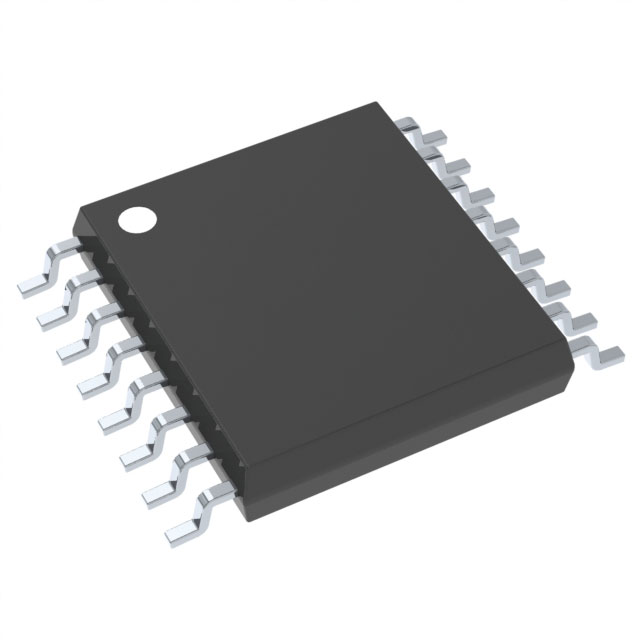
| Package / Case | 16-TSSOP |
| Package / Case [x] | 0.173 in |
| Package / Case [y] | 4.4 mm |
| Supplier Device Package | 16-TSSOP |
| Type | Multiplexer, Buffer |
| Voltage - Supply [Max] | 3.6 V |
| Voltage - Supply [Min] | 3 V |
Pricing
Prices provided here are for design reference only. For realtime values and availability, please visit the distributors directly
| Distributor | Package | Quantity | $ | |
|---|---|---|---|---|
| Digikey | Tube | 180 | $ 7.90 | |
| Texas Instruments | TUBE | 1 | $ 8.09 | |
| 100 | $ 6.59 | |||
| 250 | $ 5.18 | |||
| 1000 | $ 4.40 | |||
Description
General part information
SN65LVDM22 Series
The SN65LVDS22 and SN65LVDM22 are differential line drivers and receivers that use low-voltage differential signaling (LVDS) to achieve signaling rates as high as 400 Mbps. The receiver outputs can be switched to either or both drivers through the multiplexer control signals S0 and S1. This allows the flexibility to perform splitter or signal routing functions with a single device.
The TIA/EIA-644 standard compliant electrical interface provides a minimum differential output voltage magnitude of 247 mV into a 100-load.
The intended application of these devices and signaling technique is for both point-to-point baseband (single termination) and multipoint (double termination) data transmissions over controlled impedance media. The transmission media may be printed-circuit board traces, backplanes, or cables. (Note: The ultimate rate and distance of data transfer is dependent upon the attenuation characteristics of the media, the noise coupling to the environment, and other application specific characteristics).
Documents
Technical documentation and resources