OPA320AQDBVRQ1
ActiveAUTOMOTIVE QUALIFIED, PRECISION, ZERO-CROSSOVER, 20-MHZ, 0.9-PA IB, RRIO, CMOS OPERATIONAL AMPLIFIER
Deep-Dive with AI
Search across all available documentation for this part.
OPA320AQDBVRQ1
ActiveAUTOMOTIVE QUALIFIED, PRECISION, ZERO-CROSSOVER, 20-MHZ, 0.9-PA IB, RRIO, CMOS OPERATIONAL AMPLIFIER
Technical Specifications
Parameters and characteristics for this part
| Specification | OPA320AQDBVRQ1 |
|---|---|
| Amplifier Type | General Purpose |
| Current - Input Bias | 0.2 pA |
| Current - Output / Channel | 65 mA |
| Current - Supply | 1.45 mA |
| Gain Bandwidth Product | 20 MHz |
| Grade | Automotive |
| Mounting Type | Surface Mount |
| Number of Circuits | 1 |
| Operating Temperature [Max] | 125 °C |
| Operating Temperature [Min] | -40 °C |
| Output Type | Rail-to-Rail |
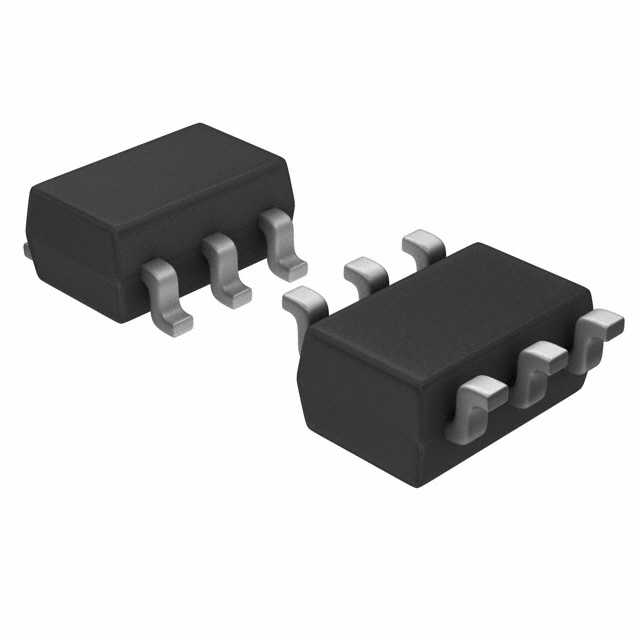
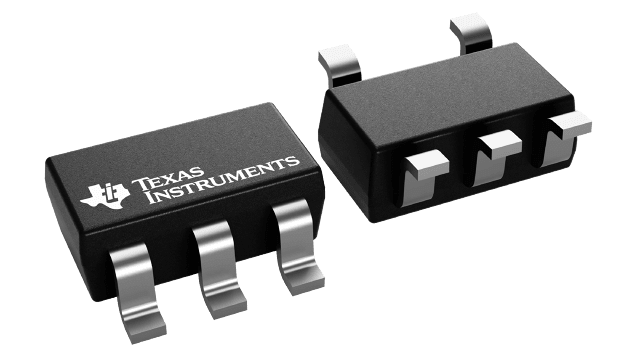
| Package / Case | SC-74A, SOT-753 |
| Qualification | AEC-Q100 |
| Slew Rate | 10 V/çs |
| Supplier Device Package | SOT-23-5 |
| Voltage - Input Offset | 40 µV |
| Voltage - Supply Span (Max) [Max] | 5.5 V |
| Voltage - Supply Span (Min) [Min] | 1.8 V |
Pricing
Prices provided here are for design reference only. For realtime values and availability, please visit the distributors directly
| Distributor | Package | Quantity | $ | |
|---|---|---|---|---|
| Digikey | Cut Tape (CT) | 1 | $ 2.94 | |
| 10 | $ 2.64 | |||
| 25 | $ 2.49 | |||
| 100 | $ 2.12 | |||
| 250 | $ 1.99 | |||
| 500 | $ 1.74 | |||
| 1000 | $ 1.44 | |||
| Digi-Reel® | 1 | $ 2.94 | ||
| 10 | $ 2.64 | |||
| 25 | $ 2.49 | |||
| 100 | $ 2.12 | |||
| 250 | $ 1.99 | |||
| 500 | $ 1.74 | |||
| 1000 | $ 1.44 | |||
| Tape & Reel (TR) | 3000 | $ 1.34 | ||
| 6000 | $ 1.29 | |||
| Texas Instruments | LARGE T&R | 1 | $ 2.21 | |
| 100 | $ 1.82 | |||
| 250 | $ 1.31 | |||
| 1000 | $ 0.99 | |||
Description
General part information
OPA320-Q1 Series
The OPA320 (single) and OPA2320 (dual) are a new generation of precision, low-voltage CMOS operational amplifiers optimized for very low noise and wide bandwidth while operating on a low quiescent current of only 1.45 mA.
The OPA320 series is ideal for low-power, single- supply applications. Low-noise (7 nV/√Hz) and high- speed operation also make them well-suited for driving sampling analog-to-digital converters (ADCs). Other applications include signal conditioning and sensor amplification.
The OPA320 features a linear input stage with zero- crossover distortion that delivers excellent common- mode rejection ratio (CMRR) of typically 114 dB over the full input range. The input common mode range extends 100 mV beyond the negative and positive supply rails. The output voltage typically swings within 10 mV of the rails.
Documents
Technical documentation and resources