


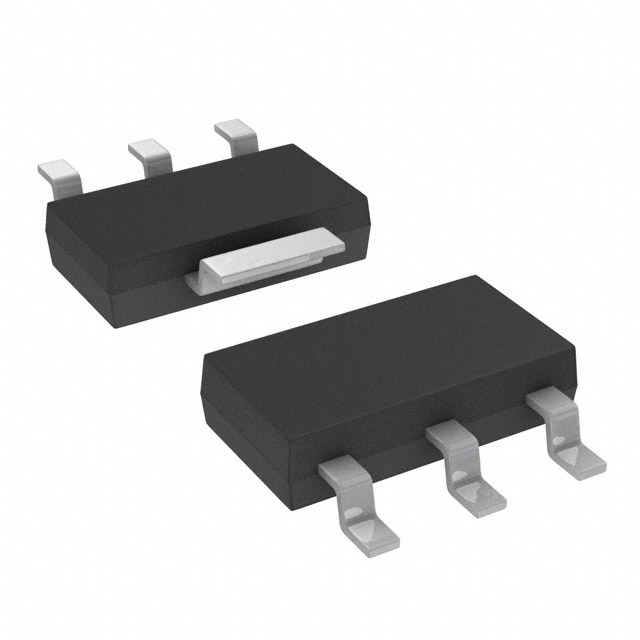
NCP1010ST130T3G
ObsoleteHIGH VOLTAGE SWITCHING REGULATOR FOR OFFLINE SMPS
Deep-Dive with AI
Search across all available documentation for this part.
NCP1010ST130T3G
ObsoleteHIGH VOLTAGE SWITCHING REGULATOR FOR OFFLINE SMPS
Deep-Dive with AI
Technical Specifications
Parameters and characteristics for this part
| Specification | NCP1010ST130T3G |
|---|---|
| Duty Cycle | 67 % |
| Fault Protection | Over Voltage, Over Temperature, Over Load |
| Frequency - Switching | 130 kHz |
| Internal Switch(s) | True |
| Mounting Type | Surface Mount |
| Operating Temperature [Max] | 150 °C |
| Operating Temperature [Min] | -40 °C |
| Output Isolation | Isolated |
| Package / Case | TO-261AA, TO-261-4 |
| Power (Watts) | 19 W |
| Supplier Device Package | SOT-223 (TO-261) |
| Topology | Flyback |
| Voltage - Breakdown | 700 V |
| Voltage - Supply (Vcc/Vdd) [Max] | 10 V |
| Voltage - Supply (Vcc/Vdd) [Min] | 8.5 V |
Pricing
Prices provided here are for design reference only. For realtime values and availability, please visit the distributors directly
| Distributor | Package | Quantity | $ | |
|---|---|---|---|---|
Description
General part information
NCP1010 Series
The NCP101X series integrates a fixed-frequency current-mode controller and a 700 V voltage MOSFET. Housed in a PDIP7 package, the NCP101X offers everything needed to build a rugged and low-cost power supply, including soft-start, frequency jittering, short-circuit protection, skip-cycle, a maximum peak current setpoint and a Dynamic Self-Supply (no need for an auxiliary winding).Unlike other monolithic solutions, the NCP101X is quiet by nature: during nominal load operation, the part switches at one of the available frequencies (65-100-130 kHz). When the current setpoint falls below a given value, e.g. the output power demand diminishes, the IC automatically enters the so-called skip cycle mode and provides excellent efficiency at light loads. Because this occurs at typically 1/4 of the maximum peak value, no acoustic noise takes place. As a result, standby power is reduced to the minimum without acoustic noise generation.
Documents
Technical documentation and resources