


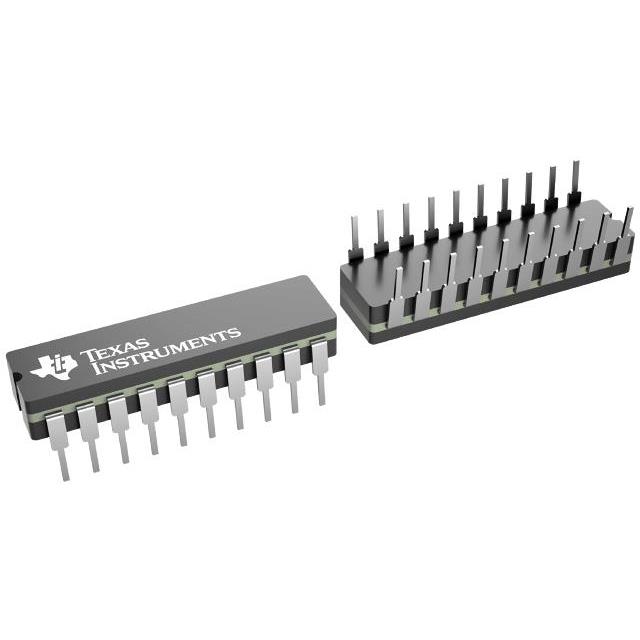
UC1875L
ActiveRESONANT CONTROLLER 500MA 1000KHZ 28-PIN CLLCC TUBE
Deep-Dive with AI
Search across all available documentation for this part.
UC1875L
ActiveRESONANT CONTROLLER 500MA 1000KHZ 28-PIN CLLCC TUBE
Technical Specifications
Parameters and characteristics for this part
| Specification | UC1875L |
|---|---|
| Applications | Resonant Converter Controller |
| Current - Supply | 30 mA |
| Mounting Type | Surface Mount |
| Operating Temperature [Max] | 125 °C |
| Operating Temperature [Min] | -55 °C |
| Package / Case | 28-CLCC |
| Supplier Device Package | 28-LCCC |
| Supplier Device Package [x] | 11.43 |
| Supplier Device Package [y] | 11.43 |
| Voltage - Input [Max] | 5.3 V |
| Voltage - Input [Min] | -3 V |
| Voltage - Supply [Max] | 20 V |
| Voltage - Supply [Min] | 9.25 V |
Pricing
Prices provided here are for design reference only. For realtime values and availability, please visit the distributors directly
| Distributor | Package | Quantity | $ | |
|---|---|---|---|---|
| Texas Instruments | TUBE | 1 | $ 49.83 | |
| 100 | $ 44.29 | |||
| 250 | $ 36.41 | |||
| 1000 | $ 32.57 | |||
Description
General part information
UC1875 Series
The UC1875 family of integrated circuits implements control of a bridge power stage by phase-shifting the switching of one half-bridge with respect to the other, allowing constant frequency pulse-width modulation in combination with resonant, zero-voltage switching for high efficiency performance at high frequencies. This family of circuits may be configured to provide control in either voltage or current mode operation, with a separate over-current shutdown for fast fault protection.
A programmable time delay is provided to insert a dead-time at the turn-on of each output stage. This delay, providing time to allow the resonant switching action, is independently controllable for each output pair (A-B, C-D).
With the oscillator capable of operation at frequencies in excess of 2MHz, overall switching frequencies to 1MHz are practical. In addition to the standard free running mode, with the CLOCKSYNC pin, the user may configure these devices to accept an external clock synchronization signal, or may lock together up to 5 units with the operational frequency determined by the fastest device.
Documents
Technical documentation and resources