


DS1961S-F5+
ActiveIBUTTON 1KB EEPROM WITH SHA-1 ENGINE
Deep-Dive with AI
Search across all available documentation for this part.
DS1961S-F5+
ActiveIBUTTON 1KB EEPROM WITH SHA-1 ENGINE
Deep-Dive with AI
Technical Specifications
Parameters and characteristics for this part
| Specification | DS1961S-F5+ |
|---|---|
| Applications | User/Product Authentication |
| Memory Size | 1 Kbit |
| Memory Type | EEPROM |
| Operating Temperature [Max] | 85 °C |
| Operating Temperature [Min] | -40 C |
Pricing
Prices provided here are for design reference only. For realtime values and availability, please visit the distributors directly
| Distributor | Package | Quantity | $ | Updated |
|---|---|---|---|---|
| Digikey | Bulk | 1 | $ 9.63 | <4d |
| 10 | $ 8.95 | |||
| 25 | $ 8.67 | |||
| 50 | $ 8.46 | |||
| 100 | $ 8.26 | |||
| 300 | $ 7.93 | |||
| 500 | $ 7.79 | |||
| 1000 | $ 7.59 | |||
Description
General part information
DS1961 Series
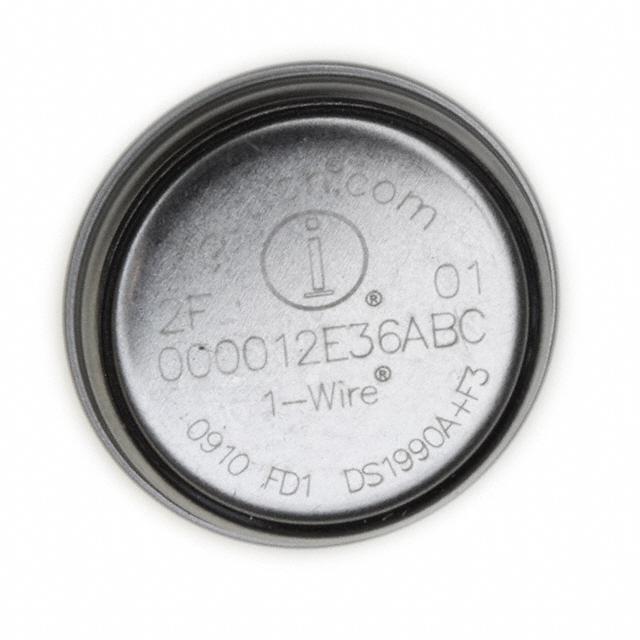
The DS1961S combines 1024 bits of EEPROM, a 64-bit secret, an 8-byte register/control page with up to five user read/write bytes, a 512-bit SHA-1 engine and a fully featured 1-Wire®interface in a rugged iButton®device. Data is transferred serially via the 1-Wire protocol, which requires only a single data lead and a ground return. The DS1961S has an additional memory area called the scratchpad that acts as a buffer when writing to the main memory, the register page or when installing a new secret. Data is first written to the scratchpad from where it can be read back. After the data has been verified, a copy scratchpad command will transfer the data to its final memory location, provided that the DS1961S receives a matching 160-Bit message authentication code (MAC). The computation of the MAC involves the secret and additional data stored in the DS1961S including the device's Identity Register. Only a new secret can be loaded without providing a MAC. The SHA-1 engine can also be activated to compute 160-bit MAC when reading a memory page or to compute a new secret, instead of loading it.The DS1961S understands a unique command "Refresh Scratchpad." Proper use of a refresh sequence (see Writing with Verification section) after a copy scratchpad operation reduces the number of weak bit failures in a touch environment. The refresh sequence also provides a means to restore functionality in a device with bits in a weak state.Each DS1961S has its own 64-bit ROM registration number that is factory lasered into the chip to provide a guaranteed unique identity for absolute traceability. The durable stainless steel package is highly resistant to environmental hazards such as dirt, moisture, and shock. Its compact coin-shaped profile is self-aligning with mating receptacles, allowing the DS1961S to be easily used by human operators. Accessories permit the DS1961S to be mounted on almost any surface including plastic key fobs and photo-ID badges.
Documents
Technical documentation and resources
