Deep-Dive with AI
Search across all available documentation for this part.
Deep-Dive with AI
Technical Specifications
Parameters and characteristics for this part
| Specification | SN65LVDS152DA |
|---|---|
| Data Rate | 200 Mbps |
| Function | Deserializer |
| Input Type | LVDS |
| Mounting Type | Surface Mount |
| Number of Inputs | 3 |
| Number of Outputs | 10 |
| Operating Temperature [Max] | 85 °C |
| Operating Temperature [Min] | -40 °C |
| Output Type | LVDS |
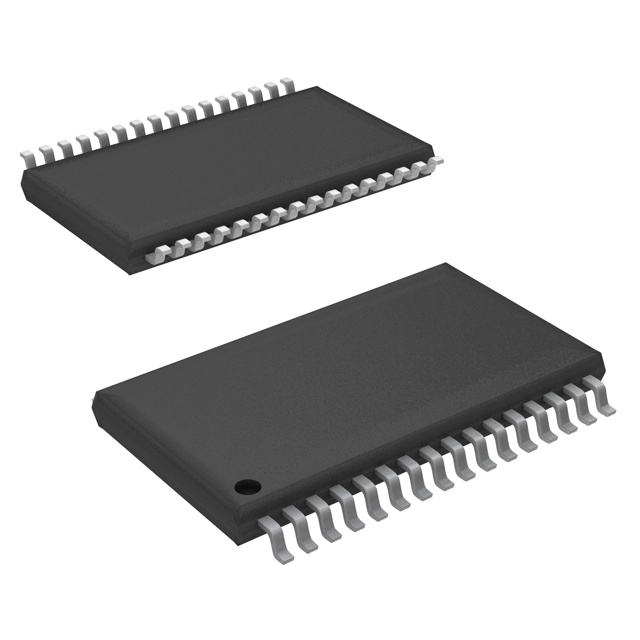
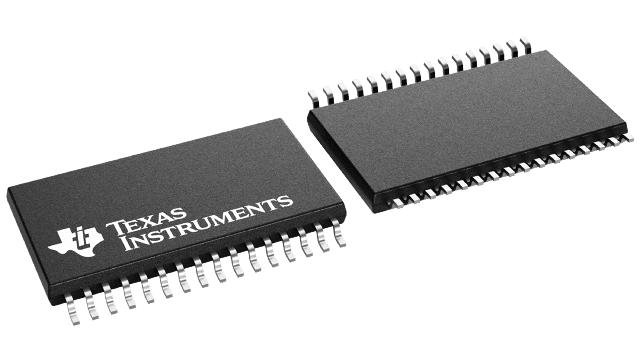
| Package / Case | 32-TSSOP |
| Supplier Device Package | 32-TSSOP |
| Voltage - Supply [Max] | 3.6 V |
| Voltage - Supply [Min] | 3 V |
Pricing
Prices provided here are for design reference only. For realtime values and availability, please visit the distributors directly
| Distributor | Package | Quantity | $ | |
|---|---|---|---|---|
| Digikey | Tube | 1 | $ 9.85 | |
| 10 | $ 8.90 | |||
| 46 | $ 8.49 | |||
| 138 | $ 7.37 | |||
| 276 | $ 7.04 | |||
| 506 | $ 6.42 | |||
| 1012 | $ 5.59 | |||
| Texas Instruments | TUBE | 1 | $ 8.48 | |
| 100 | $ 6.91 | |||
| 250 | $ 5.43 | |||
| 1000 | $ 4.61 | |||
Description
General part information
SN65LVDS152 Series
MuxIt is a family of general-purpose, multiple-chip building blocks for implementing parallel data serializers and deserializers. The system allows for wide parallel data to be transmitted through a reduced number of transmission lines over distances greater than can be achieved with a single-ended (e.g., LVTTL or LVCMOS) data interface. The number of bits multiplexed per transmission line is user selectable, allowing for higher transmission efficiencies than with other existing fixed ratio solutions. MuxIt utilizes the LVDS (TIA/EIA-644-A) low voltage differential signaling technology for communications between the data source and data destination.
The MuxIt family initially includes three devices supporting simplex communications: the SN65LVDS150 phase locked loop frequency multiplier, the SN65LVDS151 serializer-transmitter, and the SN65LVDS152 receiver-deserializer.
The SN65LVDS152 consists of three LVDS differential transmission line receivers, an LVDS differential transmission line driver, a 10-bit serial-in/parallel-out shift register, plus associated input and output buffers. It receives serialized data over an LVDS transmission line link, deserializes (demultiplexes) it, and delivers it on parallel data outputs, DO–0 through DO–9. Data received over the link is clocked at a factor of M times the original parallel data frequency. The multiplexing ratio M, or number of bits per data clock cycle, is programmed with configuration pins (M1 → M5) on the companion SN65LVDS150 MuxIt programmable PLL frequency multiplier. Up to 10 bits of data may be deserialized and output by each SN65LVDS152. Two or more SN65LVDS152 units may be connected in series (cascaded) to accommodate wider parallel data paths for higher serialization values. The range of multiplexing ratio M supported by the SN65LVDS150 MuxIt programmable PLL frequency multiplier is between 4 and 40. shows some of the combinations of LCI and MCI supported by the SN65LVDS150 MuxIt programmable PLL frequency multiplier.
Documents
Technical documentation and resources