TPS65931211RWERQ1
ActiveAUTOMOTIVE 2.8-V TO 5.5-V PMIC WITH 5 BUCKS AND 4 LDOS
Deep-Dive with AI
Search across all available documentation for this part.
TPS65931211RWERQ1
ActiveAUTOMOTIVE 2.8-V TO 5.5-V PMIC WITH 5 BUCKS AND 4 LDOS
Deep-Dive with AI
Technical Specifications
Parameters and characteristics for this part
| Specification | TPS65931211RWERQ1 |
|---|---|
| Current - Supply | 19 mA |
| Grade | Automotive |
| Mounting Type | Wettable Flank, Surface Mount |
| Operating Temperature [Max] | 125 °C |
| Operating Temperature [Min] | -40 °C |
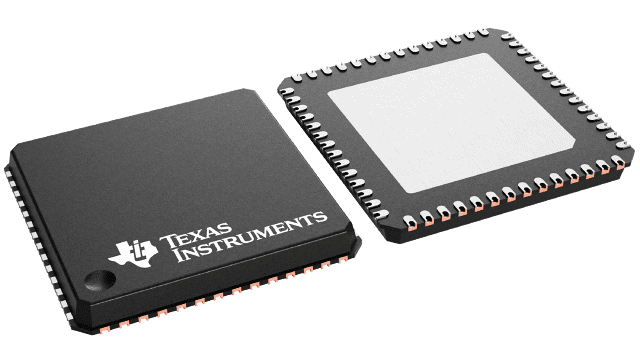
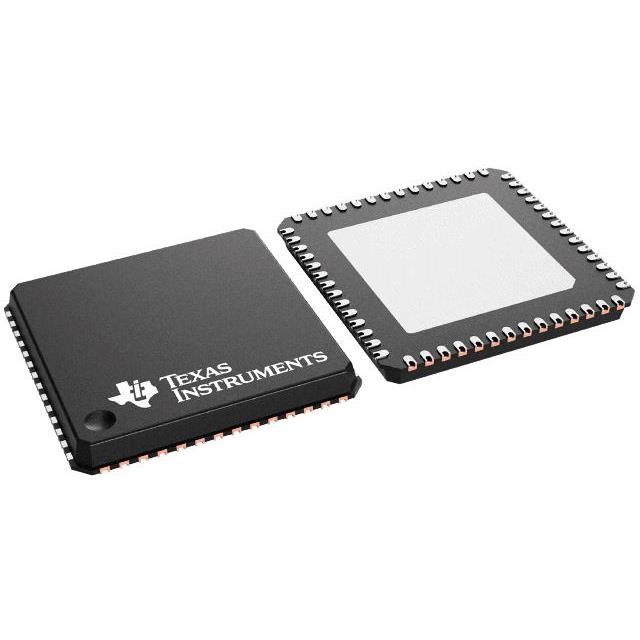
| Package / Case | 56-VFQFN Exposed Pad |
| Qualification | AEC-Q100 |
| Supplier Device Package | 56-VQFNP (8x8) |
Pricing
Prices provided here are for design reference only. For realtime values and availability, please visit the distributors directly
| Distributor | Package | Quantity | $ | |
|---|---|---|---|---|
| Digikey | Cut Tape (CT) | 1 | $ 8.87 | |
| 10 | $ 8.02 | |||
| 25 | $ 7.64 | |||
| 100 | $ 6.64 | |||
| 250 | $ 6.34 | |||
| 500 | $ 5.78 | |||
| 1000 | $ 5.03 | |||
| Digi-Reel® | 1 | $ 8.87 | ||
| 10 | $ 8.02 | |||
| 25 | $ 7.64 | |||
| 100 | $ 6.64 | |||
| 250 | $ 6.34 | |||
| 500 | $ 5.78 | |||
| 1000 | $ 5.03 | |||
| N/A | 1635 | $ 9.66 | ||
| Tape & Reel (TR) | 2000 | $ 4.85 | ||
| Texas Instruments | LARGE T&R | 1 | $ 6.79 | |
| 100 | $ 5.54 | |||
| 250 | $ 4.35 | |||
| 1000 | $ 3.69 | |||
Description
General part information
TPS6593-Q1 Series
The TPS6593-Q1 device provides four flexible multi-phase configurable BUCK regulators with 3.5 A output current per phase, and one additional BUCK regulator with 2 A output current.
All of the BUCK regulators can be synchronized to an internal 2.2-MHz or 4.4-MHz or an external 1-MHz, 2-MHz, or 4-MHz clock signal. To improve the EMC performance, an integrated spread-spectrum modulation can be added to the synchronized BUCK switching clock signal. This clock signal can also be made available to external devices through a GPIO output pin. The device provides four LDOs: three with 500-mA capability, which can be configured as load switches; one with 300-mA capability and low-noise performance.
Non-volatile memory (NVM) is used to control the default power sequences and default configurations, such as output voltage and GPIO configurations. The NVM is pre-programmed to allow start-up without external programming. Most static configurations, stored in the register map of the device, can be changed from the default through SPI or I 2C interfaces to configure the device to meet many different system needs. The NVM contains a bit-integrity-error detection feature (CRC) to stop the power-up sequence if an error is detected, preventing the system from starting in an unknown state.
Documents
Technical documentation and resources