Deep-Dive with AI
Search across all available documentation for this part.
Deep-Dive with AI
Technical Specifications
Parameters and characteristics for this part
| Specification | F28M35E50B1RFPS |
|---|---|
| Connectivity | Ethernet, EBI/EMI, SPI, I2C, SSI, CANbus, UART/USART |
| Core Processor | C28x/ARM® Cortex®-M3 |
| Core Size [custom] | 32-Bit Dual-Core |
| Data Converters | A/D 20x12b |
| Mounting Type | Surface Mount |
| Number of I/O | 64 |
| Operating Temperature [Max] | 125 ¯C |
| Operating Temperature [Min] | -40 °C |
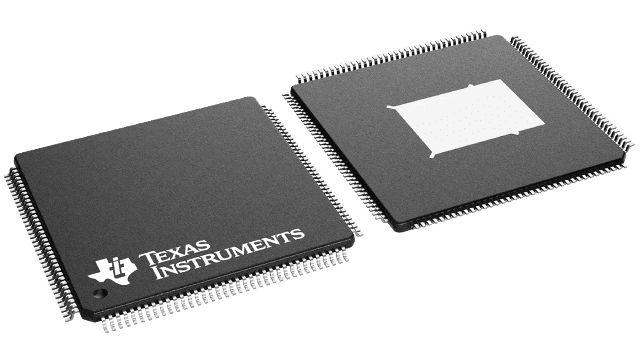
| Package / Case | 144-TQFP Exposed Pad |
| Peripherals | Brown-out Detect/Reset, DMA, POR, WDT, PWM |
| Program Memory Size | 512 KB |
| Program Memory Type | FLASH |
| RAM Size | 72 KB |
| Speed [Max] | 60 MHz |
| Speed [Min] | 60 MHz |
| Supplier Device Package | 144-HTQFP (20x20) |
| Voltage - Supply (Vcc/Vdd) | 1.8 V, 3.3 V |
Pricing
Prices provided here are for design reference only. For realtime values and availability, please visit the distributors directly
| Distributor | Package | Quantity | $ | |
|---|---|---|---|---|
Description
General part information
F28M35H52C-Q1 Series
The Concerto family is a multicore system-on-chip microcontroller unit (MCU) with independent communication and real-time control subsystems. The F28M35x family of devices is the first series in the Concerto family.
The communications subsystem is based on the industry-standard 32-bit Arm Cortex-M3 CPU and features a wide variety of communication peripherals, including Ethernet 1588, USB OTG with PHY, Controller Area Network (CAN), UART, SSI, I2C, and an external interface.
The real-time control subsystem is based on TI’s industry-leading proprietary 32-bit C28x floating-point CPU and features the most flexible and high-precision control peripherals, including ePWMs with fault protection, and encoders and captures—all as implemented by TI’s TMS320C2000™Entry performance MCUsandPremium performance MCUs. In addition, the C28-CPU has been enhanced with the addition of the VCU instruction accelerator that implements efficient Viterbi, Complex Arithmetic, 16-bit FFTs, and CRC algorithms.
Documents
Technical documentation and resources