


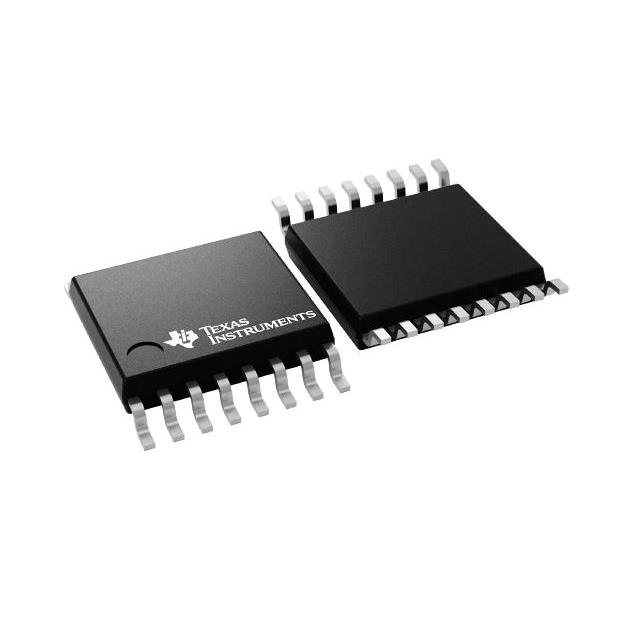
LDC5072EPWTQ1
ObsoleteAUTOMOTIVE INDUCTIVE POSITION SENSOR FRONT END WITH SINE/COSINE INTERFACE
Deep-Dive with AI
Search across all available documentation for this part.
LDC5072EPWTQ1
ObsoleteAUTOMOTIVE INDUCTIVE POSITION SENSOR FRONT END WITH SINE/COSINE INTERFACE
Deep-Dive with AI
Technical Specifications
Parameters and characteristics for this part
| Specification | LDC5072EPWTQ1 |
|---|---|
| null | |
Pricing
Prices provided here are for design reference only. For realtime values and availability, please visit the distributors directly
| Distributor | Package | Quantity | $ | |
|---|---|---|---|---|
| Texas Instruments | SMALL T&R | 1 | $ 4.00 | |
| 100 | $ 3.50 | |||
| 250 | $ 2.46 | |||
| 1000 | $ 1.98 | |||
Description
General part information
LDC5072-Q1 Series
The LDC5072-Q1 IC is an analog front-end for contact-less, inductive position sensors targeted for absolute rotary position in automotive and industrial applications. The LDC5072-Q1 excites a coil that is typically printed on a printed circuit board (PCB). The excitation is coupled back into two sets of receiver coils on the same PCB using a conductive target that is placed in close proximity of the PCB. The conductive target can also be a pattern printed on another PCB. The coil PCB stays stationary and the target moves with the motor, actuator, or valve. The excitation coil generates a secondary voltage on the receiver coils depending on the position of the target relative to the receiver coils. A signal representation of the position is obtained by reading in the voltages from the receiver coils, processing it, and giving analog outputs representing the Sine and Cosine components of the position of the target.
The LDC5072-Q1 IC is an analog front-end for contact-less, inductive position sensors targeted for absolute rotary position in automotive and industrial applications. The LDC5072-Q1 excites a coil that is typically printed on a printed circuit board (PCB). The excitation is coupled back into two sets of receiver coils on the same PCB using a conductive target that is placed in close proximity of the PCB. The conductive target can also be a pattern printed on another PCB. The coil PCB stays stationary and the target moves with the motor, actuator, or valve. The excitation coil generates a secondary voltage on the receiver coils depending on the position of the target relative to the receiver coils. A signal representation of the position is obtained by reading in the voltages from the receiver coils, processing it, and giving analog outputs representing the Sine and Cosine components of the position of the target.
Documents
Technical documentation and resources