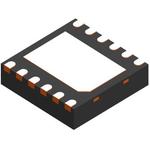
LMR23625CFPDRRR
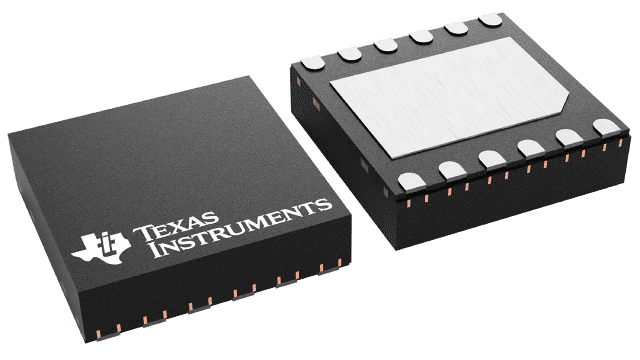
ActiveCONV DC-DC 4.5V TO 36V SYNCHRONOUS STEP DOWN SINGLE-OUT 1V TO 28V 2.5A 12-PIN WSON EP T/R
Deep-Dive with AI
Search across all available documentation for this part.
LMR23625CFPDRRR
ActiveCONV DC-DC 4.5V TO 36V SYNCHRONOUS STEP DOWN SINGLE-OUT 1V TO 28V 2.5A 12-PIN WSON EP T/R
Technical Specifications
Parameters and characteristics for this part
| Specification | LMR23625CFPDRRR |
|---|---|
| Current - Output | 2.5 A |
| Frequency - Switching | 2.1 MHz |
| Function | Step-Down |
| Mounting Type | Wettable Flank, Surface Mount |
| Number of Outputs | 1 |
| Operating Temperature [Max] | 125 ¯C |
| Operating Temperature [Min] | -40 °C |
| Output Configuration | Positive |
| Output Type | Adjustable |
| Package / Case | 12-WFDFN Exposed Pad |
| Supplier Device Package | 12-SON (3x3) |
| Synchronous Rectifier | True |
| Topology | Buck |
| Voltage - Input (Max) [Max] | 36 V |
| Voltage - Input (Min) [Min] | 4.5 V |
| Voltage - Output (Max) | 28 V |
| Voltage - Output (Min/Fixed) | 1 V |
Pricing
Prices provided here are for design reference only. For realtime values and availability, please visit the distributors directly
| Distributor | Package | Quantity | $ | |
|---|---|---|---|---|
| Arrow | N/A | 3000 | $ 1.69 | |
| Digikey | Tape & Reel (TR) | 3000 | $ 1.76 | |
| Texas Instruments | LARGE T&R | 1 | $ 2.64 | |
| 100 | $ 2.31 | |||
| 250 | $ 1.62 | |||
| 1000 | $ 1.31 | |||
Description
General part information
LMR23625-Q1 Series
The LMR23625 SIMPLE SWITCHER is an easy-to-use 36-V, 2.5-A synchronous step-down regulator. With a wide input range from 4 V to 36 V, the device is suitable for various industrial application for power conditioning from unregulated sources. Peak current-mode control is employed to achieve simple control-loop compensation and cycle-by-cycle current limiting. A quiescent current of 75 µA makes it suitable for battery-powered systems. An ultra-low 2 µA shutdown current can further prolong battery life. Internal loop compensation means that the user is free from the tedious task of loop compensation design. This also minimizes the external components. The device has an option for fixed-frequency FPWM mode to achieve small output-voltage ripple at light load. An extended family for HSOIC is available in 1-A (LMR23610) and 3-A (LMR23630) load current options in pin-to-pin compatible packages which allows simple, optimum PCB layout. A precision enable input allows simplification of regulator control and system power sequencing. Protection features include cycle-by-cycle current limit, hiccup-mode short-circuit protection and thermal shutdown due to excessive power dissipation.
space
The LMR23625 SIMPLE SWITCHER is an easy-to-use 36-V, 2.5-A synchronous step-down regulator. With a wide input range from 4 V to 36 V, the device is suitable for various industrial application for power conditioning from unregulated sources. Peak current-mode control is employed to achieve simple control-loop compensation and cycle-by-cycle current limiting. A quiescent current of 75 µA makes it suitable for battery-powered systems. An ultra-low 2 µA shutdown current can further prolong battery life. Internal loop compensation means that the user is free from the tedious task of loop compensation design. This also minimizes the external components. The device has an option for fixed-frequency FPWM mode to achieve small output-voltage ripple at light load. An extended family for HSOIC is available in 1-A (LMR23610) and 3-A (LMR23630) load current options in pin-to-pin compatible packages which allows simple, optimum PCB layout. A precision enable input allows simplification of regulator control and system power sequencing. Protection features include cycle-by-cycle current limit, hiccup-mode short-circuit protection and thermal shutdown due to excessive power dissipation.
Documents
Technical documentation and resources