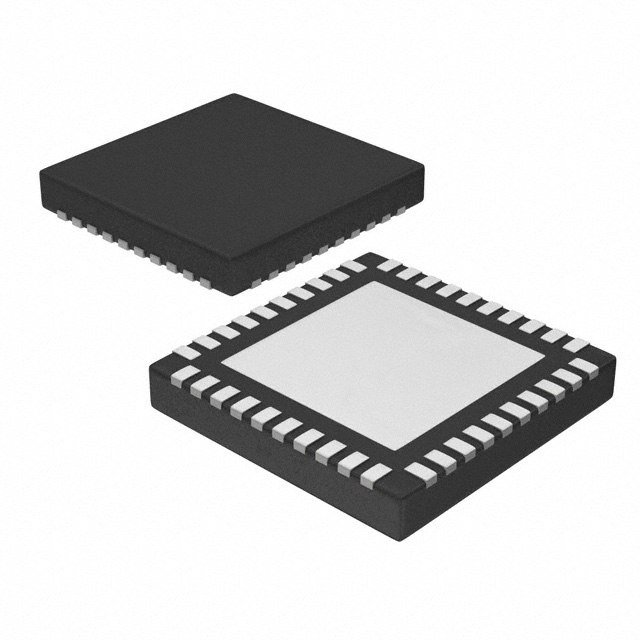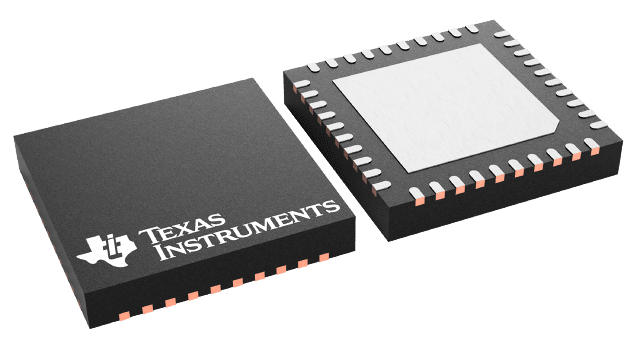
TPS65022RHAR
ActiveBATTERY MANAGEMENT PWR MGMT IC FOR LI-I ON PWRED SYS A 595-TPS65022RHAT
Deep-Dive with AI
Search across all available documentation for this part.
TPS65022RHAR
ActiveBATTERY MANAGEMENT PWR MGMT IC FOR LI-I ON PWRED SYS A 595-TPS65022RHAT
Deep-Dive with AI
Technical Specifications
Parameters and characteristics for this part
| Specification | TPS65022RHAR |
|---|---|
| Battery Chemistry [custom] | Lithium Ion/Polymer |
| Fault Protection | Over Temperature, Under Voltage |
| Function | Power Management |
| Interface | I2C |
| Mounting Type | Surface Mount |
| Number of Cells | 1 |
| Operating Temperature [Max] | 85 C |
| Operating Temperature [Min] | -40 ¯C |
| Package / Case | 40-VFQFN Exposed Pad |
| Supplier Device Package | 40-VQFN (6x6) |
Pricing
Prices provided here are for design reference only. For realtime values and availability, please visit the distributors directly
| Distributor | Package | Quantity | $ | |
|---|---|---|---|---|
| Digikey | Cut Tape (CT) | 1 | $ 7.42 | |
| Digi-Reel® | 1 | $ 7.42 | ||
| N/A | 0 | $ 4.76 | ||
| 14050 | $ 4.76 | |||
| Tape & Reel (TR) | 2500 | $ 4.05 | ||
| Mouser | N/A | 2500 | $ 4.09 | |
| Texas Instruments | LARGE T&R | 1 | $ 5.68 | |
| 100 | $ 4.63 | |||
| 250 | $ 3.64 | |||
| 1000 | $ 3.09 | |||
Description
General part information
TPS65022 Series
The TPS65022 is an integrated Power Management IC for applications powered by one Li-Ion or Li-Polymer cell, and which require multiple power rails. The TPS65022 provides three highly efficient, step-down converters targeted at providing the core voltage, peripheral, I/O and memory rails in a processor based system.
All three step-down converters enter a low-power mode at light load for maximum efficiency across the widest possible range of load currents. The TPS65022 also integrates two general-purpose 200-mA LDO voltage regulators, which are enabled with an external input pin. Each LDO operates with an input voltage range between 1.5 V and 6.5 V, allowing them to be supplied from one of the step-down converters or directly from the battery.
The default output voltage of the LDOs can be digitally set to 4 different voltage combinations using the DEFLDO1 and DEFLDO2 pins.
Documents
Technical documentation and resources