Deep-Dive with AI
Search across all available documentation for this part.
Deep-Dive with AI
Technical Specifications
Parameters and characteristics for this part
| Specification | CD40106BM96E4 |
|---|---|
| Current - Output High, Low [custom] | 3.4 mA |
| Current - Output High, Low [custom] | 3.4 mA |
| Current - Quiescent (Max) [Max] | 4 µA |
| Features | Schmitt Trigger |
| Input Logic Level - High [Max] | 10.8 V |
| Input Logic Level - High [Min] | 3.6 V |
| Input Logic Level - Low [Max] | 4 V |
| Input Logic Level - Low [Min] | 0.9 V |
| Logic Type | Inverter |
| Max Propagation Delay @ V, Max CL | 120 ns |
| Mounting Type | Surface Mount |
| Number of Circuits | 6 |
| Number of Inputs | 1 |
| Operating Temperature [Max] | 125 °C |
| Operating Temperature [Min] | -55 °C |
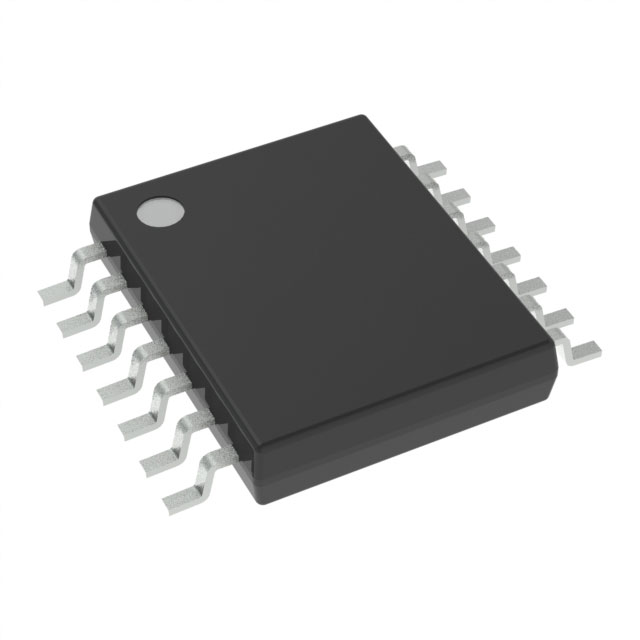
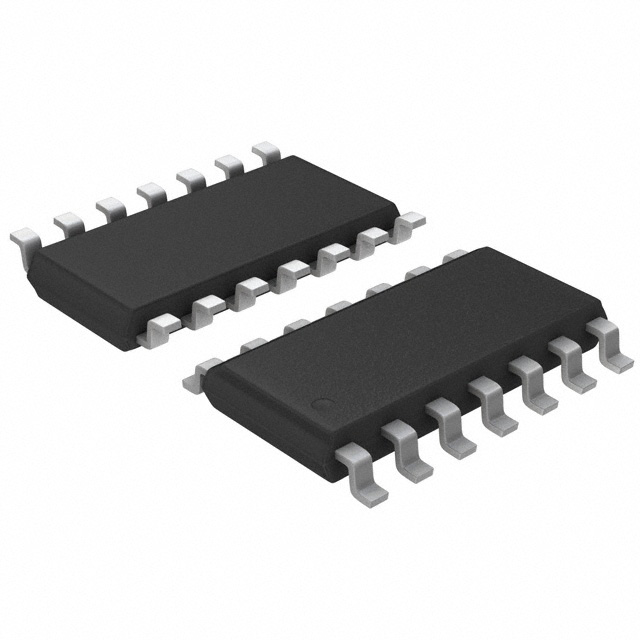
| Package / Case | 14-SOIC |
| Package / Case [x] | 0.154 in |
| Package / Case [y] | 3.9 mm |
| Voltage - Supply [Max] | 18 V |
| Voltage - Supply [Min] | 3 V |
Pricing
Prices provided here are for design reference only. For realtime values and availability, please visit the distributors directly
| Distributor | Package | Quantity | $ | |
|---|---|---|---|---|
| Digikey | Tape & Reel (TR) | 2500 | $ 0.24 | |
| 5000 | $ 0.22 | |||
| 12500 | $ 0.22 | |||
| 25000 | $ 0.21 | |||
Description
General part information
CD40106B Series
The CD40106B device consists of six Schmitt-Trigger inputs. Each circuit functions as an inverter with Schmitt-Trigger input. The trigger switches at different points for positive- and negative-going signals. The difference between the positive-going voltage (VP) and the negative-going voltages (VN) is defined as hysteresis voltage (VH).
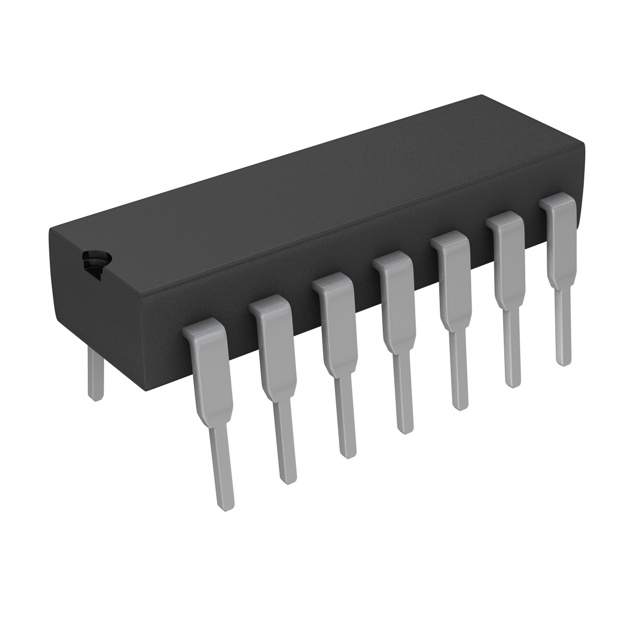
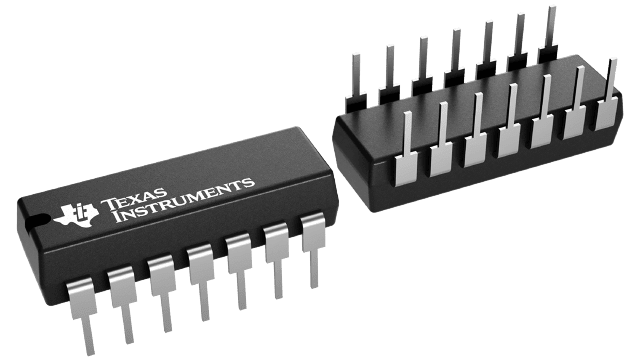
The CD40106B device is supplied in ceramic packaging (J) as well as standard packaging (D, N, NS, PW). All CD40106B devices are rated for –55°C to +125°C ambient temperature operation.
The CD40106B device consists of six Schmitt-Trigger inputs. Each circuit functions as an inverter with Schmitt-Trigger input. The trigger switches at different points for positive- and negative-going signals. The difference between the positive-going voltage (VP) and the negative-going voltages (VN) is defined as hysteresis voltage (VH).
Documents
Technical documentation and resources