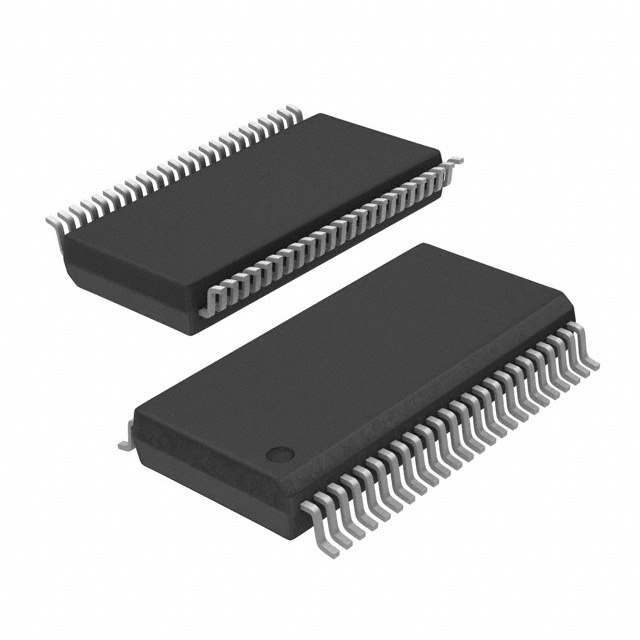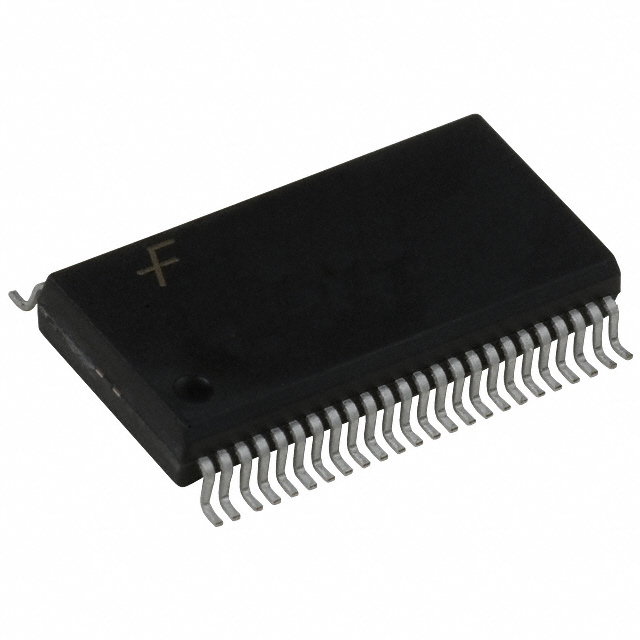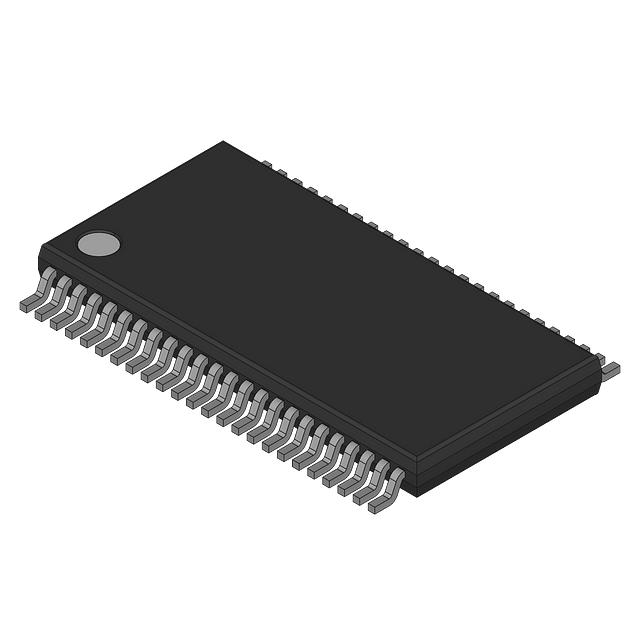
74LCX162374MTDX
ActiveLOW VOLTAGE 16-BIT D-TYPE FLIP-FLOP WITH 5V TOLERANT INPUTS AND OUTPUTS AND 26 OHM SERIES RESISTOR
Deep-Dive with AI
Search across all available documentation for this part.
74LCX162374MTDX
ActiveLOW VOLTAGE 16-BIT D-TYPE FLIP-FLOP WITH 5V TOLERANT INPUTS AND OUTPUTS AND 26 OHM SERIES RESISTOR
Deep-Dive with AI
Technical Specifications
Parameters and characteristics for this part
| Specification | 74LCX162374MTDX |
|---|---|
| Clock Frequency | 170 MHz |
| Current - Output High, Low [custom] | 12 mA |
| Current - Output High, Low [custom] | 12 mA |
| Current - Quiescent (Iq) | 20 çA |
| Function | Standard |
| Input Capacitance | 7 pF |
| Max Propagation Delay @ V, Max CL | 7 ns |
| Mounting Type | Surface Mount |
| Number of Bits per Element | 8 |
| Number of Elements | 2 |
| Operating Temperature [Max] | 85 °C |
| Operating Temperature [Min] | -40 °C |
| Output Type | Tri-State, Non-Inverted |
| Package / Case | 48-TFSOP |
| Package / Case | 0.24 in |
| Package / Case [custom] | 6.1 mm |
| Supplier Device Package | 48-TSSOP |
| Trigger Type | Positive Edge |
| Type | D-Type |
| Voltage - Supply [Max] | 3.6 V |
| Voltage - Supply [Min] | 2 V |
Pricing
Prices provided here are for design reference only. For realtime values and availability, please visit the distributors directly
| Distributor | Package | Quantity | $ | |
|---|---|---|---|---|
| Digikey | Bulk | 237 | $ 1.27 | |
Description
General part information
74LCX162374 Series
The LCX162374 contains sixteen non-inverting D-type flip-flops with 3-STATE outputs and is intended for bus oriented applications. The device is byte controlled. A buffered clock (CP) and Output Enable (OE#) are common to each byte and can be shorted together for full 16-bit operation. The LCX162374 is designed for low voltage (2.5V or 3.3V) VCCapplications with capability of interfacing to a 5V signal environment. The 26ohm series resistor in the output helps reduce output overshoot and undershoot. The LCX162374 is fabricated with an advanced CMOS technology to achieve high speed operation while maintaining CMOS low power dissipation.
Documents
Technical documentation and resources