TPS62125DSGT
Active3V-17V, 300MA BUCK CONVERTER WITH ADJUSTABLE ENABLE THRESHOLD AND HYSTERESIS
Deep-Dive with AI
Search across all available documentation for this part.
TPS62125DSGT
Active3V-17V, 300MA BUCK CONVERTER WITH ADJUSTABLE ENABLE THRESHOLD AND HYSTERESIS
Technical Specifications
Parameters and characteristics for this part
| Specification | TPS62125DSGT |
|---|---|
| Current - Output | 300 mA |
| Frequency - Switching | 1 MHz |
| Function | Step-Down |
| Mounting Type | Surface Mount |
| Number of Outputs | 1 |
| Operating Temperature [Max] | 85 C |
| Operating Temperature [Min] | -40 ¯C |
| Output Configuration | Positive |
| Output Type | Adjustable |
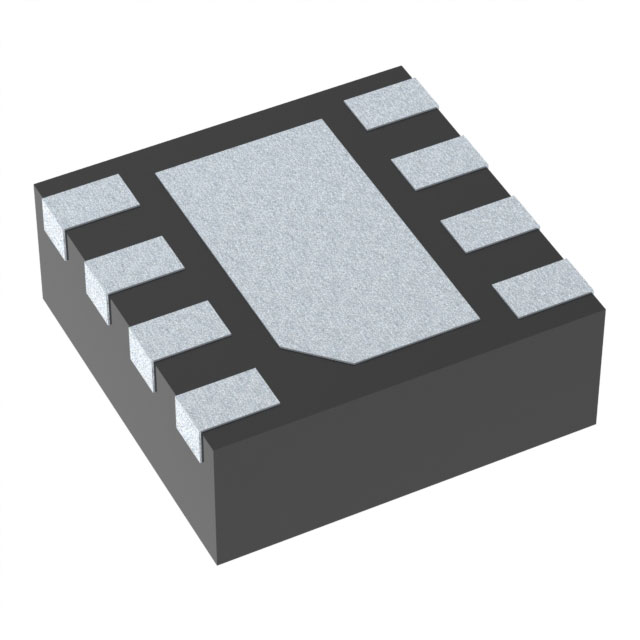
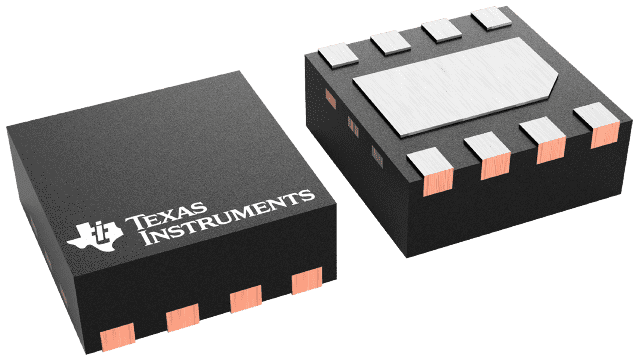
| Package / Case | 8-WFDFN Exposed Pad |
| Supplier Device Package | 8-WSON (2x2) |
| Synchronous Rectifier | True |
| Topology | Buck |
| Voltage - Input (Max) [Max] | 17 V |
| Voltage - Input (Min) [Min] | 3 V |
| Voltage - Output (Max) [Max] | 10 V |
| Voltage - Output (Min/Fixed) | 1.2 V |
Pricing
Prices provided here are for design reference only. For realtime values and availability, please visit the distributors directly
| Distributor | Package | Quantity | $ | |
|---|---|---|---|---|
| Digikey | Cut Tape (CT) | 1 | $ 1.63 | |
| 10 | $ 1.45 | |||
| 25 | $ 1.38 | |||
| 100 | $ 1.13 | |||
| Digi-Reel® | 1 | $ 1.63 | ||
| 10 | $ 1.45 | |||
| 25 | $ 1.38 | |||
| 100 | $ 1.13 | |||
| N/A | 2308 | $ 1.58 | ||
| Tape & Reel (TR) | 250 | $ 1.06 | ||
| 500 | $ 0.94 | |||
| 1250 | $ 0.74 | |||
| 2500 | $ 0.69 | |||
| 6250 | $ 0.66 | |||
| 12500 | $ 0.63 | |||
| Texas Instruments | SMALL T&R | 1 | $ 1.21 | |
| 100 | $ 0.93 | |||
| 250 | $ 0.68 | |||
| 1000 | $ 0.49 | |||
Description
General part information
TPS62125 Series
The TPS62125 device is a high-efficiency synchronous step-down converter optimized for low and ultralow power applications providing up to 300-mA output current. The wide input voltage range of 3 V to 17 V supports 4-cell alkaline and 1- to 4-cell Li-Ion batteries in series configuration as well as 9-V to 15-V powered applications. The device includes a precise low-power enable comparator which can be used as an input supply voltage supervisor (SVS) to address system specific power-up and power-down requirements. The enable comparator consumes only 6-µA quiescent current and features an accurate threshold of 1.2 V typical as well as an adjustable hysteresis. With this feature, the converter can generate a power supply rail by extracting energy from a storage capacitor fed from high impedance sources such as solar panels or current loops. With its DCS-Control scheme the converter provides power-save mode operation to maintain highest efficiency over the entire load current range. At light loads the converter operates in pulse frequency modulation (PFM) mode and transitions seamlessly and automatically in pulse width modulation (PWM) mode at higher load currents. The DCS-Control™ scheme is optimized for low-output ripple voltage in PFM mode in order to reduce output noise to a minimum and features excellent AC load regulation. An open-drain power good output indicates once the output voltage is in regulation.
The TPS62125 device is a high-efficiency synchronous step-down converter optimized for low and ultralow power applications providing up to 300-mA output current. The wide input voltage range of 3 V to 17 V supports 4-cell alkaline and 1- to 4-cell Li-Ion batteries in series configuration as well as 9-V to 15-V powered applications. The device includes a precise low-power enable comparator which can be used as an input supply voltage supervisor (SVS) to address system specific power-up and power-down requirements. The enable comparator consumes only 6-µA quiescent current and features an accurate threshold of 1.2 V typical as well as an adjustable hysteresis. With this feature, the converter can generate a power supply rail by extracting energy from a storage capacitor fed from high impedance sources such as solar panels or current loops. With its DCS-Control scheme the converter provides power-save mode operation to maintain highest efficiency over the entire load current range. At light loads the converter operates in pulse frequency modulation (PFM) mode and transitions seamlessly and automatically in pulse width modulation (PWM) mode at higher load currents. The DCS-Control™ scheme is optimized for low-output ripple voltage in PFM mode in order to reduce output noise to a minimum and features excellent AC load regulation. An open-drain power good output indicates once the output voltage is in regulation.
Documents
Technical documentation and resources