CD4066BPWRG4
Obsolete10-PA ON-STATE LEAKAGE CURRENT, 20-V, 1:1 (SPST), 4-CHANNEL ANALOG SWITCH
Deep-Dive with AI
Search across all available documentation for this part.
CD4066BPWRG4
Obsolete10-PA ON-STATE LEAKAGE CURRENT, 20-V, 1:1 (SPST), 4-CHANNEL ANALOG SWITCH
Deep-Dive with AI
Technical Specifications
Parameters and characteristics for this part
| Specification | CD4066BPWRG4 |
|---|---|
| -3db Bandwidth | 40 MHz |
| Channel Capacitance (CS(off), CD(off)) [custom] | 8 pF |
| Channel Capacitance (CS(off), CD(off)) [custom] | 8 pF |
| Channel-to-Channel Matching (ΔRon) | 5 Ohm |
| Mounting Type | Surface Mount |
| Multiplexer/Demultiplexer Circuit | 1:1 |
| Number of Circuits | 4 |
| On-State Resistance (Max) [Max] | 240 Ohm |
| Operating Temperature [Max] | 125 °C |
| Operating Temperature [Min] | -55 °C |
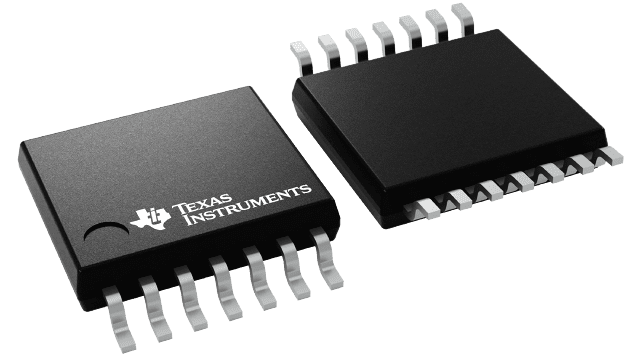
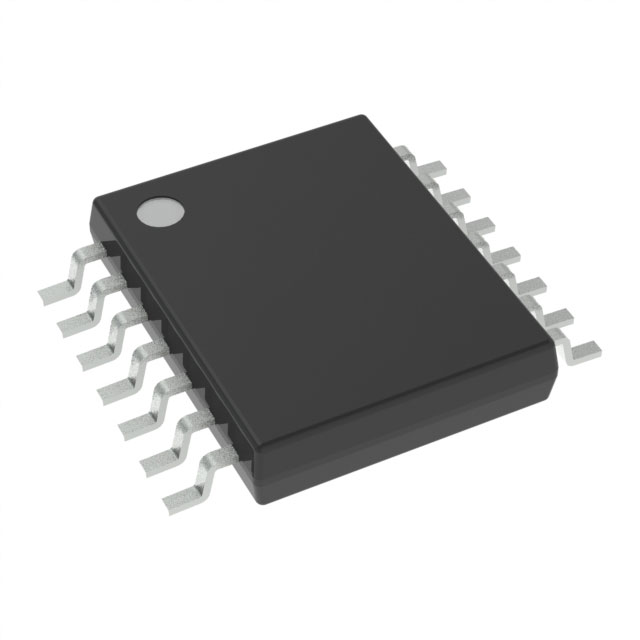
| Package / Case | 14-TSSOP |
| Package / Case [custom] | 0.173 " |
| Package / Case [custom] | 4.4 mm |
| Supplier Device Package | 14-TSSOP |
| Switch Circuit | SPST |
| Voltage - Supply, Single (V+) [Max] | 18 V |
| Voltage - Supply, Single (V+) [Min] | 3 V |
Pricing
Prices provided here are for design reference only. For realtime values and availability, please visit the distributors directly
| Distributor | Package | Quantity | $ | |
|---|---|---|---|---|
| Texas Instruments | LARGE T&R | 1 | $ 0.64 | |
| 100 | $ 0.49 | |||
| 250 | $ 0.36 | |||
| 1000 | $ 0.26 | |||
Description
General part information
CD4066B-MIL Series
The CD4066B-Q1 is a quad bilateral switch intended for the transmission or multiplexing of analog or digital signals. It is pin-for-pin compatible with the CD4016B, but exhibits a much lower on-state resistance. In addition, the on-state resistance is relatively constant over the full signal-input range.
The CD4066B-Q1 consists of four bilateral switches, each with independent controls. Both the p and the n devices in a given switch are biased on or off simultaneously by the control signal. As shown in , the well of the n-channel device on each switch is tied to either the input (when the switch is on) or to VSS (when the switch is off). This configuration eliminates the variation of the switch-transistor threshold voltage with input signal and, thus, keeps the on-state resistance low over the full operating-signal range.
The advantages over single-channel switches include peak input-signal voltage swings equal to the full supply voltage and more constant on-state impedance over the input-signal range. However, for sample-and-hold applications, the CD4016B is recommended.
Documents
Technical documentation and resources