


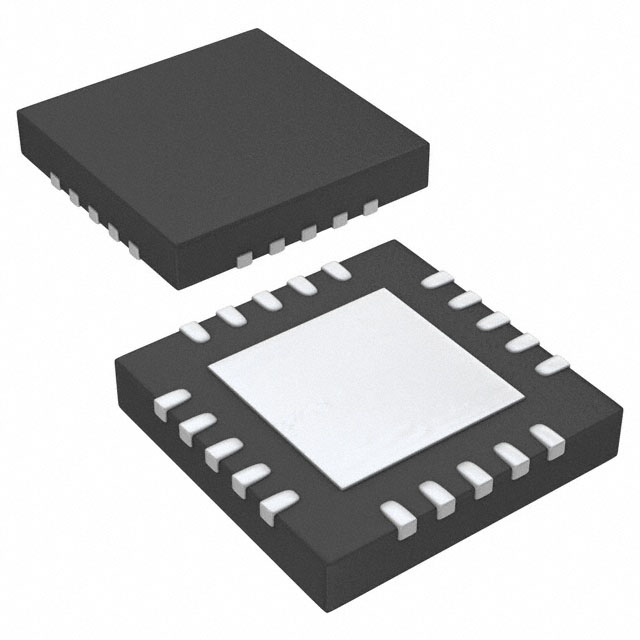
TUSS4440TRTJT
ObsoleteTRANSFORMER DRIVE ULTRASONIC SENSOR IC WITH LOGARITHMIC AMPLIFIER
Deep-Dive with AI
Search across all available documentation for this part.
TUSS4440TRTJT
ObsoleteTRANSFORMER DRIVE ULTRASONIC SENSOR IC WITH LOGARITHMIC AMPLIFIER
Deep-Dive with AI
Technical Specifications
Parameters and characteristics for this part
| Specification | TUSS4440TRTJT |
|---|---|
| Current - Supply | 13 mA |
| Input Type | Digital, Analog |
| Mounting Type | Surface Mount |
| Operating Temperature [Max] | 105 ¯C |
| Operating Temperature [Min] | -25 °C |
| Output Type | SPI |
| Package / Case | 20-WFQFN Exposed Pad |
| Supplier Device Package | 20-QFN (4x4) |
| Type | Sensor Interface |
Pricing
Prices provided here are for design reference only. For realtime values and availability, please visit the distributors directly
| Distributor | Package | Quantity | $ | |
|---|---|---|---|---|
| Digikey | Cut Tape (CT) | 1 | $ 8.56 | |
| 10 | $ 6.85 | |||
| 25 | $ 6.33 | |||
| 100 | $ 5.48 | |||
| Digi-Reel® | 1 | $ 9.36 | ||
| 5 | $ 7.89 | |||
| 10 | $ 7.33 | |||
| 25 | $ 6.66 | |||
| 50 | $ 6.19 | |||
| 100 | $ 5.75 | |||
| N/A | 155 | $ 7.06 | ||
| Tape & Reel (TR) | 250 | $ 5.31 | ||
| Texas Instruments | SMALL T&R | 1 | $ 6.24 | |
| 100 | $ 5.08 | |||
| 250 | $ 4.00 | |||
| 1000 | $ 3.39 | |||
Description
General part information
TUSS4440 Series
The TUSS4440 is a highly integrated transformer drive analog front end for industrial ultrasonic applications. The transducer drive stage consists of low-side complementary drivers that can be configured to drive an ultrasonic transducer through a step-up transformer. The device delivers constant current to the primary side of the transformer.
The receive signal path includes a low-noise linear amplifier, a bandpass filter, followed by a logarithmic gain amplifier for input dependent amplification. The logarithmic amplifier allows for high sensitivity for weak echo signals and offers excellent input dynamic range over full range of reflected echoes.
The drivers can be controlled directly through the microcontroller for complete customization of the burst signal, or can be programmed through SPI with a customizable burst length. The TUSS4440 can support a single transducer to send and receive burst signals, or can set up two transducers to split the send and receive functions.
Documents
Technical documentation and resources