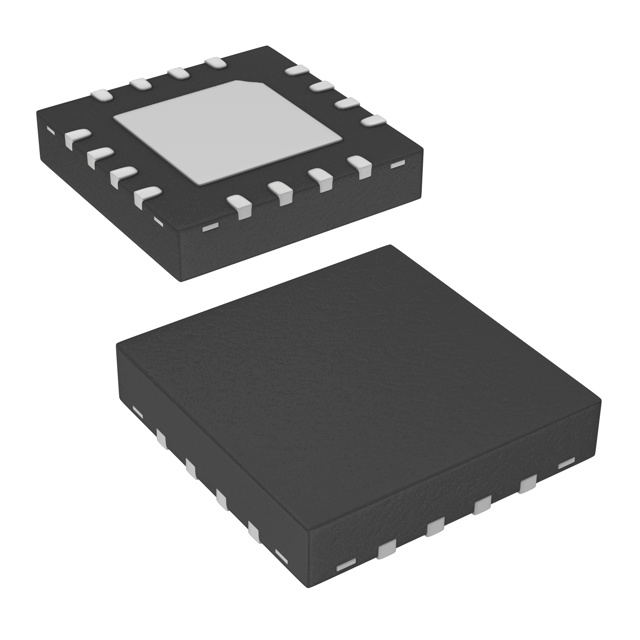
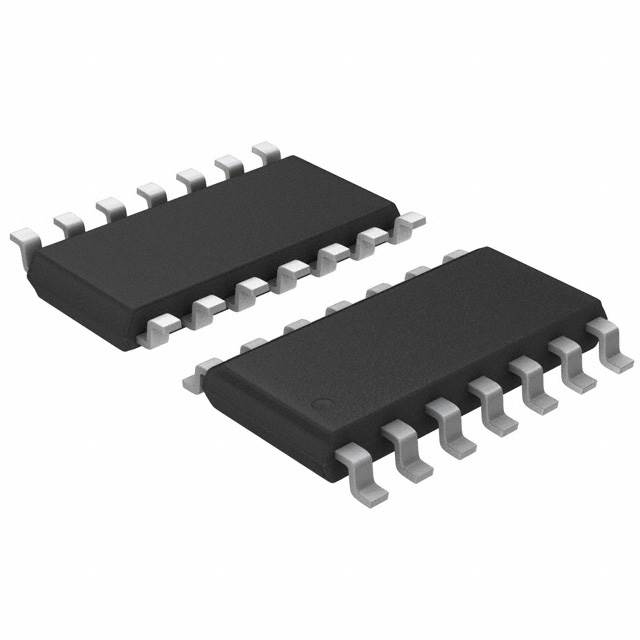
ISL6526EVAL2
ActiveEVALUATION BOARD QFN ISL6526
Deep-Dive with AI
Search across all available documentation for this part.
ISL6526EVAL2
ActiveEVALUATION BOARD QFN ISL6526
Deep-Dive with AI
Technical Specifications
Parameters and characteristics for this part
| Specification | ISL6526EVAL2 |
|---|---|
| Board Type | Fully Populated |
| Current - Output | 5 A |
| Frequency - Switching | 300 kHz |
| Main Purpose | DC/DC, Step Down |
| Outputs and Type | Non-Isolated |
| Outputs and Type | 1 |
| Regulator Topology | Buck |
| Supplied Contents | Board(s) |
| Utilized IC / Part | ISL6526 |
| Voltage - Input [Max] | 5 V |
| Voltage - Input [Min] | 3.3 V |
| Voltage - Output | 2.5 V |
Pricing
Prices provided here are for design reference only. For realtime values and availability, please visit the distributors directly
| Distributor | Package | Quantity | $ | |
|---|---|---|---|---|
| Digikey | Box | 1 | $ 63.12 | |
Description
General part information
ISL6526A Series
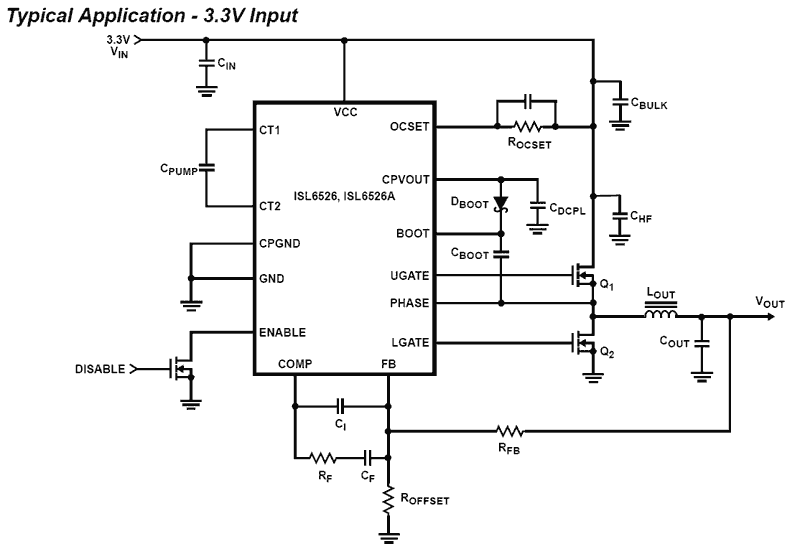
The ISL6526, ISL6526A make simple work out of implementing a complete control and protection scheme for a DC/DC stepdown converter. Designed to drive N-Channel MOSFETs in a synchronous buck topology, the ISL6526, ISL6526A integrate the control, output adjustment, monitoring and protection functions into a single package. The ISL6526, ISL6526A provide simple, single feedback loop, voltage-mode control with fast transient response. The output voltage can be precisely regulated to as low as 0. 8V, with a maximum tolerance of ±1. 5% over-temperature and line voltage variations. A fixed frequency oscillator reduces design complexity, while balancing typical application cost and efficiency. The error amplifier features a 15MHz gain-bandwidth product and 6V/µs slew rate which enables high converter bandwidth for fast transient performance. The resulting PWM duty cycles range from 0% to 100%. Protection from overcurrent conditions is provided by monitoring the rDS(ON)of the upper MOSFET to inhibit PWM operation appropriately. This approach simplifies the implementation and improves efficiency by eliminating the need for a current sense resistor.
Documents
Technical documentation and resources