


Deep-Dive with AI
Search across all available documentation for this part.
Deep-Dive with AI
Technical Specifications
Parameters and characteristics for this part
| Specification | SN65HVD101RGBR |
|---|---|
| Mounting Type | Surface Mount |
| Operating Temperature [Max] | 105 ░C |
| Operating Temperature [Min] | -40 °C |
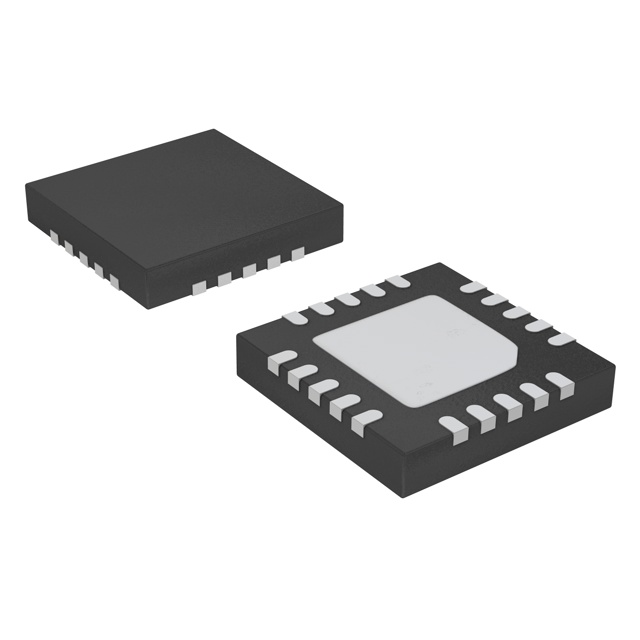
| Package / Case | 20-VFQFN Exposed Pad |
| Protocol | IO-Link |
| Receiver Hysteresis | 1 V |
| Supplier Device Package | 20-VQFN (3.5x4) |
| Type | Transceiver |
| Voltage - Supply [Max] | 3.6 V, 5.5 V |
| Voltage - Supply [Min] | 4.5 V, 3 V |
Pricing
Prices provided here are for design reference only. For realtime values and availability, please visit the distributors directly
| Distributor | Package | Quantity | $ | |
|---|---|---|---|---|
| Digikey | Cut Tape (CT) | 1 | $ 5.70 | |
| 10 | $ 5.12 | |||
| 25 | $ 4.84 | |||
| 100 | $ 4.20 | |||
| 250 | $ 3.98 | |||
| 500 | $ 3.57 | |||
| Digi-Reel® | 1 | $ 5.70 | ||
| 10 | $ 5.12 | |||
| 25 | $ 4.84 | |||
| 100 | $ 4.20 | |||
| 250 | $ 3.98 | |||
| 500 | $ 3.57 | |||
| Tape & Reel (TR) | 1000 | $ 2.83 | ||
| 2000 | $ 2.70 | |||
| 3000 | $ 2.66 | |||
| Texas Instruments | LARGE T&R | 1 | $ 3.92 | |
| 100 | $ 3.19 | |||
| 250 | $ 2.51 | |||
| 1000 | $ 2.13 | |||
Description
General part information
SN65HVD101 Series
The SN65HVD101 and ‘HVD102 IO-Link PHYs implement the IO-Link interface for industrial point-to-point communication. When the device is connected to an IO-Link master through a 3-wire interface, the master can initiate communication and exchange data with the remote node while the SN65HVD10X acts as a complete physical layer for the communication.
The IO-Link driver output (CQ) can be used in push-pull, high-side, or low-side configurations using the EN and TX input pins. The PHY receiver converts the 24-V IO-Link signal on the CQ pin to standard logic levels on the RX pin. A simple parallel interface is used to receive and transmit data and status information between the PHY and the local controller.
The SN65HVD101 and ’HVD102 implement protection features for overcurrent, overvoltage and overtemperature conditions. The IO-Link driver current limit can be set using an external resistor. If a short-circuit current fault occurs, the driver outputs are internally limited, and the PHY generates an error signal (SC). These devices also implement an overtemperature shutdown feature that protects the device from high-temperature faults.
Documents
Technical documentation and resources