TAS5701PAP
Active20-W STEREO, 0- TO 21-V SUPPLY, DIGITAL INPUT, OPEN LOOP CLASS-D AUDIO AMPLIFIER W/ H/W CONTROL
Deep-Dive with AI
Search across all available documentation for this part.
TAS5701PAP
Active20-W STEREO, 0- TO 21-V SUPPLY, DIGITAL INPUT, OPEN LOOP CLASS-D AUDIO AMPLIFIER W/ H/W CONTROL
Technical Specifications
Parameters and characteristics for this part
| Specification | TAS5701PAP |
|---|---|
| Features | Volume Control, Short-Circuit and Thermal Protection, Digital Inputs, Depop, Mute, I2S, PWM, Shutdown |
| Max Output Power x Channels @ Load | 20 W, 8 Ohm, 2 |
| Mounting Type | Surface Mount |
| Operating Temperature [Max] | 85 C |
| Operating Temperature [Min] | 0 °C |
| Output Type | 2-Channel (Stereo) |
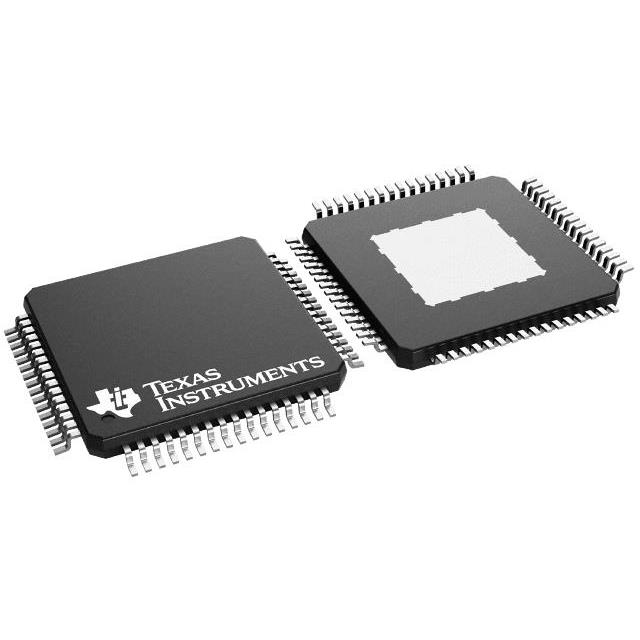
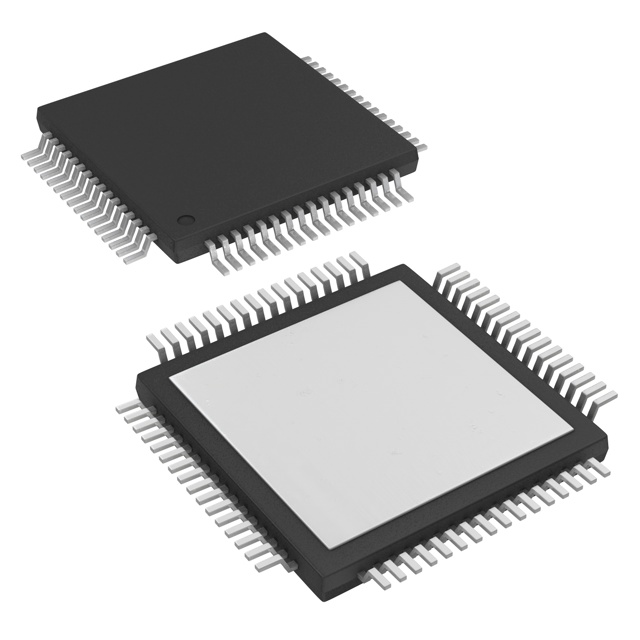
| Package / Case | 64-PowerTQFP |
| Supplier Device Package | 64-HTQFP (10x10) |
| Type | Class D |
| Voltage - Supply [Max] | 13.2 V |
| Voltage - Supply [Min] | 10.8 VDC |
Pricing
Prices provided here are for design reference only. For realtime values and availability, please visit the distributors directly
| Distributor | Package | Quantity | $ | |
|---|---|---|---|---|
| Digikey | Tray | 160 | $ 9.58 | |
| Texas Instruments | JEDEC TRAY (5+1) | 1 | $ 10.71 | |
| 100 | $ 8.73 | |||
| 250 | $ 6.86 | |||
| 1000 | $ 5.82 | |||
Description
General part information
TAS5701 Series
The TAS5701 is a 20-W efficient, digital audio power amplifier for driving stereo bridge-tied speakers. Two serial data inputs support up to 3 discrete audio channels. The SDIN1 input is routed to the internal left and right outputs. The SDIN2 input is dedicated to the SUB_PWM± outputs.
The TAS5701 is a clock slave-only device receiving clocks from external sources. The TAS5701 operates at a 384-kHz switching rate for 32-, 48-, 96-, and 192-kHz data and 352.8-kHz switching rate 44.1-,88.2-, and 176.4-kHz data. The 8× oversampling combined with the fourth-order noise shaper provides a flat noise floor and excellent dynamic range from 20 Hz to 20 kHz.
The TAS5701 is a 20-W efficient, digital audio power amplifier for driving stereo bridge-tied speakers. Two serial data inputs support up to 3 discrete audio channels. The SDIN1 input is routed to the internal left and right outputs. The SDIN2 input is dedicated to the SUB_PWM± outputs.
Documents
Technical documentation and resources