TLV3604DCKT
Active800-PS HIGH-SPEED RAIL-RAIL INPUT COMPARATOR WITH LVDS OUTPUTS
Deep-Dive with AI
Search across all available documentation for this part.
TLV3604DCKT
Active800-PS HIGH-SPEED RAIL-RAIL INPUT COMPARATOR WITH LVDS OUTPUTS
Technical Specifications
Parameters and characteristics for this part
| Specification | TLV3604DCKT |
|---|---|
| CMRR, PSRR (Typ) | 80 dB |
| CMRR, PSRR (Typ) | 80 dB |
| Current - Input Bias (Max) | 5 µA |
| Hysteresis | 60 mV |
| Mounting Type | Surface Mount |
| Number of Elements | 1 |
| Operating Temperature [Max] | 125 °C |
| Operating Temperature [Min] | -40 °C |
| Output Type | LVDS |
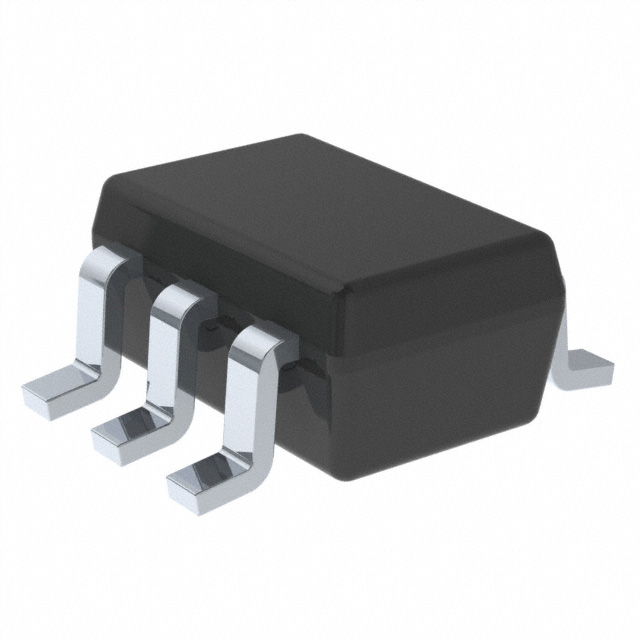
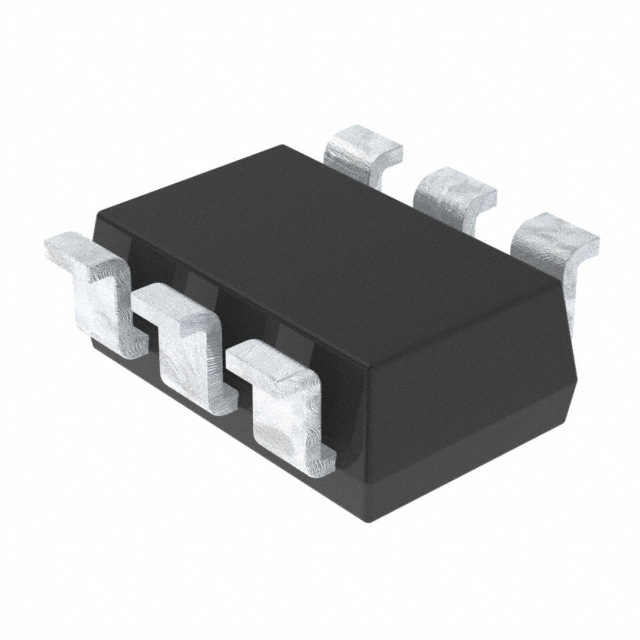
| Package / Case | 6-TSSOP, SC-88, SOT-363 |
| Propagation Delay (Max) [Max] | 800 ps |
| Supplier Device Package | SC-70-6 |
| Type | General Purpose |
| Voltage - Input Offset (Max) | 5 mV |
| Voltage - Supply, Single/Dual (±) [Max] | 5.5 V |
| Voltage - Supply, Single/Dual (±) [Min] | 2.4 V |
Pricing
Prices provided here are for design reference only. For realtime values and availability, please visit the distributors directly
| Distributor | Package | Quantity | $ | |
|---|---|---|---|---|
| Digikey | Tape & Reel (TR) | 250 | $ 3.06 | |
| 500 | $ 2.88 | |||
| 750 | $ 2.79 | |||
| 1250 | $ 2.68 | |||
| 1750 | $ 2.62 | |||
| 2500 | $ 2.56 | |||
| Texas Instruments | SMALL T&R | 1 | $ 5.28 | |
| 100 | $ 4.63 | |||
| 250 | $ 3.25 | |||
| 1000 | $ 2.62 | |||
Description
General part information
TLV3604 Series
The TLV3604, TLV3605 (single channel), and TLV3607 (dual channel) are 800ps, high-speed comparators with LVDS outputs and rail-to-rail inputs. These features, along with an operating voltage range of 2.4V to 5.5V and a high toggle frequency of 3Gbps, make them well suited for LIDAR, clock and data recovery applications, and test and measurement systems.
Likewise, the TLV3604, TLV3605 and TLV3607 have strong input overdrive performance of 350ps and are able to detect narrow pulse widths of just 600ps. This combination of low variation in propagation delay due to input overdrive and the ability to detect narrow pulses improve system performance and extend distance range in Time-of-Flight (ToF) applications.
The Low-Voltage-Differential-Signal (LVDS) output of the TLV3604, TLV3605, and TLV3607 also helps increase data throughput and optimizes power consumption. The complementary outputs reduce EMI by suppressing common mode noise on each output. The LVDS output is designed to drive and interface directly with downstream devices that accept a standard LVDS input, such as high-speed FPGAs and CPUs.
Documents
Technical documentation and resources