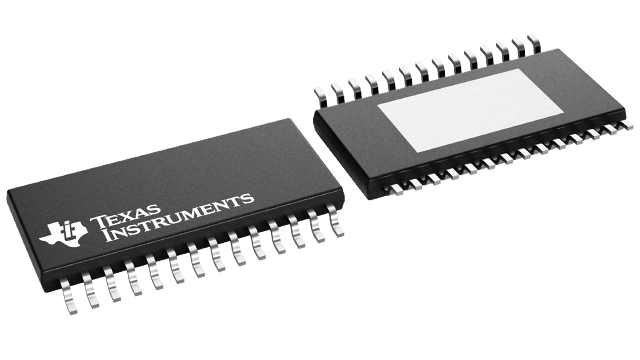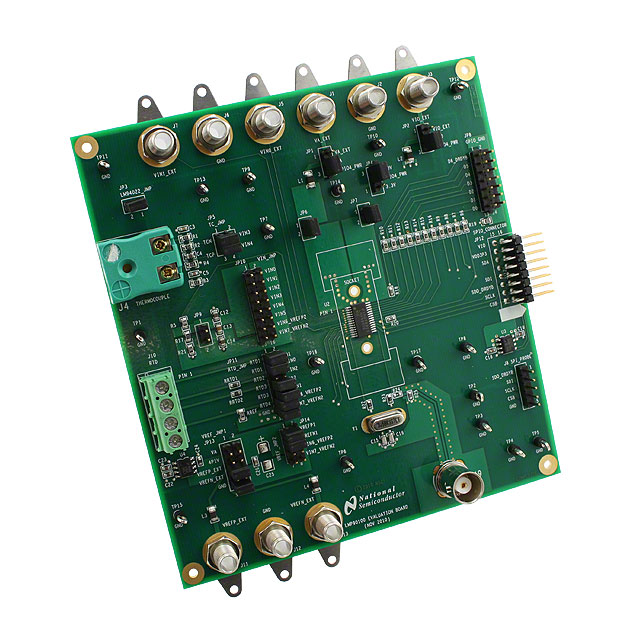
LMP90100EB/NOPB
ObsoleteEVAL BOARD FOR LMP90100
Deep-Dive with AI
Search across all available documentation for this part.
LMP90100EB/NOPB
ObsoleteEVAL BOARD FOR LMP90100
Deep-Dive with AI
Technical Specifications
Parameters and characteristics for this part
| Specification | LMP90100EB/NOPB |
|---|---|
| Embedded | False |
| Function | Analog Front End (AFE) |
| Primary Attributes | 8 Programmable Output Data Rates Per Channel |
| Secondary Attributes | SPI Interface(s) |
| Supplied Contents | Board(s) |
| Type | Interface |
| Utilized IC / Part | LMP90100 |
Pricing
Prices provided here are for design reference only. For realtime values and availability, please visit the distributors directly
| Distributor | Package | Quantity | $ | |
|---|---|---|---|---|
Description
General part information
LMP90100 Series
The LMP90xxx is a highly integrated, multichannel, low-power, 24-bit Sensor AFEs. The devices features a precision, 24-bit Sigma-Delta analog-to-digital converter (ADC) with a low-noise programmable gain amplifier and a fully differential high-impedance analog input multiplexer. A true continuous background calibration feature allows calibration at all gains and output data rates without interrupting the signal path. The background calibration feature essentially eliminates gain and offset errors across temperature and time, providing measurement accuracy without sacrificing speed and power consumption.
Another feature of the LMP90100/LMP90099/LMP90098/LMP90097 is continuous background sensor diagnostics, allowing the detection of open and short-circuit conditions and out-of-range signals, without requiring user intervention, resulting in enhanced system reliability.
Two sets of independent external reference voltage pins allow multiple ratiometric measurements. In addition, two matched programmable current sources are available in the LMP90100/LMP90098 to excite external sensors such as resistive temperature detectors and bridge sensors. Furthermore, seven GPIO pins are provided for interfacing to external LEDs and switches to simplify control across an isolation barrier.
Documents
Technical documentation and resources