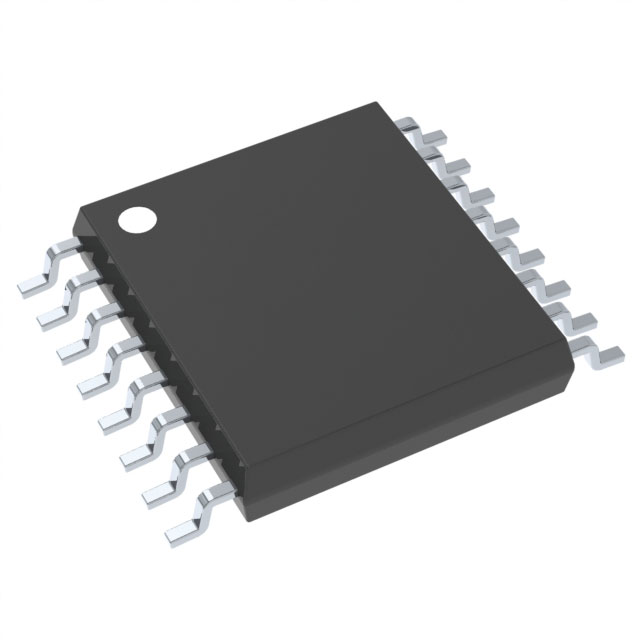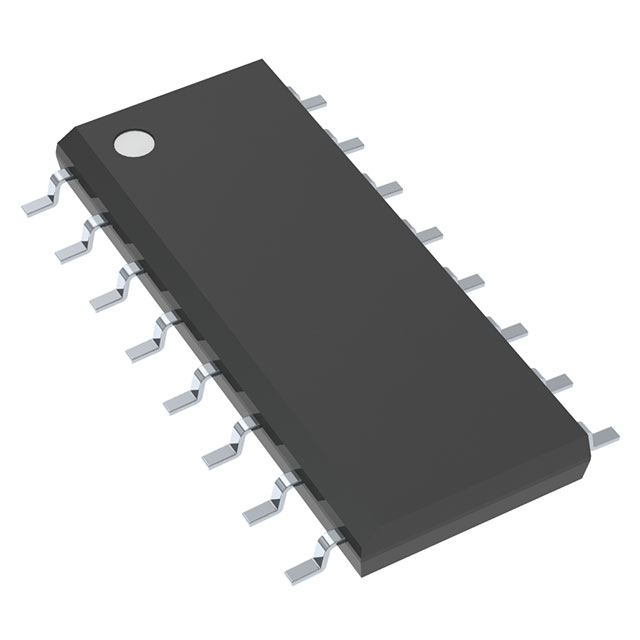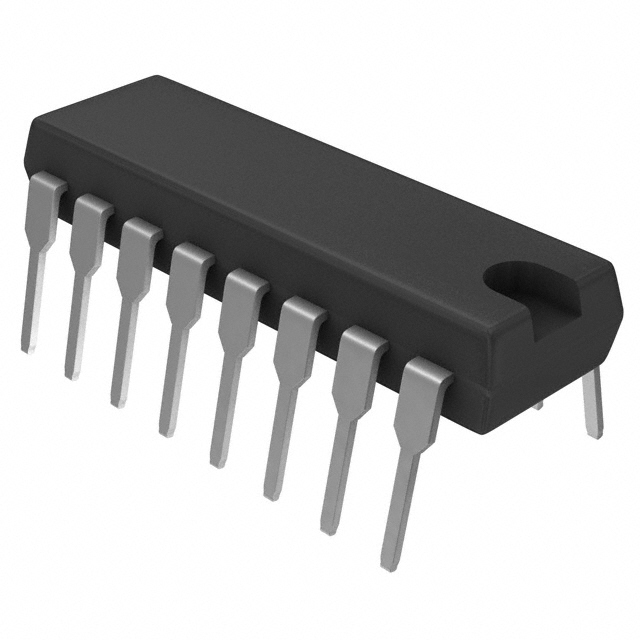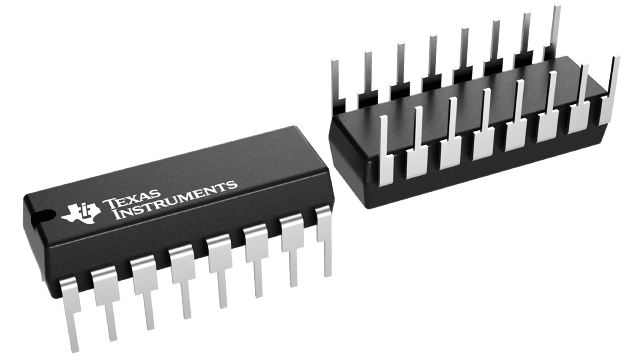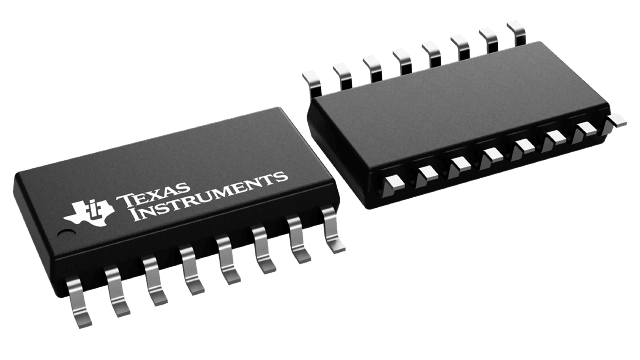
CD74HC195NSR
ActiveHIGH SPEED CMOS LOGIC 4-BIT PARALLEL ACCESS REGISTER
Deep-Dive with AI
Search across all available documentation for this part.
CD74HC195NSR
ActiveHIGH SPEED CMOS LOGIC 4-BIT PARALLEL ACCESS REGISTER
Deep-Dive with AI
Technical Specifications
Parameters and characteristics for this part
| Specification | CD74HC195NSR |
|---|---|
| Function | Universal |
| Logic Type | Register, Bidirectional |
| Mounting Type | Surface Mount |
| Number of Bits per Element | 4 |
| Number of Elements | 1 |
| Operating Temperature [Max] | 125 °C |
| Operating Temperature [Min] | -55 °C |
| Output Type | Complementary |
| Package / Case | 0.209 " |
| Package / Case | 16-SOIC |
| Package / Case | 5.3 mm |
| Supplier Device Package | 16-SO |
| Voltage - Supply [Max] | 6 V |
| Voltage - Supply [Min] | 2 V |
Pricing
Prices provided here are for design reference only. For realtime values and availability, please visit the distributors directly
| Distributor | Package | Quantity | $ | |
|---|---|---|---|---|
| Digikey | Tape & Reel (TR) | 2000 | $ 0.43 | |
| 6000 | $ 0.41 | |||
| 10000 | $ 0.40 | |||
| Texas Instruments | LARGE T&R | 1 | $ 0.83 | |
| 100 | $ 0.64 | |||
| 250 | $ 0.47 | |||
| 1000 | $ 0.34 | |||
Description
General part information
CD74HC195 Series
The device is useful in a wide variety of shifting, counting and storage applications. It performs serial, parallel, serial to parallel, or parallel to serial data transfers at very high speeds.
The two modes of operation, shift right (Q0-Q1) and parallel load, are controlled by the state of the Parallel Enable (PE)\ input. Serial data enters the first flip-flop (Q0) via the J and K\ inputs when the PE\ input is high, and is shifted one bit in the direction Q0-Q1-Q2-Q3following each Low to High clock transition. The J and K\ inputs provide the flexibility of the JK-type input for special applications and by tying the two pins together, the simple D-type input for general applications. The device appears as four common-clocked D flip-flops when the PE\ input is Low. After the Low to High clock transition, data on the parallel inputs (D0-D3) is transferred to the respective Q0-Q3outputs. Shift left operation (Q3-Q2) can be achieved by tying the Qnoutputs to the Dn-1 inputs and holding the PE\ input low.
All parallel and serial data transfers are synchronous, occurring after each Low to High clock transition. The ’HC195 series utilizes edge triggering; therefore, there is no restriction on the activity of the J, K\, Pn and PE\ inputs for logic operations, other than set-up and hold time requirements. A Low on the asynchronous Master Reset (MR)\ input sets all Q outputs Low, independent of any other input condition.
Documents
Technical documentation and resources