74LCXH16244MTDX
ObsoleteLOW VOLTAGE 16-BIT BUFFER/LINE DRIVER WITH BUSHOLD
Deep-Dive with AI
Search across all available documentation for this part.
74LCXH16244MTDX
ObsoleteLOW VOLTAGE 16-BIT BUFFER/LINE DRIVER WITH BUSHOLD
Deep-Dive with AI
Technical Specifications
Parameters and characteristics for this part
| Specification | 74LCXH16244MTDX |
|---|---|
| Current - Output High, Low | 24 mA |
| Logic Type | Buffer, Non-Inverting |
| Mounting Type | Surface Mount |
| Number of Bits per Element | 4 |
| Number of Elements | 4 |
| Operating Temperature [Max] | 85 °C |
| Operating Temperature [Min] | -40 °C |
| Output Type | 3-State |
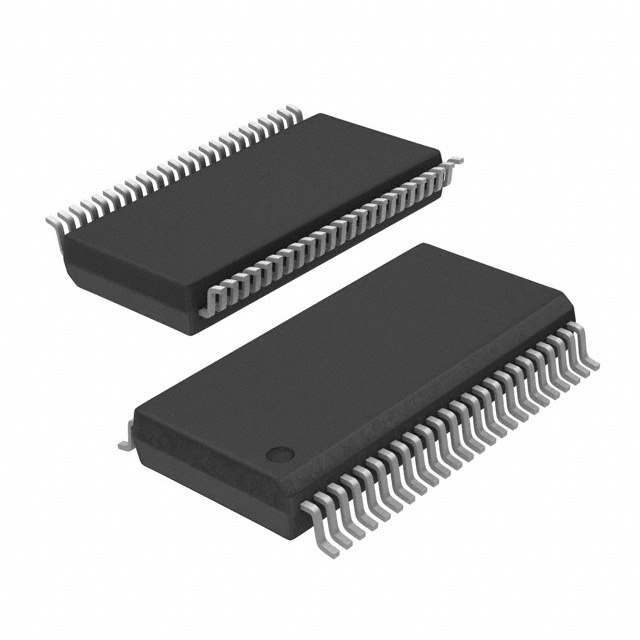
| Package / Case | 48-TFSOP |
| Package / Case | 0.24 in |
| Package / Case [custom] | 6.1 mm |
| Supplier Device Package | 48-TSSOP |
| Voltage - Supply [Max] | 3.6 V |
| Voltage - Supply [Min] | 2 V |
Pricing
Prices provided here are for design reference only. For realtime values and availability, please visit the distributors directly
| Distributor | Package | Quantity | $ | |
|---|---|---|---|---|
| Digikey | Cut Tape (CT) | 1 | $ 1.68 | |
| 10 | $ 1.51 | |||
| 25 | $ 1.42 | |||
| 100 | $ 1.14 | |||
| 250 | $ 1.00 | |||
| 500 | $ 0.97 | |||
| Digi-Reel® | 1 | $ 1.68 | ||
| 10 | $ 1.51 | |||
| 25 | $ 1.42 | |||
| 100 | $ 1.14 | |||
| 250 | $ 1.00 | |||
| 500 | $ 0.97 | |||
| Tape & Reel (TR) | 1000 | $ 0.77 | ||
| 2000 | $ 0.74 | |||
| 5000 | $ 0.71 | |||
| 10000 | $ 0.70 | |||
Description
General part information
74LCXH16244 Series
The LCXH16244 contains sixteen non-inverting buffers with 3-STATE outputs designed to be employed as a memory and address driver, clock driver, or bus oriented transmitter/receiver. The device is nibble controlled. Each nibble has separate 3-STATE control inputs which can be shorted together for full 16-bit operation. The LCXH16244 data inputs include active bushold circuitry, eliminating the need for external pull-up resistors to hold unused or floating data inputs at a valid logic level. The LCXH16244 is designed for low voltage (2.5V or 3.3V) VCCapplications with capability of interfacing to a 5V signal environment. The LCXH16244 is fabricated with an advanced CMOS technology to achieve high speed operation while maintaining CMOS low power dissipation.
Documents
Technical documentation and resources