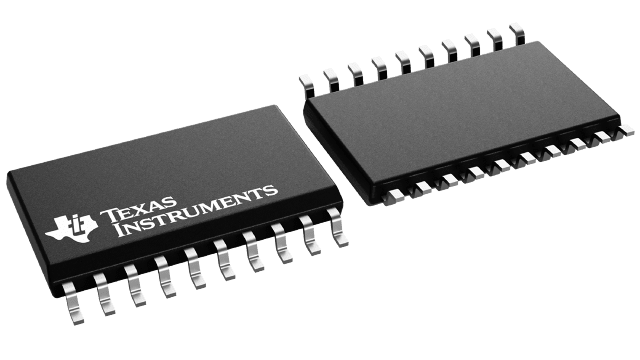
TPIC8101DWR
ActiveVIBRATION AND ENGINE KNOCK SENSOR INTERFACE
Deep-Dive with AI
Search across all available documentation for this part.
TPIC8101DWR
ActiveVIBRATION AND ENGINE KNOCK SENSOR INTERFACE
Technical Specifications
Parameters and characteristics for this part
| Specification | TPIC8101DWR |
|---|---|
| Current - Supply | 20 mA |
| Grade | Automotive |
| Input Type | Serial |
| Mounting Type | Surface Mount |
| Operating Temperature [Max] | 125 °C |
| Operating Temperature [Min] | -40 C |
| Output Type | Serial |
| Package / Case | 20-SOIC (0.295", 7.50mm Width) |
| Qualification | AEC-Q100 |
| Supplier Device Package | 20-SOIC |
| Type | Sensor Interface |
Pricing
Prices provided here are for design reference only. For realtime values and availability, please visit the distributors directly
| Distributor | Package | Quantity | $ | |
|---|---|---|---|---|
| Digikey | Cut Tape (CT) | 1 | $ 6.66 | |
| 10 | $ 6.01 | |||
| 25 | $ 5.74 | |||
| 100 | $ 4.98 | |||
| 250 | $ 4.76 | |||
| 500 | $ 4.34 | |||
| 1000 | $ 3.78 | |||
| Digi-Reel® | 1 | $ 6.66 | ||
| 10 | $ 6.01 | |||
| 25 | $ 5.74 | |||
| 100 | $ 4.98 | |||
| 250 | $ 4.76 | |||
| 500 | $ 4.34 | |||
| 1000 | $ 3.78 | |||
| N/A | 2204 | $ 5.35 | ||
| 3500 | $ 5.35 | |||
| Tape & Reel (TR) | 2000 | $ 2.40 | ||
| Texas Instruments | LARGE T&R | 1 | $ 3.88 | |
| 100 | $ 3.40 | |||
| 250 | $ 2.38 | |||
| 1000 | $ 1.92 | |||
Description
General part information
TPIC8101 Series
The TPIC8101 is a dual-channel signal processing IC for detection of premature detonation in combustion engine. The two sensor channels are selectable through the SPI bus. The knock sensor typically provides an electrical signal to the amplifier inputs. The sensed signal is processed through a programmable band-pass filter to extract the frequency of interest (engine knock or ping signals). The band-pass filter eliminates any engine background noise associated with combustion. The engine background noise is typically low in amplitude compared to the predetonation noise.
The detected signal is full-wave rectified and integrated by use of the INT/HOLD signal. The digital output from the integration stage is either converted to an analog signal, passed through an output buffer, or be read directly by the SPI.
This analog buffered output may be interfaced to an A/D converter and read by the microprocessor. The digital output may be directly interfaced to the microprocessor.
Documents
Technical documentation and resources