INA166UA/2K5
ActiveLOW-NOISE, LOW-DISTORTION, G=2000 INSTRUMENTATION AMPLIFIER
Deep-Dive with AI
Search across all available documentation for this part.
INA166UA/2K5
ActiveLOW-NOISE, LOW-DISTORTION, G=2000 INSTRUMENTATION AMPLIFIER
Technical Specifications
Parameters and characteristics for this part
| Specification | INA166UA/2K5 |
|---|---|
| -3db Bandwidth | 450 kHz |
| Amplifier Type | Instrumentation |
| Current - Input Bias | 2.5 µA |
| Current - Output / Channel | 60 mA |
| Current - Supply | 10 mA |
| Mounting Type | Surface Mount |
| Number of Circuits | 1 |
| Operating Temperature [Max] | 85 °C |
| Operating Temperature [Min] | -40 °C |
| Package / Case | 14-SOIC |
| Package / Case [x] | 0.154 in |
| Package / Case [y] | 3.9 mm |
| Slew Rate | 15 V/µs |
| Voltage - Input Offset | 50 µV |
| Voltage - Supply Span (Max) [Max] | 36 V |
Pricing
Prices provided here are for design reference only. For realtime values and availability, please visit the distributors directly
| Distributor | Package | Quantity | $ | |
|---|---|---|---|---|
| Digikey | Tape & Reel (TR) | 2500 | $ 6.36 | |
| Texas Instruments | LARGE T&R | 1 | $ 8.91 | |
| 100 | $ 7.26 | |||
| 250 | $ 5.71 | |||
| 1000 | $ 4.84 | |||
Description
General part information
INA166 Series
The INA166 is a very low-noise, low-distortion, monolithic instrumentation amplifier. Its current-feedback circuitry achieves very wide bandwidth and excellent dynamic response over a wide range of gain. It is ideal for low-level signals such as microphones or hydrophones. Many industrial, instrumentation, and medical applications also benefit from its low noise and wide bandwidth.
Unique distortion cancellation circuitry reduces distortion to extremely low levels, even in high gain. The INA166 provides near-theoretical noise performance for 200source impedance. Its differential input, low noise, and low distortion provide superior performance as a low-level signal amplifier.
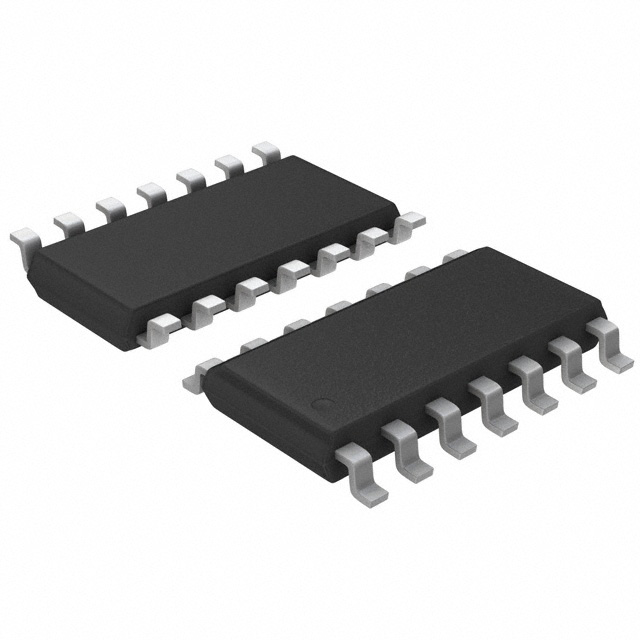
The INA166 is available in a space-saving SO-14 surface-mount package, specified for operation over the \x9640°C to +85°C temperature range.
Documents
Technical documentation and resources