


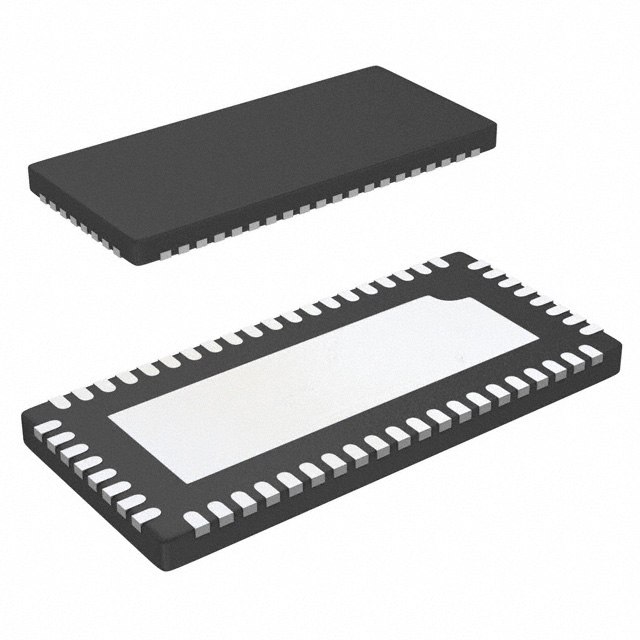
SN75DP126SSRHUR
Active5.4-GBPS DP++ 1.1 TO HDMI 1.4B / DP1.2 1-TO-2 MUX REDRIVER
Deep-Dive with AI
Search across all available documentation for this part.
SN75DP126SSRHUR
Active5.4-GBPS DP++ 1.1 TO HDMI 1.4B / DP1.2 1-TO-2 MUX REDRIVER
Deep-Dive with AI
Technical Specifications
Parameters and characteristics for this part
| Specification | SN75DP126SSRHUR |
|---|---|
| Applications | Notebook PCs, Desktop |
| Interface | I2C |
| Mounting Type | Surface Mount |
| Package / Case | 56-WFQFN Exposed Pad |
| Supplier Device Package | 56-WQFN (5x11) |
| Voltage - Supply [Max] | 3.6 V |
| Voltage - Supply [Min] | 3 V |
Pricing
Prices provided here are for design reference only. For realtime values and availability, please visit the distributors directly
| Distributor | Package | Quantity | $ | |
|---|---|---|---|---|
| Digikey | Cut Tape (CT) | 1 | $ 3.53 | |
| 10 | $ 3.17 | |||
| 25 | $ 3.00 | |||
| 100 | $ 2.60 | |||
| 250 | $ 2.47 | |||
| 500 | $ 2.21 | |||
| 1000 | $ 1.87 | |||
| Digi-Reel® | 1 | $ 3.53 | ||
| 10 | $ 3.17 | |||
| 25 | $ 3.00 | |||
| 100 | $ 2.60 | |||
| 250 | $ 2.47 | |||
| 500 | $ 2.21 | |||
| 1000 | $ 1.87 | |||
| Tape & Reel (TR) | 2000 | $ 1.77 | ||
| Texas Instruments | LARGE T&R | 1 | $ 2.43 | |
| 100 | $ 1.98 | |||
| 250 | $ 1.56 | |||
| 1000 | $ 1.32 | |||
Description
General part information
SN75DP126 Series
The SN75DP126 switches one Dual-Mode DisplayPort (DP++) input to one Dual-Mode DisplayPort (DP++) sink output or one HDMI/DVI sink output. The HDMI/DVI output has a built-in level translator compliant with DVI 1.0 and HDMI 1.4b standard TMDS signaling, and is specified up to a maximum data rate of 3.4 Gbps, supporting resolutions greater than 1920 X 1440 and HDTV deep color at 1080p. An integrated DP-HDMI Adaptor ID buffer can be accessed when the HDMI/DVI sink is selected to indicate support for HDMI signaling.
The device compensates for PCB-related frequency loss and switching-related loss to provide the optimum electrical performance from source to sink. The DP++ Main Link signal inputs feature-configurable equalizers with selectable boost settings.
At the SN75DP126 DP++ Main Link output, four primary levels of differential output voltage (VOD) swing and four primary levels of pre-emphasis are available as well as a secondary level of boost adjustment, programmed through I2C, for fine-tuning the Main Link output. The device can monitor the AUX channel and automatically adjust output signaling levels and input equalizers based on DP Link Training commands.
Documents
Technical documentation and resources