Deep-Dive with AI
Search across all available documentation for this part.
Deep-Dive with AI
Technical Specifications
Parameters and characteristics for this part
| Specification | MC14516BDG |
|---|---|
| Count Rate | 8 MHz |
| Direction | Up, Down |
| Logic Type | Binary Counter |
| Mounting Type | Surface Mount |
| Number of Bits per Element | 4 |
| Number of Elements | 1 |
| Operating Temperature [Max] | 125 °C |
| Operating Temperature [Min] | -55 °C |
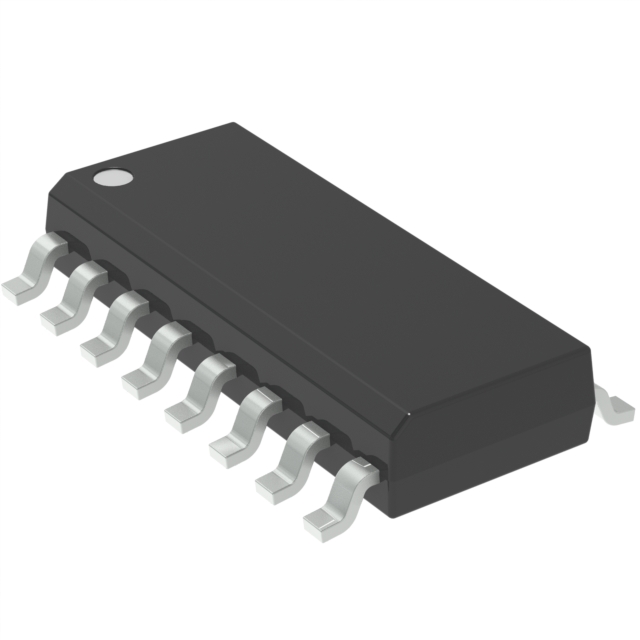
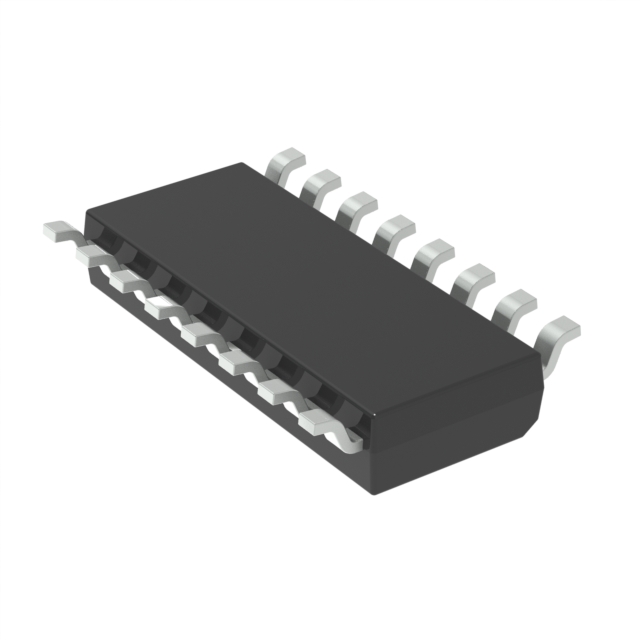
| Package / Case | 16-SOIC |
| Package / Case [x] | 0.154 in |
| Package / Case [y] | 3.9 mm |
| Reset | Asynchronous |
| Supplier Device Package | 16-SOIC |
| Timing | Synchronous |
| Trigger Type | Positive Edge |
| Voltage - Supply [Max] | 18 V |
| Voltage - Supply [Min] | 3 V |
Pricing
Prices provided here are for design reference only. For realtime values and availability, please visit the distributors directly
| Distributor | Package | Quantity | $ | |
|---|---|---|---|---|
| Digikey | Tube | 1 | $ 1.35 | |
| 10 | $ 0.81 | |||
| 25 | $ 0.68 | |||
| 100 | $ 0.53 | |||
| 250 | $ 0.46 | |||
| 500 | $ 0.42 | |||
| 1000 | $ 0.38 | |||
| 2500 | $ 0.35 | |||
| 5000 | $ 0.33 | |||
| ON Semiconductor | N/A | 1 | $ 0.25 | |
Description
General part information
MC14516B Series
The MC14516B synchronous up/down binary counter is constructed with MOS P-channel and N-channel enhancement mode devices in a monolithic structure.This counter can be preset by applying the desired value, in binary, to the Preset inputs (P0, P1, P2, P3) and then bringing the Preset Enable (PE) high. The direction of counting is controlled by applying a high (for up counting) or a low (for down counting) to the UP/DOWN input. The state of the counter changes on the positive transition of the clock input.Cascading can be accomplished by connecting the Carrybar Outbar to the Carrybar Inbar of the next stage while clocking each counter in parallel. The outputs (Q0, Q1, Q2, Q3) can be reset to a low state by applying a high to the reset (R) pin.This CMOS counter finds primary use in up/down and difference counting. Other applications include: (1) Frequency synthesizer applications where low power dissipation and/or high noise immunity is desired, (2) Analog-to-digital and digital-to-analog conversions, and (3) Magnitude and sign generation.
Documents
Technical documentation and resources