TLV62085RLTT
ActiveCONV DC-DC 2.6V TO 6V SYNCHRONOUS STEP DOWN SINGLE-OUT 0.8V TO 6V 3A 7-PIN VSON-HR T/R
Deep-Dive with AI
Search across all available documentation for this part.
TLV62085RLTT
ActiveCONV DC-DC 2.6V TO 6V SYNCHRONOUS STEP DOWN SINGLE-OUT 0.8V TO 6V 3A 7-PIN VSON-HR T/R
Deep-Dive with AI
Technical Specifications
Parameters and characteristics for this part
| Specification | TLV62085RLTT |
|---|---|
| Current - Output | 3 A |
| Frequency - Switching | 2.4 MHz |
| Function | Step-Down |
| Mounting Type | Surface Mount |
| Number of Outputs | 1 |
| Operating Temperature [Max] | 125 ¯C |
| Operating Temperature [Min] | -40 °C |
| Output Configuration | Positive |
| Output Type | Adjustable |
| Package / Case | 7-VFDFN |
| Supplier Device Package | 7-VSON (2x2) |
| Synchronous Rectifier | True |
| Topology | Buck |
| Voltage - Input (Max) [Max] | 6 V |
| Voltage - Input (Min) [Min] | 2.5 V |
| Voltage - Output (Min/Fixed) | 0.8 V |
Pricing
Prices provided here are for design reference only. For realtime values and availability, please visit the distributors directly
| Distributor | Package | Quantity | $ | |
|---|---|---|---|---|
| Digikey | Cut Tape (CT) | 1 | $ 2.02 | |
| 10 | $ 1.81 | |||
| 25 | $ 1.71 | |||
| 100 | $ 1.46 | |||
| Digi-Reel® | 1 | $ 2.02 | ||
| 10 | $ 1.81 | |||
| 25 | $ 1.71 | |||
| 100 | $ 1.46 | |||
| Tape & Reel (TR) | 250 | $ 1.37 | ||
| 500 | $ 1.20 | |||
| 1250 | $ 0.99 | |||
| 2500 | $ 0.92 | |||
| 6250 | $ 0.89 | |||
| Texas Instruments | SMALL T&R | 1 | $ 1.52 | |
| 100 | $ 1.25 | |||
| 250 | $ 0.90 | |||
| 1000 | $ 0.68 | |||
Description
General part information
TLV62085 Series
The TLV62085 device is a high-frequency synchronous step-down converter optimized for small solution size and high efficiency. With an input voltage range of 2.5 V to 6.0 V, common battery technologies are supported. The devices focus on high-efficiency step-down conversion over a wide output current range. At medium to heavy loads, the converter operates in PWM mode and automatically enters Power Save Mode operation at light load to maintain high efficiency over the entire load current range.
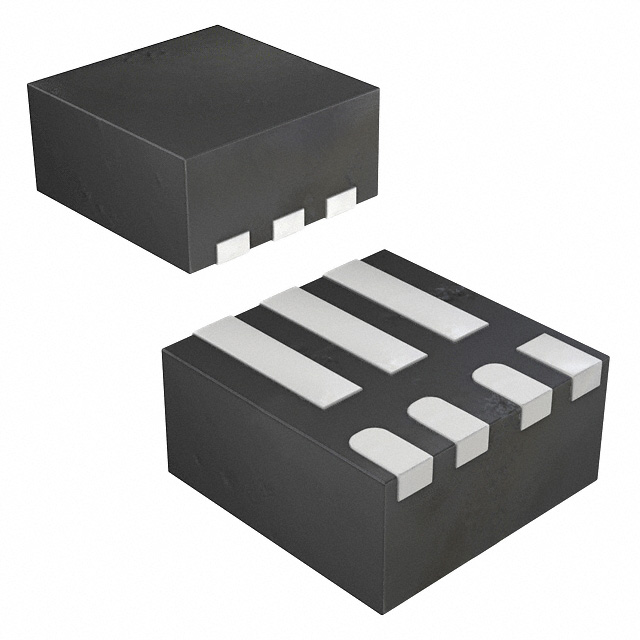
To address the requirements of system power rails, the internal compensation circuit allows a large selection of external output capacitor values ranging from 10 µF to 150 µF and above. Together with its DCS-Control™ architecture, excellent load transient performance and output voltage regulation accuracy are achieved. The device is available in a 2-mm × 2-mm VSON package.
The TLV62085 device is a high-frequency synchronous step-down converter optimized for small solution size and high efficiency. With an input voltage range of 2.5 V to 6.0 V, common battery technologies are supported. The devices focus on high-efficiency step-down conversion over a wide output current range. At medium to heavy loads, the converter operates in PWM mode and automatically enters Power Save Mode operation at light load to maintain high efficiency over the entire load current range.
Documents
Technical documentation and resources