


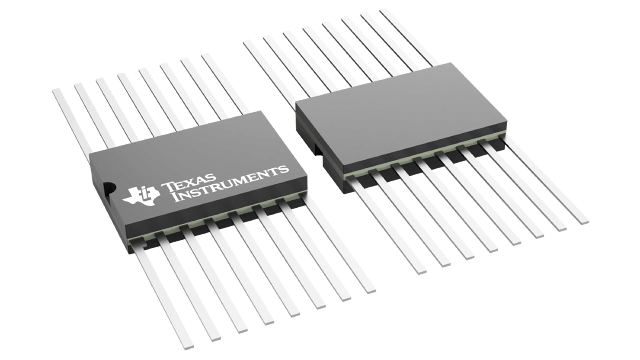
DS26LV32AW-QML
Active3V ENHANCED CMOS QUAD DIFFERENTIAL LINE RECEIVER
Deep-Dive with AI
Search across all available documentation for this part.
DS26LV32AW-QML
Active3V ENHANCED CMOS QUAD DIFFERENTIAL LINE RECEIVER
Technical Specifications
Parameters and characteristics for this part
| Specification | DS26LV32AW-QML |
|---|---|
| Duplex | Half |
| Mounting Type | Surface Mount |
| Number of Drivers/Receivers [custom] | 0 |
| Number of Drivers/Receivers [custom] | 4 |
| Operating Temperature [Max] | 125 °C |
| Operating Temperature [Min] | -55 °C |
| Package / Case | 16-CFlatPack |
| Protocol | RS422 |
| Type | Receiver |
| Voltage - Supply [Max] | 3.6 V |
| Voltage - Supply [Min] | 3 V |
Pricing
Prices provided here are for design reference only. For realtime values and availability, please visit the distributors directly
| Distributor | Package | Quantity | $ | |
|---|---|---|---|---|
| Texas Instruments | TUBE | 1 | $ 35.81 | |
| 100 | $ 31.83 | |||
| 250 | $ 26.17 | |||
| 1000 | $ 23.41 | |||
Description
General part information
DS26LV32AQML Series
The DS26LV32A is a high speed quad differential CMOS receiver that is comparable to TIA/EIA-422-B and ITU-T V.11 standards, but with a specified common mode voltage range of -0.5V to +5.5V due to the lower operating supply voltage of 3.0V to 3.6V. The TRI-STATE enables, EN andEN, allow the device to be active High or active Low. The enables are common to all four receivers. The receiver output (RO) is specified to be High when the inputs are left open. The receiver can detect signals as low as ±200mV over the common mode range of -0.5V to +5.5V. The receiver outputs (RO) are compatible with TTL and LVCMOS levels.
The DS26LV32A is a high speed quad differential CMOS receiver that is comparable to TIA/EIA-422-B and ITU-T V.11 standards, but with a specified common mode voltage range of -0.5V to +5.5V due to the lower operating supply voltage of 3.0V to 3.6V. The TRI-STATE enables, EN andEN, allow the device to be active High or active Low. The enables are common to all four receivers. The receiver output (RO) is specified to be High when the inputs are left open. The receiver can detect signals as low as ±200mV over the common mode range of -0.5V to +5.5V. The receiver outputs (RO) are compatible with TTL and LVCMOS levels.
Documents
Technical documentation and resources