


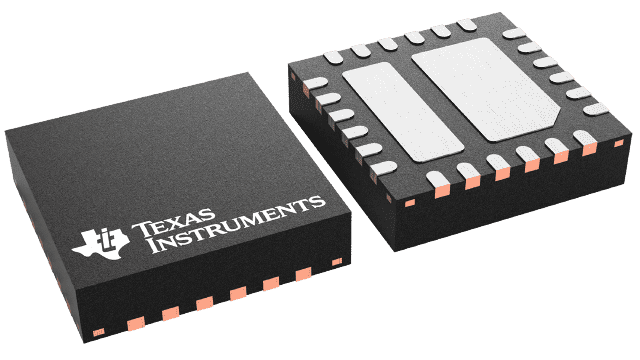
TPS259830LNRGER
Active2.7V TO 26V, 2.7MΩ 20A INTEGRATED HOT-SWAP EFUSE WITH CURRENT MONITOR AND BLOCKING FET DRIVE
Deep-Dive with AI
Search across all available documentation for this part.
TPS259830LNRGER
Active2.7V TO 26V, 2.7MΩ 20A INTEGRATED HOT-SWAP EFUSE WITH CURRENT MONITOR AND BLOCKING FET DRIVE
Technical Specifications
Parameters and characteristics for this part
| Specification | TPS259830LNRGER |
|---|---|
| Applications | PCI |
| Current - Output (Max) [Max] | 243 µA |
| Current - Supply | 18 A |
| Features | Auto Retry, OVP |
| Internal Switch(s) | True |
| Mounting Type | Surface Mount |
| Number of Channels | 1 |
| Operating Temperature [Max] | 125 °C |
| Operating Temperature [Min] | -40 °C |
| Package / Case | 24-VFQFN Exposed Pad |
| Programmable Features | Current Limit |
| Supplier Device Package | 24-VQFN (4x4) |
| Type | Hot Swap Controller |
| Voltage - Supply [Max] | 26 V |
| Voltage - Supply [Min] | 2.7 V |
Pricing
Prices provided here are for design reference only. For realtime values and availability, please visit the distributors directly
| Distributor | Package | Quantity | $ | |
|---|---|---|---|---|
| Digikey | Cut Tape (CT) | 1 | $ 3.29 | |
| 10 | $ 2.96 | |||
| 25 | $ 2.80 | |||
| 100 | $ 2.42 | |||
| 250 | $ 2.30 | |||
| 500 | $ 2.06 | |||
| 1000 | $ 1.74 | |||
| Digi-Reel® | 1 | $ 3.29 | ||
| 10 | $ 2.96 | |||
| 25 | $ 2.80 | |||
| 100 | $ 2.42 | |||
| 250 | $ 2.30 | |||
| 500 | $ 2.06 | |||
| 1000 | $ 1.74 | |||
| Tape & Reel (TR) | 3000 | $ 1.65 | ||
| 6000 | $ 1.59 | |||
| Texas Instruments | LARGE T&R | 1 | $ 2.75 | |
| 100 | $ 2.28 | |||
| 250 | $ 1.64 | |||
| 1000 | $ 1.23 | |||
Description
General part information
TPS25983 Series
The TPS25983 family of eFuses is a highly-integrated circuit protection and power management device in a small package. The devices are operational over a wide input voltage range. A single part caters to low-voltage systems needing minimal I*R voltage drop as well as higher voltage, high current systems needing low power dissipation. The TPS25983 family is a robust defense against overloads, short-circuits, voltage surges, reverse current, and excessive inrush current.
Overvoltage events are limited by internal cutoff circuits with user adjustable overvoltage threshold.
Multiple device options exist to choose between the response to overcurrent conditions, circuit breaker, or active current limiter. The overcurrent limit threshold can be set with a single external resistor. The devices intelligently manage the overcurrent response by distinguishing between transient events and actual faults, thereby allowing the system to function uninterrupted during line and load transients without compromising on the robustness of the protection against faults. The device can be configured to stay latched-off or retry automatically after a fault shutdown. The number of auto-retries as well as the retry delay are configurable with capacitors. This feature enables remote systems to automatically recover from temporary faults while making sure that the power supplies are not stressed indefinitely due to a persistent fault.