


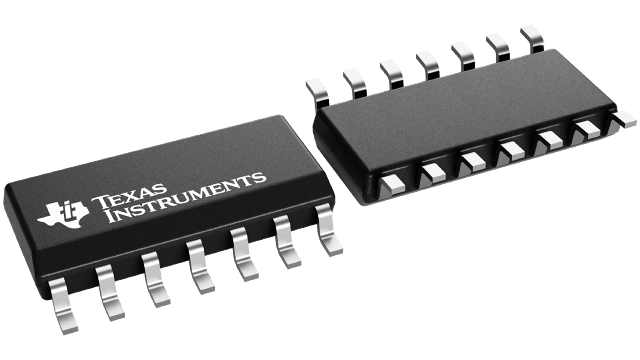
SN65MLVD202D
NRNDLVDS DRIVER/RECEIVER 100MBPS 0.65V 14-PIN SOIC TUBE
Deep-Dive with AI
Search across all available documentation for this part.
SN65MLVD202D
NRNDLVDS DRIVER/RECEIVER 100MBPS 0.65V 14-PIN SOIC TUBE
Deep-Dive with AI
Technical Specifications
Parameters and characteristics for this part
| Specification | SN65MLVD202D |
|---|---|
| Data Rate | 100 Mbps |
| Duplex | Full |
| Mounting Type | Surface Mount |
| Operating Temperature [Max] | 85 °C |
| Operating Temperature [Min] | -40 °C |
| Package / Case | 14-SOIC |
| Package / Case [x] | 0.154 in |
| Package / Case [y] | 3.9 mm |
| Protocol | Multipoint, LVDS |
| Receiver Hysteresis | 25 mV |
| Type | Transceiver |
| Voltage - Supply [Max] | 3.6 V |
| Voltage - Supply [Min] | 3 V |
Pricing
Prices provided here are for design reference only. For realtime values and availability, please visit the distributors directly
| Distributor | Package | Quantity | $ | |
|---|---|---|---|---|
| Digikey | Tube | 250 | $ 3.91 | |
| Texas Instruments | TUBE | 1 | $ 4.43 | |
| 100 | $ 3.61 | |||
| 250 | $ 2.84 | |||
| 1000 | $ 2.41 | |||
Description
General part information
SN65MLVD202 Series
This series of SN65MLVD20x devices are low-voltage differential line drivers and receivers complying with the proposed multipoint low-voltage differential signaling (M-LVDS) standard (TIA/EIA–899). These circuits are similar to their TIA/EIA-644 standard compliant LVDS counterparts, with added features to address multipoint applications. Driver output current has been increased to support doubly-terminated, 50-load multipoint applications. Driver output slew rates are optimized for signaling rates up to 100 Mbps.
Types 1 and 2 receivers are available. Both types of receivers operate over a common-mode voltage range of –1 V to 3.4 V to provide increased noise immunity in harsh electrical environments. Type-1 receivers have their differential input voltage thresholds near zero volts (±50 mV), and include 25 mV of hysteresis to prevent output oscillations in the presence of noise. Type-2 receivers include an offset threshold to detect open-circuit, idle-bus, and other fault conditions, and provide a known output state under these conditions.
The intended application of these devices is in half-duplex or multipoint baseband data transmission over controlled impedance media of approximately 100-characteristic impedance. The transmission media may be printed circuit board traces, backplanes, or cables. (Note: The ultimate rate and distance of data transfer is dependent upon the attenuation characteristics of the media, the noise coupling to the environment, and other application-specific characteristics).
Documents
Technical documentation and resources