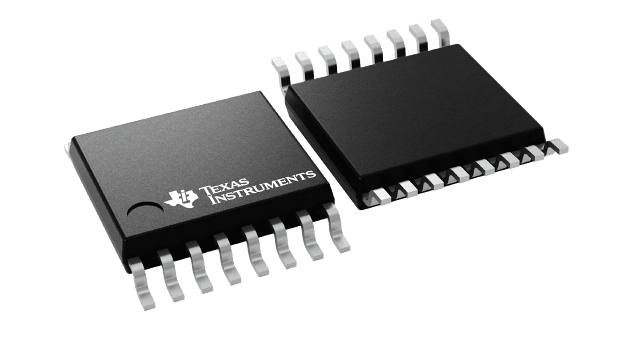
CD4585BPW
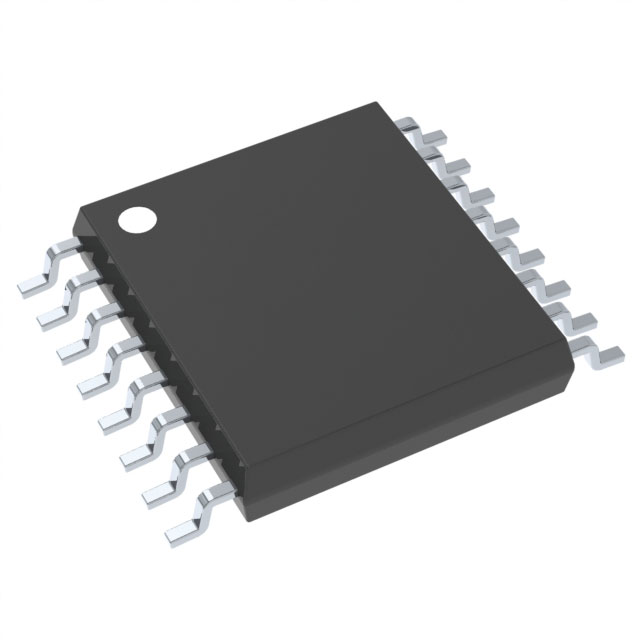
ActiveMAGNITUDE COMPARATOR 4-BIT 16-PIN TSSOP TUBE
Deep-Dive with AI
Search across all available documentation for this part.
CD4585BPW
ActiveMAGNITUDE COMPARATOR 4-BIT 16-PIN TSSOP TUBE
Deep-Dive with AI
Technical Specifications
Parameters and characteristics for this part
| Specification | CD4585BPW |
|---|---|
| Current - Output High, Low [custom] | 4.2 mA |
| Current - Output High, Low [custom] | 4.2 mA |
| Current - Quiescent (Iq) | 100 µA |
| Max Propagation Delay @ V, Max CL | 160 ns |
| Mounting Type | Surface Mount |
| Number of Bits | 4 |
| Operating Temperature [Max] | 125 °C |
| Operating Temperature [Min] | -55 °C |
| Output | Active High |
| Output Function | A<B, A>B, A=B |
| Package / Case | 16-TSSOP |
| Package / Case [x] | 0.173 in |
| Package / Case [y] | 4.4 mm |
| Supplier Device Package | 16-TSSOP |
| Type | Magnitude Comparator |
| Voltage - Supply [Max] | 18 V |
| Voltage - Supply [Min] | 3 V |
Pricing
Prices provided here are for design reference only. For realtime values and availability, please visit the distributors directly
| Distributor | Package | Quantity | $ | |
|---|---|---|---|---|
| Arrow | N/A | 1 | $ 0.14 | |
| 10 | $ 0.10 | |||
| Digikey | Tube | 1 | $ 1.33 | |
| 10 | $ 0.83 | |||
| 25 | $ 0.70 | |||
| 100 | $ 0.55 | |||
| 250 | $ 0.48 | |||
| 500 | $ 0.44 | |||
| 1000 | $ 0.40 | |||
| 2500 | $ 0.36 | |||
| 5000 | $ 0.34 | |||
| Texas Instruments | TUBE | 1 | $ 0.75 | |
| 100 | $ 0.51 | |||
| 250 | $ 0.39 | |||
| 1000 | $ 0.26 | |||
Description
General part information
CD4585B-MIL Series
CD4585B is a 4-bit magnitude comparator designed for use in computer and logic applications that require the comparison of two 4-bit words. This logic circuit determines whether one 4-bit word (Binary or BCD) is "less than", "equal to", or "greater than" a second 4-bit word.
The CD4585B has eight comparing inputs (A3, B3, through A0, B0), three outputs (A<B,A = B,A>B) and three cascading inputs (A<B,A=B,A>B) that permit systems designers to expand the comparator function to 8, 12, 16.....4N bits. When a single CD4585B is used, the cascading inputs are connected as follows: (A<B) = low, (A=B) = high, (A>B) = high.
Cascading these units for comparison of more than 4 bits is accomplished as shown in Fig. 13.
Documents
Technical documentation and resources