


Deep-Dive with AI
Search across all available documentation for this part.
Deep-Dive with AI
Technical Specifications
Parameters and characteristics for this part
| Specification | LM138K-MIL |
|---|---|
| Current - Output | 5 A |
| Current - Quiescent (Iq) | 5 mA |
| Mounting Type | Through Hole |
| Number of Regulators | 1 |
| Operating Temperature [Max] | 150 °C |
| Operating Temperature [Min] | -55 °C |
| Output Configuration | Positive |
| Output Type | Adjustable |
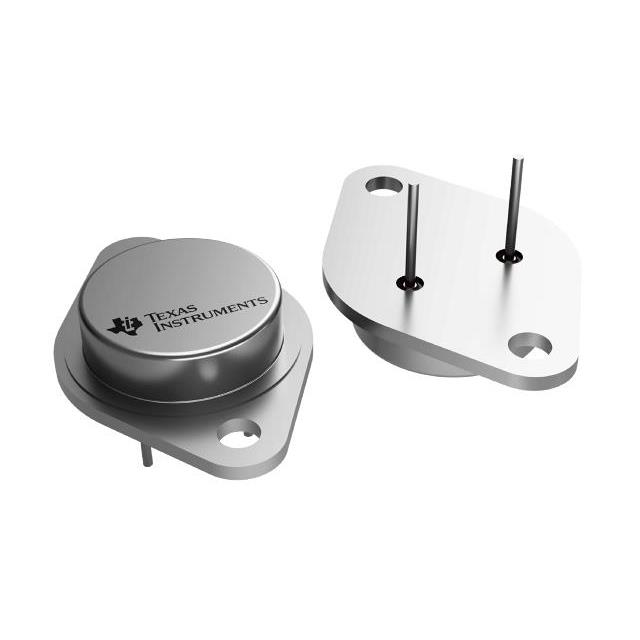
| Package / Case | TO-3, TO-204AA |
| Protection Features | Over Temperature, Over Current, Short Circuit |
| Supplier Device Package | TO-3-2 |
| Voltage - Output (Max) [Max] | 35 V |
| Voltage - Output (Min/Fixed) | 1.2 V |
Pricing
Prices provided here are for design reference only. For realtime values and availability, please visit the distributors directly
| Distributor | Package | Quantity | $ | |
|---|---|---|---|---|
| Texas Instruments | TRAY NON-STD | 1 | $ 129.71 | |
| 100 | $ 125.81 | |||
| 250 | $ 104.75 | |||
| 1000 | $ 97.53 | |||
Description
General part information
LM138QML Series
The LM138QML adjustable 3-terminal positive voltage regulator is capable of supplying in excess of 5 A over a 1.2-V to 32-V output range. The device is exceptionally easy to use and requires only two resistors to set the output voltage. Careful circuit design has resulted in outstanding load and line regulation—comparable to many commercial power supplies.
A unique feature of the LM138QML device is time-dependent current limiting. The current limit circuitry allows peak currents of up to 12 A to be drawn from the regulator for short periods of time. This allows the LM138QML device to be used with heavy transient loads and speeds start-up under full-load conditions. Under sustained loading conditions, the current limit decreases to a safe value protecting the regulator. Also included on the chip are thermal overload protection and safe area protection for the power transistor. Overload protection remains functional even if the adjustment pin is accidentally disconnected.
Normally, no capacitors are needed unless the device is situated more than 6 inches from the input filter capacitors, in which case an input bypass is needed. An output capacitor can be added to improve transient response, while bypassing the adjustment pin will increase the regulator’s ripple rejection.
Documents
Technical documentation and resources