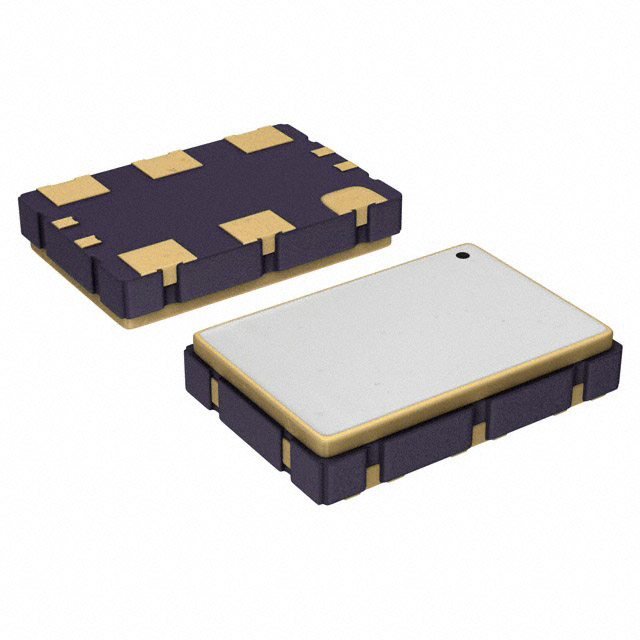
8N3Q001EG-0035CDI8
ActiveCLCC-10(5X7) TIMERS / COUNTERS
Deep-Dive with AI
Search across all available documentation for this part.
8N3Q001EG-0035CDI8
ActiveCLCC-10(5X7) TIMERS / COUNTERS
Deep-Dive with AI
Technical Specifications
Parameters and characteristics for this part
| Specification | 8N3Q001EG-0035CDI8 |
|---|---|
| Current - Supply | 140 mA |
| Frequency | 159.375 MHz, 155.52 MHz, 156.25 MHz, 128.78788 MHz |
| Mounting Type | Surface Mount |
| Operating Temperature [Max] | 85 °C |
| Operating Temperature [Min] | -40 °C |
| Package / Case | 10-CLCC |
| Supplier Device Package | 10-CLCC (7x5) |
| Type | Clock Oscillator |
| Voltage - Supply [Max] | 3.465 V |
| Voltage - Supply [Min] | 3.135 V |
Pricing
Prices provided here are for design reference only. For realtime values and availability, please visit the distributors directly
Description
General part information
8N3Q001 Series
The 8N3Q001 is a Quad-Frequency Programmable Clock Oscillator with very flexible frequency programming capabilities. The device uses IDT's fourth generation FemtoClock® NG technology for an optimum of high clock frequency and low phase noise performance. The device accepts 2.5V or 3.3V supply and is packaged in a small, lead-free (RoHS 6) 10-lead Ceramic 5mm x 7mm x 1.55mm package. Besides the four default power-up frequencies set by the FSEL0 and FSEL1 pins, the 8N3Q001 can be programmed via the I2C interface to output clock frequencies between 15.476MHz to 866.67MHz and from 975MHz to 1,300MHz to a very high degree of precision with a frequency step size of 435.9Hz ÷ N (N is the PLL output divider). Since the FSEL0 and FSEL1 pins are mapped to 4 independent PLL M and N divider registers (P, MINT, MFRAC and N), reprogramming those registers to other frequencies under control of FSEL0 and FSEL1 is supported. The extended temperature range supports wireless infrastructure, telecommunication and networking end equipment requirements.
Documents
Technical documentation and resources