


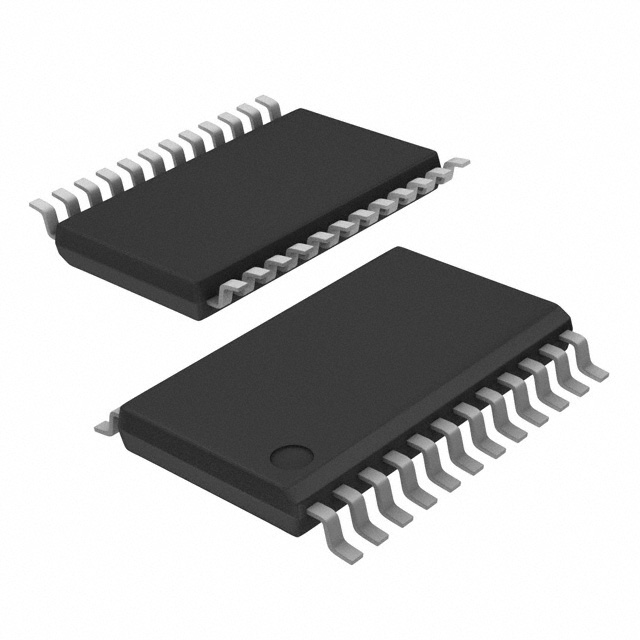
BQ29311PWR
Active3-, 4-CELL LITHIUM-ION PROTECTION IC FOR USE WITH BQ2083/5
Deep-Dive with AI
Search across all available documentation for this part.
BQ29311PWR
Active3-, 4-CELL LITHIUM-ION PROTECTION IC FOR USE WITH BQ2083/5
Technical Specifications
Parameters and characteristics for this part
| Specification | BQ29311PWR |
|---|---|
| Battery Chemistry | Lithium Ion/Polymer |
| Fault Protection | Over/Under Voltage, Over Current, Short Circuit |
| Function | Battery Protection |
| Interface | I2C |
| Mounting Type | Surface Mount |
| Operating Temperature [Max] | 85 C |
| Operating Temperature [Min] | -25 °C |
| Package / Case | 24-TSSOP |
| Package / Case | 0.173 in, 4.4 mm |
| Supplier Device Package | 24-TSSOP |
Pricing
Prices provided here are for design reference only. For realtime values and availability, please visit the distributors directly
| Distributor | Package | Quantity | $ | |
|---|---|---|---|---|
| Digikey | Tape & Reel (TR) | 2000 | $ 3.15 | |
| Texas Instruments | LARGE T&R | 1 | $ 4.74 | |
| 100 | $ 4.15 | |||
| 250 | $ 2.91 | |||
| 1000 | $ 2.35 | |||
Description
General part information
BQ29311 Series
The bq29311 is a three- or four-cell lithium-ion battery pack protection analog front end (AFE) IC that incorporates a 3.3-V 25-mA low-dropout regulator (LDO) and an I2C compatible interface to extract battery parameters such as cell voltages and control output status. Other parameters, such as overcurrent protection threshold and delay, can also be programmed into the bq29311 to increase the flexibility of the battery management system.
The bq29311 provides safety protection in overcurrent, short circuit, overvoltage, and undervoltage conditions via control from the battery management host. In overcurrent and short-circuit conditions the bq29311 can activate the FET drive as a secondary protection level. The communications interface allows the host to control and observe the current status of the protection, to set overcurrent levels for charge and discharge, to set the overcurrent blanking delay time, short-circuit threshold levels, and short-circuit blanking delay time, and to program for the VREG shutdown voltage and brownout-detection thresholds.
Each cell is balanced by a discharge path, which is enabled by the internal control registers accessible through the I2C compatible interface. The maximum current is set by an external series resistor with an absolute maximum value of 10 mA discharge current per cell.
Documents
Technical documentation and resources