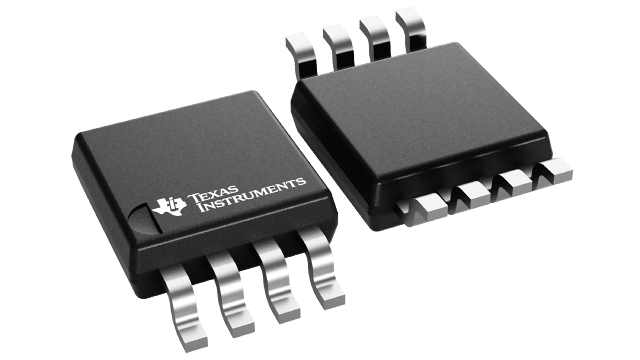
LM3485LED EVAL
ActiveBOARD EVALUATION LM3485LED
Deep-Dive with AI
Search across all available documentation for this part.
LM3485LED EVAL
ActiveBOARD EVALUATION LM3485LED
Deep-Dive with AI
Technical Specifications
Parameters and characteristics for this part
| Specification | LM3485LED EVAL |
|---|---|
| Current - Output / Channel | 1.4 A |
| Features | Dimmable |
| Outputs and Type | 1 Non-Isolated Output |
| Supplied Contents | Board(s) |
| Utilized IC / Part | LM3485 |
| Voltage - Input [Max] | 30 V |
| Voltage - Input [Min] | 5 V |
| Voltage - Output | 30 VDC |
Pricing
Prices provided here are for design reference only. For realtime values and availability, please visit the distributors directly
| Distributor | Package | Quantity | $ | |
|---|---|---|---|---|
| Digikey | Box | 1 | $ 30.00 | |
Description
General part information
LM3485 Series
The LM3485 is a high-efficiency PFET switching regulator controller that can be used to quickly and easily develop a small, low-cost, switching buck regulator for a wide range of applications. The hysteretic control architecture provides for simple design without any control-loop stability concerns using a wide variety of external components. The PFET architecture also allows for low component count as well as ultralow dropout, 100% duty cycle operation. Another benefit is high efficiency operation at light loads without an increase in output ripple.
Current limit protection is provided by measuring the voltage across the RDS(ON)of the PFET, thus eliminating the need for a sense resistor. The cycle-by-cycle current limit can be adjusted with a single resistor, ensuring safe operation over a range of output currents.
The LM3485 is a high-efficiency PFET switching regulator controller that can be used to quickly and easily develop a small, low-cost, switching buck regulator for a wide range of applications. The hysteretic control architecture provides for simple design without any control-loop stability concerns using a wide variety of external components. The PFET architecture also allows for low component count as well as ultralow dropout, 100% duty cycle operation. Another benefit is high efficiency operation at light loads without an increase in output ripple.
Documents
Technical documentation and resources