LP3923TL-VB/NOPB
NRNDCELLULAR PHONE POWER MANAGEMENT IC (PMIC)
Deep-Dive with AI
Search across all available documentation for this part.
LP3923TL-VB/NOPB
NRNDCELLULAR PHONE POWER MANAGEMENT IC (PMIC)
Deep-Dive with AI
Technical Specifications
Parameters and characteristics for this part
| Specification | LP3923TL-VB/NOPB |
|---|---|
| Applications | Cellular, CDMA Handset |
| Mounting Type | Surface Mount |
| Operating Temperature [Max] | 85 °C |
| Operating Temperature [Min] | -40 °C |
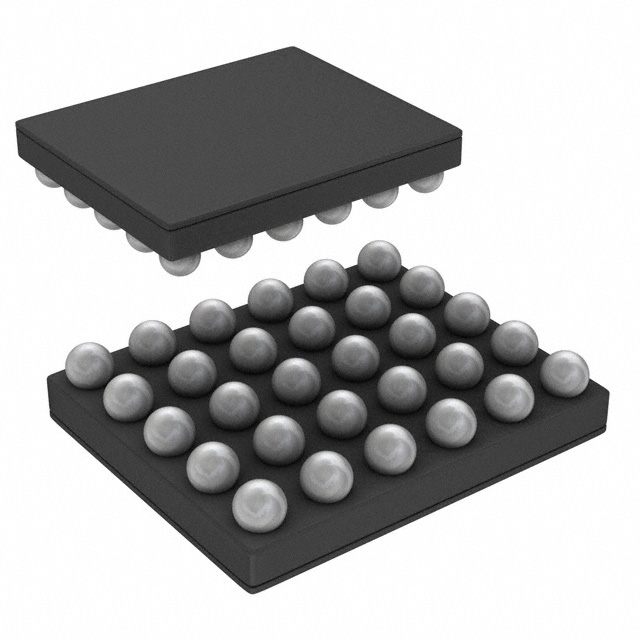
| Package / Case | 30-WFBGA |
| Supplier Device Package | 30-DSBGA |
| Voltage - Supply [Max] | 5.5 V |
| Voltage - Supply [Min] | 3 V |
Pricing
Prices provided here are for design reference only. For realtime values and availability, please visit the distributors directly
| Distributor | Package | Quantity | $ | |
|---|---|---|---|---|
| Digikey | Cut Tape (CT) | 1 | $ 2.16 | |
| 10 | $ 1.94 | |||
| 25 | $ 1.83 | |||
| 100 | $ 1.56 | |||
| Digi-Reel® | 1 | $ 2.16 | ||
| 10 | $ 1.94 | |||
| 25 | $ 1.83 | |||
| 100 | $ 1.56 | |||
| Tape & Reel (TR) | 250 | $ 1.47 | ||
| 500 | $ 1.28 | |||
| 1250 | $ 1.06 | |||
| 2500 | $ 0.99 | |||
| 6250 | $ 0.95 | |||
| Texas Instruments | SMALL T&R | 1 | $ 1.87 | |
| 100 | $ 1.54 | |||
| 250 | $ 1.11 | |||
| 1000 | $ 0.83 | |||
Description
General part information
LP3923 Series
The LP3923 is a fully Integrated Power Management Unit (PMU) designed for CDMA cellular phones.
The LP3923 PMU contains a fully integrated Li-Ion battery charger with power FET and over-voltage-protection (OVP), one Buck regulator, 8 low-noise low-dropout (LDO) voltage regulators, and a high-speed serial interface to program on/off conditions and output voltages of individual regulators, and to read status information of the PMU. Two LILO (low-input, low-output) type LDOs with separate power input provide an application option for pre-regulated high efficient power management for longer battery life.
The Li-Ion charger can safely charge and maintain a single cell Li-Ion battery operating from an AC adapter. The charger integrates a power FET, a reverse current blocking diode, a sense resistor with current monitor output, and requires only a few external components. Charging is thermally regulated to obtain the most efficient charging rate for a given ambient temperature.
Documents
Technical documentation and resources