OPA211AID
Active1.1NV/RTHZ NOISE, LOW-POWER, PRECISION OPERATIONAL AMPLIFIER
Deep-Dive with AI
Search across all available documentation for this part.
OPA211AID
Active1.1NV/RTHZ NOISE, LOW-POWER, PRECISION OPERATIONAL AMPLIFIER
Technical Specifications
Parameters and characteristics for this part
| Specification | OPA211AID |
|---|---|
| Amplifier Type | General Purpose |
| Current - Input Bias | 60 nA |
| Current - Supply | 3.6 mA |
| Gain Bandwidth Product | 80 MHz |
| Mounting Type | Surface Mount |
| Number of Circuits | 1 |
| Operating Temperature [Max] | 125 °C |
| Operating Temperature [Min] | -40 °C |
| Output Type | Rail-to-Rail |
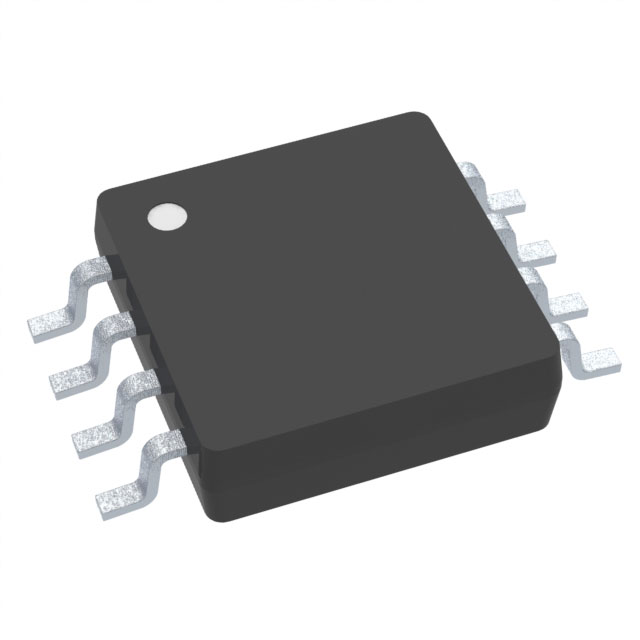
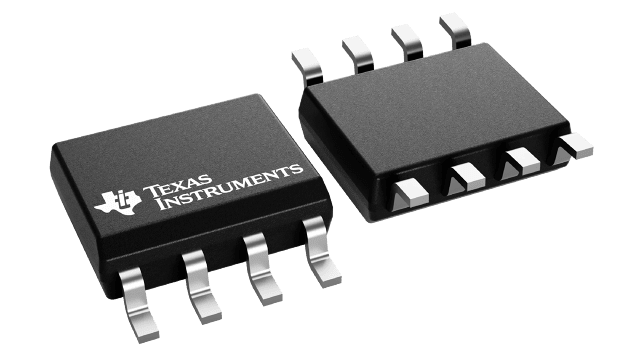
| Package / Case | 8-SOIC |
| Package / Case [x] | 0.154 in |
| Package / Case [y] | 3.9 mm |
| Slew Rate | 27 V/µs |
| Supplier Device Package | 8-SOIC |
| Voltage - Input Offset | 30 çV |
| Voltage - Supply Span (Max) [Max] | 36 V |
| Voltage - Supply Span (Min) [Min] | 4.5 V |
Pricing
Prices provided here are for design reference only. For realtime values and availability, please visit the distributors directly
| Distributor | Package | Quantity | $ | |
|---|---|---|---|---|
| Digikey | Tube | 1 | $ 9.65 | |
| 10 | $ 8.72 | |||
| 75 | $ 8.31 | |||
| 150 | $ 7.22 | |||
| 300 | $ 6.89 | |||
| 525 | $ 6.28 | |||
| 1050 | $ 5.47 | |||
| Texas Instruments | TUBE | 1 | $ 7.39 | |
| 100 | $ 6.02 | |||
| 250 | $ 4.73 | |||
| 1000 | $ 4.01 | |||
Description
General part information
OPA211-HT Series
The OPA211 series of precision operational amplifiers achieves very low 1.1 nV/√Hznoise density with a supply current of only 3.6 mA. This series also offers rail-to-rail output swing, which maximizes dynamic range.
The extremely low voltage and low current noise, high speed, and wide output swing of the OPA211 series make these devices an excellent choice as a loop filter amplifier in PLL applications.
In precision data acquisition applications, the OPA211 series of op amps provides 700-ns settling time to 16-bit accuracy throughout 10-V output swings. This ac performance, combined with only 240-µV of offset and 0.35-µV/°C of drift over temperature, makes the OPA211 ideal for driving high-precision 16-bit analog-to-digital converters (ADCs) or buffering the output of high-resolution digital-to-analog converters (DACs).
Documents
Technical documentation and resources