NCP1250ASN65T1G
ObsoletePWM CONTROLLER, CURRENT MODE, FOR OFFLINE POWER SUPPLIES
Deep-Dive with AI
Search across all available documentation for this part.
NCP1250ASN65T1G
ObsoletePWM CONTROLLER, CURRENT MODE, FOR OFFLINE POWER SUPPLIES
Deep-Dive with AI
Technical Specifications
Parameters and characteristics for this part
| Specification | NCP1250ASN65T1G |
|---|---|
| Duty Cycle | 80 % |
| Fault Protection | Over Power, Over Voltage, Short Circuit |
| Frequency - Switching | 65 kHz |
| Internal Switch(s) | False |
| Mounting Type | Surface Mount |
| Operating Temperature [Max] | 125 ¯C |
| Operating Temperature [Min] | -40 °C |
| Output Isolation | Isolated |
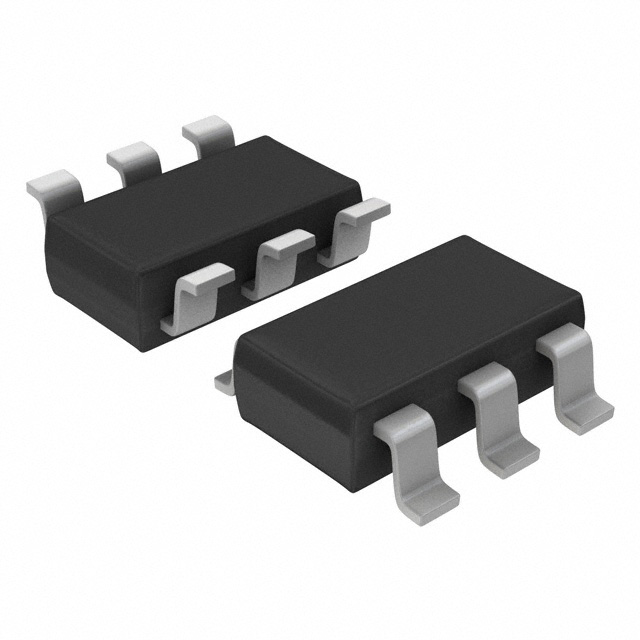
| Package / Case | TSOT-23-6, SOT-23-6 Thin |
| Supplier Device Package | 6-TSOP |
| Topology | Flyback |
| Voltage - Start Up | 18 V |
| Voltage - Supply (Vcc/Vdd) [Max] | 28 V |
| Voltage - Supply (Vcc/Vdd) [Min] | 8.8 V |
Pricing
Prices provided here are for design reference only. For realtime values and availability, please visit the distributors directly
| Distributor | Package | Quantity | $ | |
|---|---|---|---|---|
Description
General part information
NCP1250 Series
The NCP1250 is a highly integrated PWM controller capable of delivering a rugged and high performance offline power supply in a tiny TSOP-6 package. With a supply range up to 28 V, the controller hosts a jittered 65 kHz or 100 kHz switching circuitry operated in peak current mode control. When the power on the secondary side starts to decrease, the controller automatically folds back its switching frequency down to a minimum level of 26 kHz. As the power further goes down, the part enters skip cycle while limiting the peak current. 40W AdapterOver Power Protection (OPP) is a difficult exercise especially when no-load standby requirements drive the converter specifications. The ON proprietary integrated OPP lets you harness the maximum delivered power without affecting your standby performance simply via two external resistors. An Over Voltage Protection input is also combined on the same pin and protects the whole circuitry in case of optocoupler failure or adverse open loop operation.Finally, a timer-based short-circuit protection offers the best protection scheme, letting you precisely select the protection trip point irrespective of a loose coupling between the auxiliary and the power windings.
Documents
Technical documentation and resources