TPS54821RHLR
Active4.5-V TO 17-V, 8-A SYNCHRONOUS BUCK CONVERTER WITH HICCUP CURRENT LIMIT
Deep-Dive with AI
Search across all available documentation for this part.
TPS54821RHLR
Active4.5-V TO 17-V, 8-A SYNCHRONOUS BUCK CONVERTER WITH HICCUP CURRENT LIMIT
Technical Specifications
Parameters and characteristics for this part
| Specification | TPS54821RHLR |
|---|---|
| Current - Output | 8 A |
| Frequency - Switching [Max] | 1.6 MHz |
| Frequency - Switching [Min] | 200 kHz |
| Function | Step-Down |
| Mounting Type | Surface Mount |
| Number of Outputs | 1 |
| Operating Temperature [Max] | 125 °C |
| Operating Temperature [Min] | -40 C |
| Output Configuration | Positive |
| Output Type | Adjustable |
| Package / Case | 14-VFQFN Exposed Pad |
| Supplier Device Package | 3.5x3.5, 14-VQFN |
| Synchronous Rectifier | True |
| Topology | Buck |
| Voltage - Input (Max) [Max] | 17 V |
| Voltage - Input (Min) [Min] | 4.5 V |
| Voltage - Output (Max) [Max] | 15 V |
| Voltage - Output (Min/Fixed) | 0.6 V |
Pricing
Prices provided here are for design reference only. For realtime values and availability, please visit the distributors directly
| Distributor | Package | Quantity | $ | |
|---|---|---|---|---|
| Digikey | Cut Tape (CT) | 1 | $ 3.54 | |
| 10 | $ 3.18 | |||
| 25 | $ 3.00 | |||
| 100 | $ 2.60 | |||
| 250 | $ 2.47 | |||
| 500 | $ 2.22 | |||
| 1000 | $ 1.87 | |||
| Digi-Reel® | 1 | $ 3.54 | ||
| 10 | $ 3.18 | |||
| 25 | $ 3.00 | |||
| 100 | $ 2.60 | |||
| 250 | $ 2.47 | |||
| 500 | $ 2.22 | |||
| 1000 | $ 1.87 | |||
| N/A | 5775 | $ 3.83 | ||
| Tape & Reel (TR) | 3000 | $ 1.78 | ||
| Texas Instruments | LARGE T&R | 1 | $ 2.67 | |
| 100 | $ 2.34 | |||
| 250 | $ 1.64 | |||
| 1000 | $ 1.32 | |||
Description
General part information
TPS54821 Series
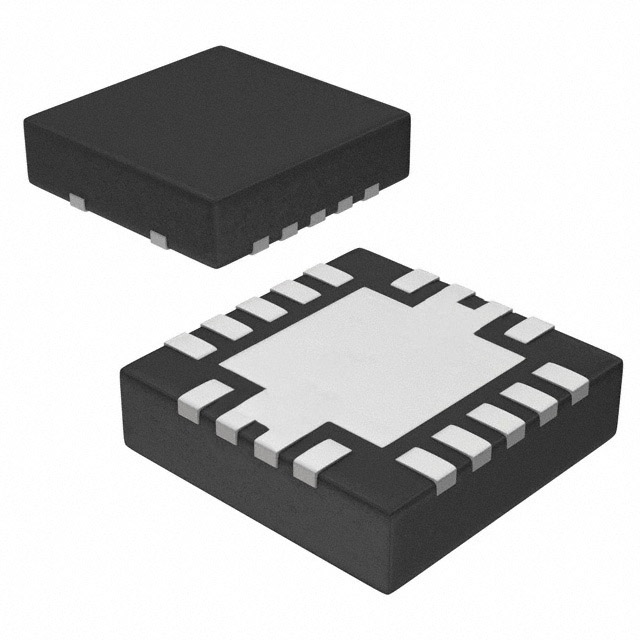
The TPS54821 in thermally enhanced 3.5 mm × 3.5 mm QFN package is a full featured 17 V, 8 A synchronous step down converter which is optimized for small designs through high efficiency and integrating the high-side and low-side MOSFETs. Further space savings are achieved through current mode control, which reduces component count, and by selecting a high switching frequency, reducing the inductor's footprint.
The output voltage startup ramp is controlled by the SS/TR pin which allows operation as either a stand alone power supply or in tracking situations. Power sequencing is also possible by correctly configuring the enable and the open drain power good pins.
Cycle by cycle current limiting on the high-side FET protects the device in overload situations and is enhanced by a low-side sourcing current limit which prevents current runaway. There is also a low-side sinking current limit which turns off the low-side MOSFET to prevent excessive reverse current. Hiccup protection will be triggered if the overcurrent condition has persisted for longer than the preset time. Thermal hiccup protection disables the device when the die temperature exceeds the thermal shutdown temperature and enables the part again after the built-in thermal shutdown hiccup time.
Documents
Technical documentation and resources