OPA4342UA
ActiveQUAD, 5.5-V, 1-MHZ, LOW BIAS CURRENT (0.2-PA), RRIO OPERATIONAL AMPLIFIER
Deep-Dive with AI
Search across all available documentation for this part.
OPA4342UA
ActiveQUAD, 5.5-V, 1-MHZ, LOW BIAS CURRENT (0.2-PA), RRIO OPERATIONAL AMPLIFIER
Deep-Dive with AI
Technical Specifications
Parameters and characteristics for this part
| Specification | OPA4342UA |
|---|---|
| Amplifier Type | CMOS |
| Current - Input Bias | 0.2 pA |
| Current - Output / Channel | 15 mA |
| Current - Supply | 150 µA |
| Gain Bandwidth Product | 1 MHz |
| Mounting Type | Surface Mount |
| Number of Circuits | 4 |
| Operating Temperature [Max] | 85 °C |
| Operating Temperature [Min] | -40 °C |
| Output Type | Rail-to-Rail |
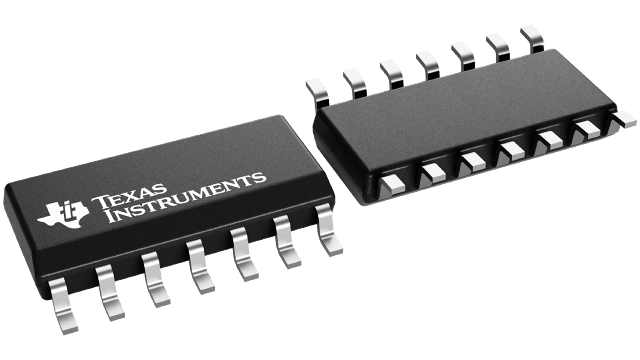
| Package / Case | 14-SOIC |
| Package / Case [x] | 0.154 in |
| Package / Case [y] | 3.9 mm |
| Slew Rate | 1 V/µs |
| Voltage - Input Offset | 1 mV |
| Voltage - Supply Span (Max) [Max] | 5.5 V |
| Voltage - Supply Span (Min) [Min] | 2.7 V |
Pricing
Prices provided here are for design reference only. For realtime values and availability, please visit the distributors directly
| Distributor | Package | Quantity | $ | |
|---|---|---|---|---|
| Digikey | Tube | 1 | $ 3.31 | |
| 10 | $ 2.97 | |||
| 50 | $ 2.81 | |||
| 100 | $ 2.43 | |||
| 250 | $ 2.31 | |||
| 500 | $ 2.07 | |||
| 1000 | $ 1.75 | |||
| 2500 | $ 1.66 | |||
| 5000 | $ 1.60 | |||
| Texas Instruments | TUBE | 1 | $ 2.50 | |
| 100 | $ 2.19 | |||
| 250 | $ 1.53 | |||
| 1000 | $ 1.24 | |||
Description
General part information
OPA4342 Series
The OPA342 series rail-to-rail CMOS operational amplifiers are designed for low-cost, low-power, miniature applications. They are optimized to operate on a single supply as low as 2.5V with an input common-mode voltage range that extends 300mV beyond the supplies.
Rail-to-rail input/output and high-speed operation make them ideal for driving sampling Analog-to-Digital Converters (ADC). They are also well suited for general-purpose and audio applications and providing I/V conversion at the output of Digital-to-Analog Converters (DAC). Single, dual, and quad versions have identical specs for design flexibility.
The OPA342 series offers excellent dynamic response with a quiescent current of only 250uA max. Dual and quad designs feature completely independent circuitry for lowest crosstalk and freedom from interaction.
Documents
Technical documentation and resources