


Zenode.ai Logo
Beta
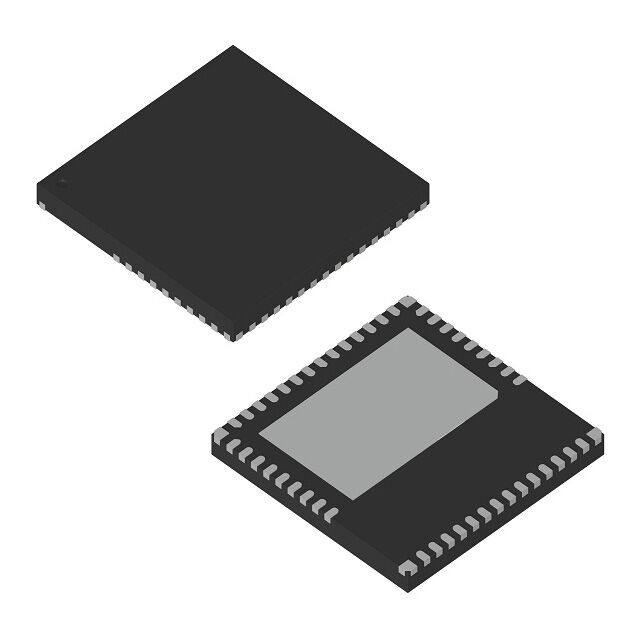
46 VFQFN
Integrated Circuits (ICs)

BM3G007MUV-LBE2

Active
Rohm Semiconductor

NANO CAP™, ECOGAN™, 650V 70MΩ 2MHZ, GAN HEMT POWER STAGE IC

Deep-Dive with AI

Search across all available documentation for this part.

46 VFQFN
Integrated Circuits (ICs)

BM3G007MUV-LBE2

Active
Rohm Semiconductor

NANO CAP™, ECOGAN™, 650V 70MΩ 2MHZ, GAN HEMT POWER STAGE IC

Technical Specifications

Parameters and characteristics for this part

SpecificationBM3G007MUV-LBE2
Fault ProtectionOver Temperature, UVLO
FeaturesPower Good, Slew Rate Controlled
Input TypeNon-Inverting
Mounting TypeWettable Flank, Surface Mount
Number of Outputs1
Operating Temperature [Max]105 ░C
Operating Temperature [Min]-40 C
Output ConfigurationLow Side
Output TypeN-Channel
Package / Case46-VFQFN Exposed Pad
Ratio - Input:Output1:1
Rds On (Typ)70 mOhm
Supplier Device PackageVQFN046V8080
Switch TypeGeneral Purpose
Voltage - Load650 V
Voltage - Supply (Vcc/Vdd) [Max]30 V
Voltage - Supply (Vcc/Vdd) [Min]6.25 V

Pricing

Prices provided here are for design reference only. For realtime values and availability, please visit the distributors directly

DistributorPackageQuantity$
DigikeyCut Tape (CT) 1$ 15.13
10$ 11.97
25$ 11.18
100$ 10.31
250$ 9.89
500$ 9.64
Digi-Reel® 1$ 15.13
10$ 11.97
25$ 11.18
100$ 10.31
250$ 9.89
500$ 9.64
N/A 0$ 15.13
Tape & Reel (TR) 1000$ 8.69
NewarkEach (Supplied on Cut Tape) 1$ 16.84
10$ 11.79
25$ 10.55
50$ 10.04
100$ 9.55

Description

General part information

BM3G007MUV-LB Series

This is the product guarantees long time support in industrial market. BM3G007MUV-LB provides an optimum solution for all electronics systems that requires high power density and efficiency. By integrating the 650V enhancement GaN HEMT and silicon driver to ROHM’s original package, parasitic inductance caused by a PCB and wire bonding is reduced significantly compared to traditional discrete solutions. Owing to this, a high switching slew rate up to 150V/ns can be achieved. On the other hand, adjustable gate drive strength contributes to low EMI, and various protections and other additional functions provide optimized cost, PCB size. This IC is designed to adapt major exist controllers, so that it also can be used to replace the traditional discrete power switches, such as super junction MOSFET.

Documents

Technical documentation and resources

Evaluation Board User's Guide for BM3G007MUV-EVK-003

User's Guide

How to Use the Thermal Resistance and Thermal Characteristics Parameters

Thermal Design

Power Eco Family: Overview of ROHM's Power Semiconductor Lineup

White Paper

Calculation of Power Dissipation in Switching Circuit

Schematic Design & Verification

Evaluation Board User's Guide for BM3G007MUV-EVK-001

User's Guide

BM3G007MUV-LB Data Sheet

Data Sheet

Generation Mechanism of Voltage Surge on Commutation Side (Basic)

Technical Article

Overview of ROHM's Simulation Models(for ICs and Discrete Semiconductors)

Technical Article

Method for Monitoring Switching Waveform

Schematic Design & Verification

PCB Layout Thermal Design Guide

Thermal Design

ROHM's EcoGaN™ Solutions Contribute to Greater Miniaturization and Energy Savings

White Paper

θ<sub>JA</sub> and Ψ<sub>JT</sub>

Thermal Design

What Is Thermal Design

Thermal Design

Method for Calculating Junction Temperature from Transient Thermal Resistance Data

Thermal Design

θ<sub>JC</sub> and Ψ<sub>JT</sub>

Thermal Design

Importance of Probe Calibration When Measuring Power: Deskew

Schematic Design & Verification

Notes for Temperature Measurement Using Thermocouples

Thermal Design

4 Steps for Successful Thermal Designing of Power Devices

White Paper

Method of lifetime estimation of EcoGaN™ in soft-switching operations

White Paper

Impedance Characteristics of Bypass Capacitor

Schematic Design & Verification

Notes for Calculating Power Consumption:Static Operation

Thermal Design

Basics of Thermal Resistance and Heat Dissipation

Thermal Design

Reference Board User's Guide for BM3G007MUV-EVK-002

User's Guide

BM3G007MUV-LB SPICE Modeling Report

Models

Notes for Temperature Measurement Using Forward Voltage of PN Junction

Thermal Design

Judgment Criteria of Thermal Evaluation

Thermal Design