LM5072MHX-80/NOPB
ActiveCLASS 4 NON-STANDARD POE PD WITH FLYBACK DC-DC CONTROLLER & 12V-57V ADAPTER PRIORITY
Deep-Dive with AI
Search across all available documentation for this part.
LM5072MHX-80/NOPB
ActiveCLASS 4 NON-STANDARD POE PD WITH FLYBACK DC-DC CONTROLLER & 12V-57V ADAPTER PRIORITY
Deep-Dive with AI
Technical Specifications
Parameters and characteristics for this part
| Specification | LM5072MHX-80/NOPB |
|---|---|
| Auxiliary Sense | True |
| Internal Switch(s) | Both |
| Mounting Type | Surface Mount |
| Number of Channels | 1 |
| Operating Temperature [Max] | 125 °C |
| Operating Temperature [Min] | -40 °C |
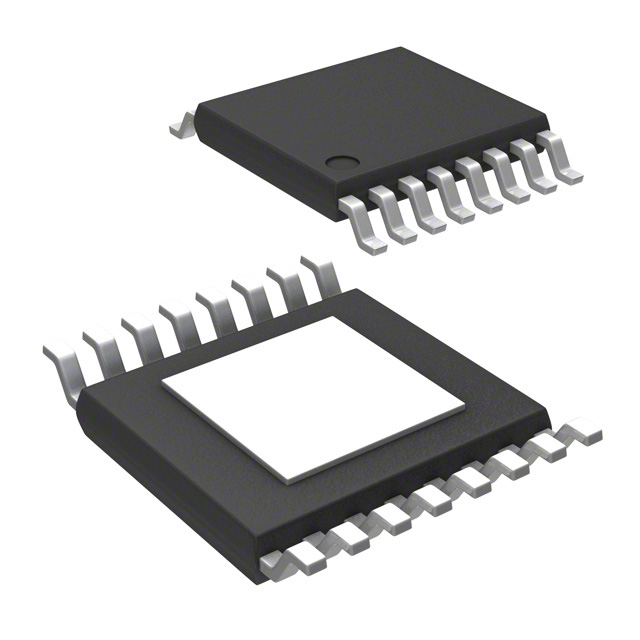
| Package / Case | 16-PowerTSSOP |
| Package / Case | 0.173 in, 4.4 mm Width |
| Power - Max [Max] | 12.95 W |
| Standards | 802.3af (PoE) |
| Supplier Device Package | 16-HTSSOP |
| Type | Controller (PD), DC/DC |
| Voltage - Supply [Max] | 70 VDC |
| Voltage - Supply [Min] | 9 V |
Pricing
Prices provided here are for design reference only. For realtime values and availability, please visit the distributors directly
| Distributor | Package | Quantity | $ | |
|---|---|---|---|---|
| Digikey | Cut Tape (CT) | 1 | $ 3.91 | |
| 10 | $ 3.51 | |||
| 25 | $ 3.32 | |||
| 100 | $ 2.88 | |||
| 250 | $ 2.73 | |||
| 500 | $ 2.45 | |||
| 1000 | $ 2.06 | |||
| Digi-Reel® | 1 | $ 3.91 | ||
| 10 | $ 3.51 | |||
| 25 | $ 3.32 | |||
| 100 | $ 2.88 | |||
| 250 | $ 2.73 | |||
| 500 | $ 2.45 | |||
| 1000 | $ 2.06 | |||
| Tape & Reel (TR) | 2500 | $ 1.96 | ||
| 5000 | $ 1.89 | |||
| Texas Instruments | LARGE T&R | 1 | $ 3.24 | |
| 100 | $ 2.84 | |||
| 250 | $ 1.99 | |||
| 1000 | $ 1.61 | |||
Description
General part information
LM5072 Series
The LM5072 Powered Device (PD) interface and Pulse-Width-Modulation (PWM) controller provides a complete power solution, fully compliant to IEEE 802.3af, for the PD connecting into Power over Ethernet (PoE) networks. This controller integrates all functions necessary to implement both a PD powered interface and DC-DC converter with a minimum number of external components. The LM5072 provides the flexibility for the PD to also accept power from auxiliary sources such as AC adapters in a variety of configurations. The low RDS(ON) PD interface hot swap MOSFET and programmable DC current limit extend the range of LM5072 applications up to twice the power level of 802.3af compliant PD devices. The 100V maximum voltage rating simplifies selection of the transient voltage suppressor that protects the PD from network transients. The LM5072 includes an easy-to-use PWM controller that facilitates the various single-ended power supply topologies including the flyback, forward and buck. The PWM control scheme is based on peak current mode control, which provides inherent advantages including line feed-forward, cycle-by-cycle current limit, and simplified feedback loop compensation. Two versions of the LM5072 provide either an 80% maximum duty cycle (-80 suffix), or a 50% maximum duty cycle (-50 suffix).
The LM5072 Powered Device (PD) interface and Pulse-Width-Modulation (PWM) controller provides a complete power solution, fully compliant to IEEE 802.3af, for the PD connecting into Power over Ethernet (PoE) networks. This controller integrates all functions necessary to implement both a PD powered interface and DC-DC converter with a minimum number of external components. The LM5072 provides the flexibility for the PD to also accept power from auxiliary sources such as AC adapters in a variety of configurations. The low RDS(ON) PD interface hot swap MOSFET and programmable DC current limit extend the range of LM5072 applications up to twice the power level of 802.3af compliant PD devices. The 100V maximum voltage rating simplifies selection of the transient voltage suppressor that protects the PD from network transients. The LM5072 includes an easy-to-use PWM controller that facilitates the various single-ended power supply topologies including the flyback, forward and buck. The PWM control scheme is based on peak current mode control, which provides inherent advantages including line feed-forward, cycle-by-cycle current limit, and simplified feedback loop compensation. Two versions of the LM5072 provide either an 80% maximum duty cycle (-80 suffix), or a 50% maximum duty cycle (-50 suffix).
Documents
Technical documentation and resources