CD74HCT299E
ActiveHIGH SPEED CMOS LOGIC 8-BIT UNIVERSAL SHIFT REGISTER WITH 3-STATE OUTPUTS
Deep-Dive with AI
Search across all available documentation for this part.
CD74HCT299E
ActiveHIGH SPEED CMOS LOGIC 8-BIT UNIVERSAL SHIFT REGISTER WITH 3-STATE OUTPUTS
Deep-Dive with AI
Technical Specifications
Parameters and characteristics for this part
| Specification | CD74HCT299E |
|---|---|
| Function | Universal |
| Logic Type | Shift Register |
| Mounting Type | Through Hole |
| Number of Bits per Element | 8 |
| Number of Elements | 2 |
| Operating Temperature [Max] | 125 °C |
| Operating Temperature [Min] | -55 °C |
| Output Type | Tri-State |
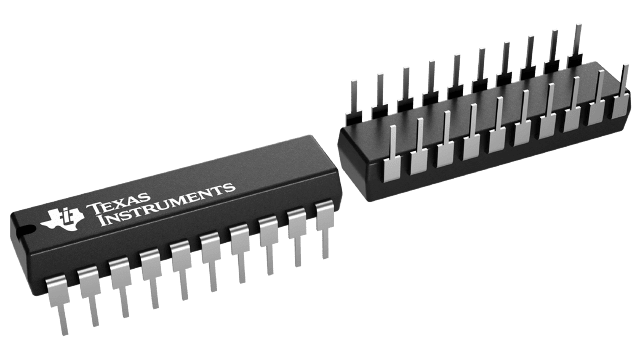
| Package / Case | 20-DIP |
| Package / Case | 7.62 mm |
| Package / Case | 0.3 in |
| Supplier Device Package | 20-PDIP |
| Voltage - Supply [Max] | 5.5 V |
| Voltage - Supply [Min] | 4.5 V |
Pricing
Prices provided here are for design reference only. For realtime values and availability, please visit the distributors directly
| Distributor | Package | Quantity | $ | |
|---|---|---|---|---|
| Digikey | Tube | 1 | $ 0.91 | |
| 20 | $ 0.81 | |||
| 40 | $ 0.77 | |||
| 100 | $ 0.63 | |||
| 260 | $ 0.59 | |||
| 500 | $ 0.52 | |||
| 1000 | $ 0.48 | |||
| Texas Instruments | TUBE | 1 | $ 1.28 | |
| 100 | $ 0.87 | |||
| 250 | $ 0.67 | |||
| 1000 | $ 0.45 | |||
Description
General part information
CD74HCT299 Series
The ’HC259 and ’HCT299 are 8-bit shift/storage registers with three-state bus interface capability. The register has four synchronous-operating modes controlled by the two select inputs as shown in the mode select (S0, S1) table. The mode select, the serial data (DS0, DS7) and the parallel data (I/O0– I/O7) respond only to the low-to-high transition of the clock (CP) pulse. S0, S1 and data inputs must be one set-up time prior to the clock positive transition.
The Master Reset (MR)\ is an asynchronous active low input. When MR\ output is low, the register is cleared regardless of the status of all other inputs. The register can be expanded by cascading same units by tying the serial output (Q0) to the serial data (DS7) input of the preceding register, and tying the serial output (Q7) to the serial data (DS0) input of the following register. Recirculating the (n x 8) bits is accomplished by tying the Q7 of the last stage to the DS0 of the first stage.
The three-state input/output I(/O) port has three modes of operation:
Documents
Technical documentation and resources