INA2332AIPWT
ActiveLOW-POWER, SINGLE-SUPPLY, CMOS INSTRUMENTATION AMPLIFIERS
Deep-Dive with AI
Search across all available documentation for this part.
INA2332AIPWT
ActiveLOW-POWER, SINGLE-SUPPLY, CMOS INSTRUMENTATION AMPLIFIERS
Technical Specifications
Parameters and characteristics for this part
| Specification | INA2332AIPWT |
|---|---|
| -3db Bandwidth | 2 MHz |
| Amplifier Type | Instrumentation |
| Current - Input Bias | 0.5 pA |
| Current - Output / Channel | 48 mA |
| Current - Supply | 0.000415 µA |
| Mounting Type | Surface Mount |
| Number of Circuits | 2 |
| Operating Temperature [Max] | 125 °C |
| Operating Temperature [Min] | -55 °C |
| Output Type | Rail-to-Rail |
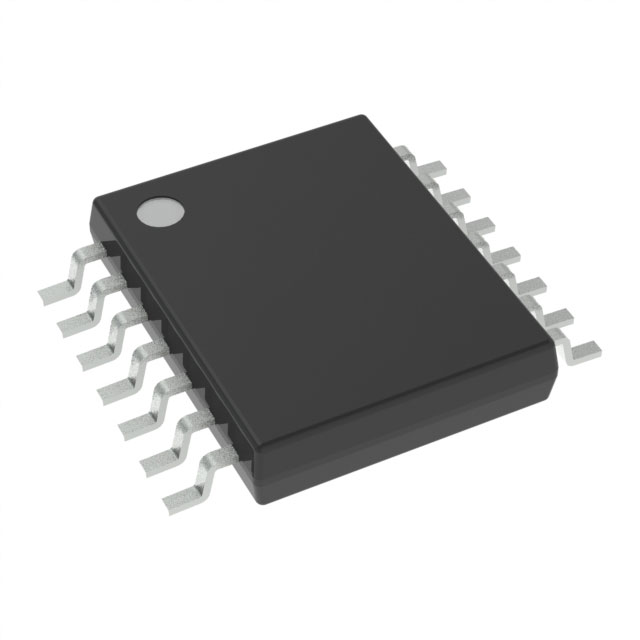
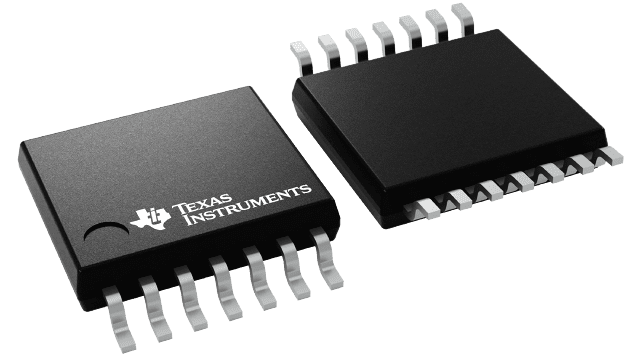
| Package / Case | 14-TSSOP |
| Package / Case [custom] | 0.173 " |
| Package / Case [custom] | 4.4 mm |
| Slew Rate | 5 V/çs |
| Supplier Device Package | 14-TSSOP |
| Voltage - Input Offset | 2 mV |
| Voltage - Supply Span (Max) [Max] | 5.5 V |
| Voltage - Supply Span (Min) [Min] | 2.5 V |
Pricing
Prices provided here are for design reference only. For realtime values and availability, please visit the distributors directly
| Distributor | Package | Quantity | $ | |
|---|---|---|---|---|
| Digikey | Cut Tape (CT) | 1 | $ 2.82 | |
| 10 | $ 2.53 | |||
| 25 | $ 2.40 | |||
| 100 | $ 2.08 | |||
| Digi-Reel® | 1 | $ 2.82 | ||
| 10 | $ 2.53 | |||
| 25 | $ 2.40 | |||
| 100 | $ 2.08 | |||
| Tape & Reel (TR) | 250 | $ 1.97 | ||
| 500 | $ 1.77 | |||
| 1250 | $ 1.49 | |||
| 2500 | $ 1.42 | |||
| 6250 | $ 1.36 | |||
| Texas Instruments | SMALL T&R | 1 | $ 2.36 | |
| 100 | $ 1.95 | |||
| 250 | $ 1.40 | |||
| 1000 | $ 1.05 | |||
Description
General part information
INA2332 Series
The INA332 and INA2332 are rail-to-rail output, low-power CMOS instrumentation amplifiers that offer wide range, single-supply, and bipolar-supply operation. Using a special manufacturing flow, the INA332 family provides the lowest cost available, while still achieving low-noise amplification of differential signals with low quiescent current of 415µA (dropping to 0.01µA when shutdown). Returning to normal operation within microseconds, this INA can be used for battery or multichannel applications.
Configured internally in a gain of 5V/V, the INA332 offers flexibility in higher gains by choosing external resistors.
The INA332 rejects line noise and its harmonics because common-mode error remains low even at higher frequencies.