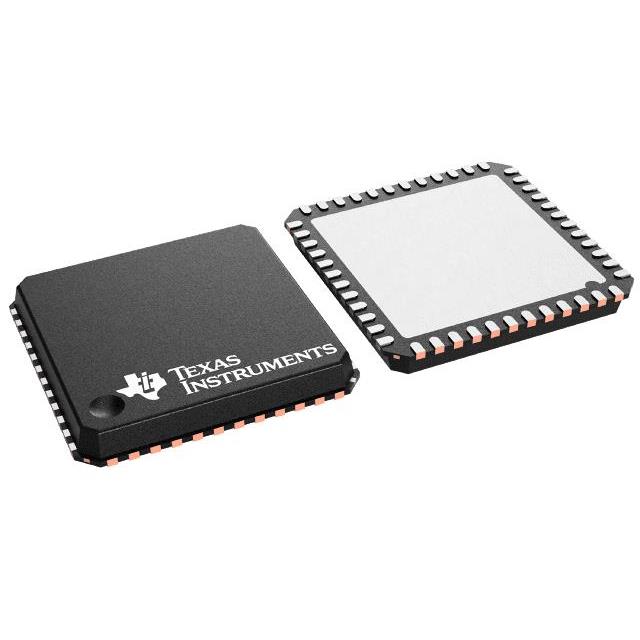
LMX2820RTCR
Active22.6-GHZ WIDEBAND RF SYNTHESIZER WITH PHASE SYNCHRONIZATION, JESD AND <5-ΜS FREQUENCY CALIBRATION
Deep-Dive with AI
Search across all available documentation for this part.
LMX2820RTCR
Active22.6-GHZ WIDEBAND RF SYNTHESIZER WITH PHASE SYNCHRONIZATION, JESD AND <5-ΜS FREQUENCY CALIBRATION
Deep-Dive with AI
Technical Specifications
Parameters and characteristics for this part
| Specification | LMX2820RTCR |
|---|---|
| Frequency [Max] | 22.6 GHz |
| Frequency [Min] | 45 MHz |
| Function | Synthesizer |
| Mounting Type | Surface Mount |
| Package / Case | 48-VFQFN Exposed Pad |
| RF Type | General Purpose |
| Supplier Device Package | 48-VQFN (7x7) |
Pricing
Prices provided here are for design reference only. For realtime values and availability, please visit the distributors directly
| Distributor | Package | Quantity | $ | |
|---|---|---|---|---|
| Digikey | Tape & Reel (TR) | 2500 | $ 87.50 | |
| Texas Instruments | LARGE T&R | 1 | $ 93.10 | |
| 100 | $ 90.30 | |||
| 250 | $ 75.18 | |||
| 1000 | $ 70.00 | |||
Description
General part information
LMX2820 Series
The LMX2820 is a high-performance, wideband synthesizer that can generate any frequency in the range of 45 MHz to 22.6 GHz. The high performance PLL with figure of merit of –236 dBc/Hz and high phase detector frequency can attain very low in-band noise and integrated jitter. The high-speed N-divider has no pre-divider, thus significantly reducing the amplitude and number of spurs. There is also a programmable input multiplier to mitigate integer boundary spurs.
The LMX2820 allows users to synchronize the output of multiple devices and also enables applications that need deterministic delay between input and output. The fast calibration algorithm greatly reduces the VCO calibration time, enabling systems requiring fast frequency hopping. The LMX2820 can generate or repeat SYSREF that is compliant to the JESD204B standard, allowing for its use as a low-noise clock source for high-speed data converters. This synthesizer can also be used with an external VCO. A direct PFD input pin is provided to support offset mixing for low spurious transmission.
The device runs from a single 3.3-V supply and has integrated LDOs that eliminate the need for onboard low-noise LDOs.
Documents
Technical documentation and resources