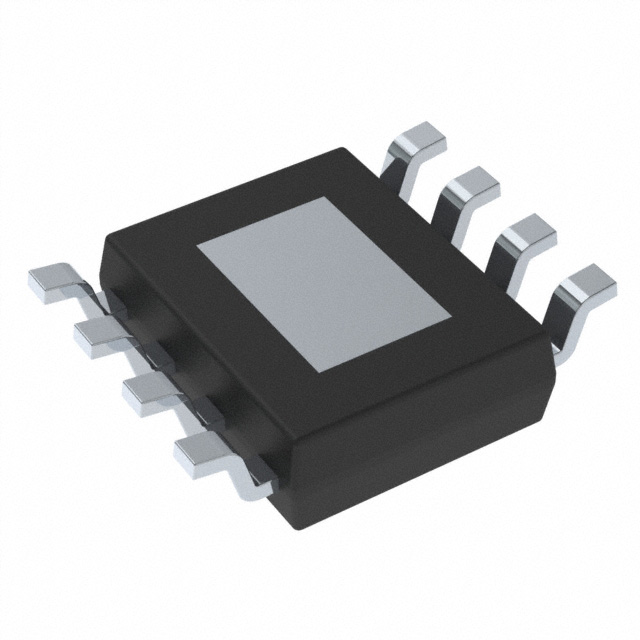
TPS54540BDDAR
Active4.5-V TO 42-V INPUT, 5-A STEP-DOWN CONVERTER WITH ECO-MODE™
Deep-Dive with AI
Search across all available documentation for this part.
TPS54540BDDAR
Active4.5-V TO 42-V INPUT, 5-A STEP-DOWN CONVERTER WITH ECO-MODE™
Technical Specifications
Parameters and characteristics for this part
| Specification | TPS54540BDDAR |
|---|---|
| Current - Output | 5 A |
| Frequency - Switching | 500 kHz |
| Function | Step-Down |
| Mounting Type | Surface Mount |
| Number of Outputs | 1 |
| Operating Temperature [Max] | 150 °C |
| Operating Temperature [Min] | -40 °C |
| Output Configuration | Positive |
| Output Type | Adjustable |
| Package / Case | 8-PowerSOIC |
| Package / Case [x] | 0.154 in |
| Package / Case [y] | 3.9 mm |
| Supplier Device Package | 8-SO PowerPad |
| Synchronous Rectifier | False |
| Topology | Split Rail, Buck |
| Voltage - Input (Max) [Max] | 42 V |
| Voltage - Input (Min) [Min] | 4.5 V |
| Voltage - Output (Max) [Max] | 41.1 V |
| Voltage - Output (Min/Fixed) | 0.8 V |
Pricing
Prices provided here are for design reference only. For realtime values and availability, please visit the distributors directly
| Distributor | Package | Quantity | $ | |
|---|---|---|---|---|
| Digikey | Cut Tape (CT) | 1 | $ 4.53 | |
| 10 | $ 4.07 | |||
| 25 | $ 3.85 | |||
| 100 | $ 3.34 | |||
| 250 | $ 3.17 | |||
| 500 | $ 2.84 | |||
| 1000 | $ 2.40 | |||
| Digi-Reel® | 1 | $ 4.53 | ||
| 10 | $ 4.07 | |||
| 25 | $ 3.85 | |||
| 100 | $ 3.34 | |||
| 250 | $ 3.17 | |||
| 500 | $ 2.84 | |||
| 1000 | $ 2.40 | |||
| Tape & Reel (TR) | 2500 | $ 2.28 | ||
| Texas Instruments | LARGE T&R | 1 | $ 3.42 | |
| 100 | $ 3.00 | |||
| 250 | $ 2.10 | |||
| 1000 | $ 1.69 | |||
Description
General part information
TPS54540B-Q1 Series
The TPS54540B-Q1 device is a 42-V, 5-A, step-down regulator with an integrated high-side MOSFET. The device survives load-dump pulses up to 65 V per ISO 7637. Current mode control provides simple external compensation and flexible component selection. A low-ripple pulse-skip mode reduces the no load supply current to 146 µA. Shutdown supply current is reduced to 2 µA when the enable pin is pulled low.
Undervoltage lockout is internally set at 4.3 V but can be increased using an external resistor divider at the enable pin. The output voltage start-up ramp is internally controlled to provide a controlled start-up and eliminate overshoot.
A wide adjustable frequency range allows either efficiency or external component size to be optimized. Output current is limited cycle-by-cycle. Frequency foldback and thermal shutdown protect internal and external components during an overload condition.
Documents
Technical documentation and resources