


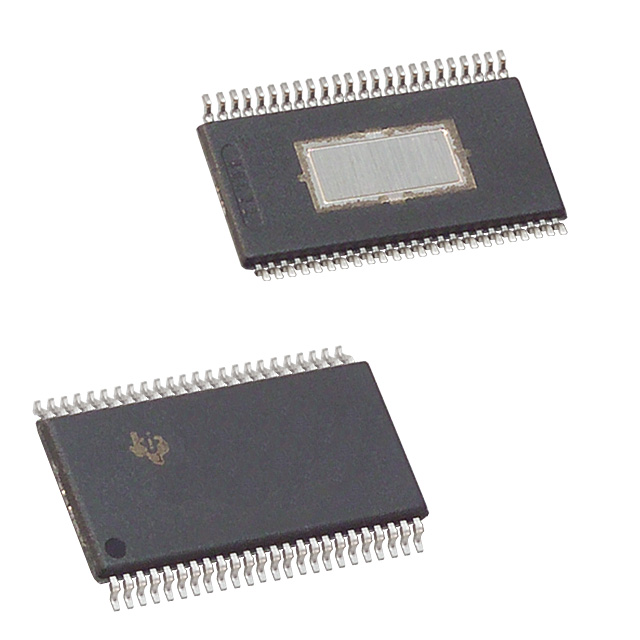
TPIC71002TDCARQ1
ActiveAUTOMOTIVE CATALOG TWO-CHANNEL SQUIB DRIVER
Deep-Dive with AI
Search across all available documentation for this part.
TPIC71002TDCARQ1
ActiveAUTOMOTIVE CATALOG TWO-CHANNEL SQUIB DRIVER
Deep-Dive with AI
Technical Specifications
Parameters and characteristics for this part
| Specification | TPIC71002TDCARQ1 |
|---|---|
| Applications | Airbag |
| Grade | Automotive |
| Interface | SPI Serial |
| Mounting Type | Surface Mount |
| Package / Case | 48-PowerTFSOP |
| Package / Case | 0.24 in |
| Package / Case [custom] | 6.1 mm |
| Qualification | AEC-Q100 |
| Supplier Device Package | 48-HTSSOP |
Pricing
Prices provided here are for design reference only. For realtime values and availability, please visit the distributors directly
| Distributor | Package | Quantity | $ | |
|---|---|---|---|---|
| Digikey | Cut Tape (CT) | 1 | $ 5.89 | |
| 10 | $ 5.29 | |||
| 25 | $ 5.00 | |||
| 100 | $ 4.33 | |||
| 250 | $ 4.11 | |||
| 500 | $ 3.69 | |||
| 1000 | $ 3.11 | |||
| Digi-Reel® | 1 | $ 5.89 | ||
| 10 | $ 5.29 | |||
| 25 | $ 5.00 | |||
| 100 | $ 4.33 | |||
| 250 | $ 4.11 | |||
| 500 | $ 3.69 | |||
| 1000 | $ 3.11 | |||
| Tape & Reel (TR) | 2000 | $ 2.96 | ||
| Texas Instruments | SMALL T&R | 1 | $ 4.46 | |
| 100 | $ 3.63 | |||
| 250 | $ 2.85 | |||
| 1000 | $ 2.42 | |||
Description
General part information
TPIC71002-Q1 Series
The TPIC71002 is a two-channel squib driver for airbag deployment in automotive applications. Each channel consists of a high side and a low side switches with independent control logic for protection against inadvertent deployment. Both the high and the low side switches have internal current limits and over-temperature protection.
The IC registers are used for two channel configuration, control and status monitoring. To prevent inadvertent deployment, the high and the low side switches are turned on only if the proper configuration sequence is used, two independent arming/safing inputs are active and multiple inputs to the deploy controller logic are at the correct level. The registers are programmed using a serial communication interface.
To prevent excessive power dissipation the maximum active ON time for each channel is limited by programmable Firing Time Out Timer. In addition, a current limit register is used to program the maximum current through the switches during a deployment. The current limitation on the low side switch is larger than the corresponding high side switch. During deployment, the low side switch will be fully enhanced and operates in RDS_ON mode and the high side switch will be in the current regulation mode.
Documents
Technical documentation and resources