DRV8231DSGR
Active35-V, 3.7-A H-BRIDGE MOTOR DRIVER WITH INTEGRATED CURRENT REGULATION
Deep-Dive with AI
Search across all available documentation for this part.
DRV8231DSGR
Active35-V, 3.7-A H-BRIDGE MOTOR DRIVER WITH INTEGRATED CURRENT REGULATION
Technical Specifications
Parameters and characteristics for this part
| Specification | DRV8231DSGR |
|---|---|
| Applications | Printer |
| Current - Output | 3.7 A |
| Function | Driver - Fully Integrated, Control and Power Stage |
| Interface | PWM |
| Motor Type - AC, DC | Brushed DC |
| Motor Type - Stepper | Bipolar |
| Mounting Type | Surface Mount |
| Operating Temperature [Max] | 125 °C |
| Operating Temperature [Min] | -40 °C |
| Output Configuration | Half Bridge (2) |
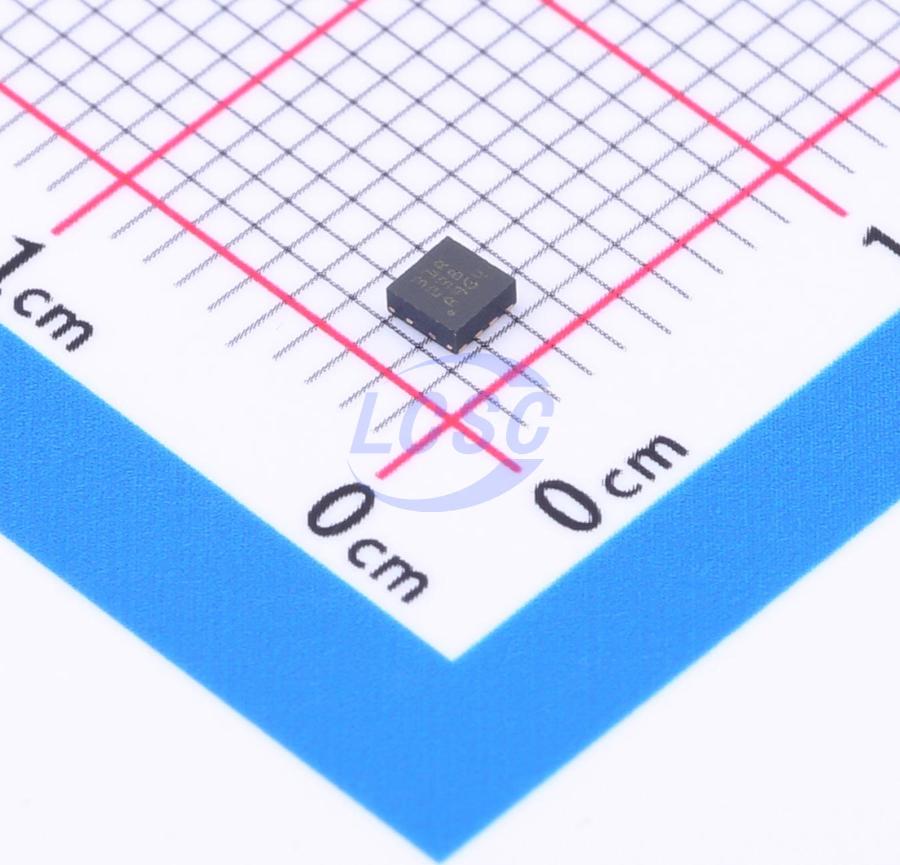
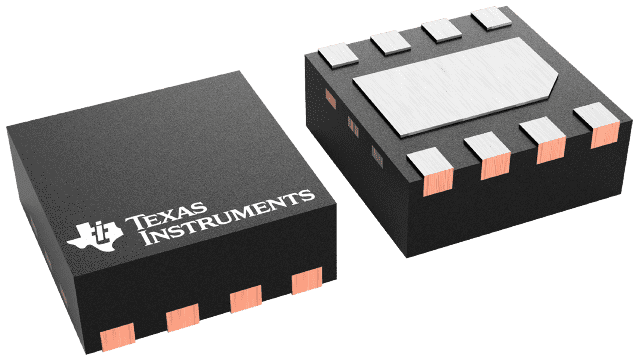
| Package / Case | 8-WFDFN Exposed Pad |
| Supplier Device Package | 8-WSON (2x2) |
| Technology | NMOS |
| Voltage - Load [Max] | 33 V |
| Voltage - Load [Min] | 4.5 V |
| Voltage - Supply [Max] | 33 V |
| Voltage - Supply [Min] | 4.5 V |
Pricing
Prices provided here are for design reference only. For realtime values and availability, please visit the distributors directly
| Distributor | Package | Quantity | $ | |
|---|---|---|---|---|
| Digikey | Cut Tape (CT) | 1 | $ 2.09 | |
| 10 | $ 1.33 | |||
| 25 | $ 1.13 | |||
| 100 | $ 0.91 | |||
| 250 | $ 0.80 | |||
| 500 | $ 0.74 | |||
| 1000 | $ 0.68 | |||
| Digi-Reel® | 1 | $ 2.09 | ||
| 10 | $ 1.33 | |||
| 25 | $ 1.13 | |||
| 100 | $ 0.91 | |||
| 250 | $ 0.80 | |||
| 500 | $ 0.74 | |||
| 1000 | $ 0.68 | |||
| Tape & Reel (TR) | 3000 | $ 0.58 | ||
| 6000 | $ 0.55 | |||
| 9000 | $ 0.53 | |||
| 15000 | $ 0.51 | |||
| Texas Instruments | LARGE T&R | 1 | $ 0.99 | |
| 100 | $ 0.76 | |||
| 250 | $ 0.56 | |||
| 1000 | $ 0.40 | |||
Description
General part information
DRV8231A Series
The DRV8231A device is an integrated motor driver with N-channel H-bridge, charge pump, current sense feedback, current regulation, and protection circuitry. The charge pump improves efficiency by supporting N-channel MOSFET half bridges and 100% duty cycle driving.
An internal current mirror architecture on the IPROPI pin implements current sensing and regulation. This eliminates the need for a large power shunt resistor, saving board area and reducing system cost. The IPROPI current-sense output allows a microcontroller to detect motor stall or changes in load conditions. The external voltage reference pin, VREF, determines the threshold of current regulation during start-up and stall events without interaction from a microcontroller.
A low-power sleep mode achieves ultra-low quiescent current draw by shutting down most of the internal circuitry. Internal protection features include supply undervoltage lockout, output overcurrent, and device overtemperature.